Safely withdraw from alcohol, from the comfort of your home












Clean Slate Clinic on Australia's 9News

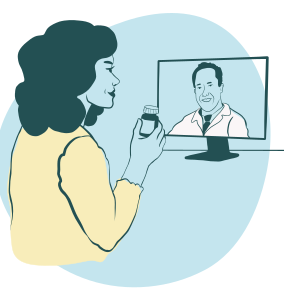

Experienced Australian-based professionals

Over 12 months, you'll receive premium care from leading addiction clinicians in Australia.


You’ll undergo a medicated detox without needing to go to a clinic. Our clients tend to require less time off from work than an in-house detox. We do we require that you inform a close friend or family member and you local GP, but we do not require anyone else or your employer to be informed.
We’ll provide an assessment before you start the program to ensure it’s safe for you. If your appointed clinician does not consider this program safe for you, they will recommend other options.
From day one, you’re matched with a dedicated nurse who stays with you throughout your journey. Every detox is overseen by your named doctor, with daily nurse check‑ins to keep you safe, comfortable, and supported. Medication is managed in consultation with your doctor and dispensed through your chosen pharmacy, fully briefed in advance.
After detox, you’ll meet your doctor again to celebrate progress and plan next steps. With regular nurse contact across 11 months of aftercare, you’re never alone. You’ll have consistent medical guidance and accountability throughout your recovery journey.
Your journey starts with your goals; whether abstinence or moderation, we co‑design a plan that fits your life. Every detail is personalised: your health, relationships, and routines shape the care you receive. Medical checks ensure your doctor builds the safest detox plan possible, while your welcome kit equips you with supplements, a breathalyser, and a clear program guide.
With daily reflections and resources that explain addiction and recovery, your plan adapts around you; unique, evidence‑based, and designed for lasting change.
Our approach combines gold‑standard medical practice with SMART Recovery group work, CBT‑informed tools, and whole‑person aftercare. Daily monitoring during detox and ongoing support across nine domains of life mean safer withdrawal, reduced relapse risk, and a recovery plan that’s practical, durable, and designed around you.
Our program is available privately for just $11-$13 per day, depending on how you prefer to pay. Choose $4,200 upfront for the full 12‑month program, or spread the cost at $410 per month. Flexible payment methods, including Afterpay and PayPal, make professional medical care accessible without financial strain.
If you have Private Health Insurance with unrestricted psychiatric hospital cover, most major insurers will fully fund your placement, meaning no out‑of‑pocket cost.
Government‑funded places are also available in select Primary Health Networks (PHNs). For full details on insurers, PHNs, and payment options, visit: Our Pricing.
What our clients say








Our partners







































Ready to get started?





Frequently asked questions
How much does it cost?

Our program is available privately for just $11–$13 per day, depending on how you prefer to pay.
Private
You can choose:
- $4,200 upfront for the full 12-month program, or
- $410 per month if you prefer to spread the cost across the year.
Private Health Insurance and Government Funding
If you have Private Health Insurance with unrestricted psychiatric hospital cover, most major insurers will fully fund your placement with us - meaning there is no out-of-pocket program cost for you.
We also have Government-funded places available in select Primary Health Networks (PHNs).
For more detail on which insurers cover the program, which PHNs we work with, and available payment methods (including Afterpay and PayPal), visit:
Our pricing.
Please note: the cost of any prescription medications and dispensing fees is not included in the program price. These are paid directly to your local pharmacy. Most medications we prescribe are PBS-subsidised, keeping out-of-pocket costs low.
Can I detox from alcohol at home?
Most people can safely be detoxed at home, but you would need an assessment with a nurse to ensure it is safe for you.
Will my information be kept confidential?
Yes. Clean Slate Clinic is a strictly confidential service. Our clients privacy is our highest priority. Your data will not be shared unless a) we have your consent or b) we are legally required to do so*.
*Mandatory reporting to professional bodies may legally apply if your occupation carries the possible risk of harm to the public, if your duties are performed while intoxicated. This will only be done following discussion with you, and where you are unable, or unwilling to complete the report yourself.
Read our Privacy Policy here.
What can I do whilst I'm waiting for my first appointment?
Once you’ve completed the suitability test, you will receive an email directing you to schedule a call with our team.
We don’t advise anyone to change their drinking habits until they've spoken with our team.
Can I still go to work during my detox?
This may be possible, depending on your individual circumstances. You should discuss this with the nurse in your initial assessment.
Do I need to tell anyone I'm going through a detox?
To undergo the Clean Slate Clinic you will need a close friend or family member to support you through your detox and to inform your local GP you are going through the program. Beyond that you are not required to inform your employer or anyone else.
What is the Clean Slate Clinic?
Evidence-based detox support service for Australians looking to detox from home.
How does it work?
Preparation (2-3 weeks)
- One of our nurses will assess your suitability with you
- You’ll have access to our online resources to support you through the detox
- Finding your support person and local GP
- We will do some basic tests, including a blood test
- We will build a vitamin regime with you
- You’ll talk to our Clean Slate GP managing your detox
Detox (1 week)
- You’ll have a daily video call with one of our nurses
- You’ll have a daily medication regime to relieve withdrawal symptoms and cravings
- Daily breathalyzer and withdrawal screening
Aftercare (11 months)
- Post detox review with the Clean Slate GP and your allocated nurse
- Nurse review weekly for 3-4 weeks then at month 3, 6 and 12.
- You’ll have access to prescribed anti-craving medication if suitable
- Access to multiple peer-supported 'SMART Recovery' meetings each week, facilitated by our trained team
- Signposting and referral to other support services
- You’ll have an individual care plan
Do I have to tell my GP?
You will need a local GP to support you in the delivery of ongoing care and management, depending on your individual circumstances.
Can you prescribe anti-craving medications like naltrexone (revia), acamprosate (campral) or disulfiram (antabuse)?
Yes. These will be considered as part of your personalised care plan.
I'm a healthcare worker - what about mandatory reporting?
What is it about healthcare workers?
Healthcare workers face unique challenges when it comes to seeking help for alcohol and other drug use disorders. In addition to the usual barriers people face, fear of being reported to AHPRA (mandatory reporting) prevents healthcare workers from pursuing treatment and seeking support.
Healthcare workers spend their professional lives caring for others, sometimes to their own detriment. The profession places a high value on competence, resilience and self-sufficiency leading some professionals to believe they should be able to manage their substance use without help.
Long hours leave little time for self-care. Demanding and often unpredictable schedules can make accessing treatment difficult. Stressful environments that prioritise productivity over well-being discourage individuals from taking time off for treatment.
In addition to fears of mandatory reporting, and the stigma that exists in this field, fears about reputation, training, career progression, and colleague perceptions can also prevent healthcare workers from seeking help. Healthcare workers in small communities may face further challenges regarding anonymity.
Safe, effective and evidence-based treatments exist, and we know that seeking help early prevents most fears from being realised. When treatment is not accessed in a timely way, there is a higher chance of things reaching crisis point, increasing the likelihood of an AHPRA report.
What is mandatory reporting?
Mandatory reporting is a legal requirement for registered health practitioners and their employers to report certain types of conduct by other health practitioners. Fear of being reported is one of the primary reasons HCWs do not reach out for help, despite less than 1% of all reports resulting in loss of registration (BDI)
Recent changes to Australian law and the threshold for reporting were made to help ensure that health professionals aren’t unfairly penalised for being diagnosed with a physical or mental health condition. These changes were intended to encourage workers to seek care and treatment for these conditions before they become impairments.
Who must report?
All health practitioners (health professionals whose work involves caring for patients) and their employers (e.g. hospitals, clinics) are required to make a mandatory notification (also called a mandatory report) to AHPRA if they have a reasonable belief that another health professional is putting patients at substantial risk of harm.
Who CAN report?
Anyone can make a report to AHPRA.
What must be reported?
Mandatory reports must be made if it is believed, on reasonable grounds, that a health practitioner:
- is practising while intoxicated.
- is practising with an impairment that is not being managed by effective controls
- is engaging in, or has engaged in, or being at risk of engaging in sexual misconduct in connection with their practise of medicine.
- Is practising in a way that significantly departs from accepted professional standards.
What does ‘Reasonable Belief’ Mean?
The threshold for mandatory reporting is having a ‘reasonable belief’ that a treating healthcare worker is putting patients or the public at substantial risk of harm.
The AHPRA guidelines refer to both “reasonable belief” and “reasonable grounds”. These are essentially the same principle and both refer to knowledge of information that would cause a reasonable person to believe that the conduct occurred.
Absolute proof is not required but there must be direct knowledge (not just a suspicion) that the incident or behaviour occurred. Rumours, gossip or innuendo are not enough to form a reasonable belief.
It is worth pointing out that the threshold for reporting is lower in instances of sexual misconduct. All health professionals are encouraged to make a report even if the sexual misconduct is not likely to result in substantial risk of harm
Impairment v Health Conditions
A health condition is not the same as an impairment. Recent changes to Australian law have provided clarity on the differences between impairments and health conditions. These changes are designed to ensure that health professionals aren’t unfairly penalised for being diagnosed with a physical or mental health condition. They are also intended to encourage workers to seek care and treatment for these conditions before they become impairments.
Impairment is defined by the detrimental impact on someone’s ability to practise medicine. That is, an illness or condition that has, or is likely to have a detrimental impact on a practitioner’s capacity to provide safe care to patients. It must be :
- wide ranging or severe
- not being managed by adequate treatment, supervision or other limitations on practice
- associated with substantial risk to the public.
Alcohol and other Substance Use Disorders
The use or misuse of alcohol or other drugs outside the workplace alone is not sufficient grounds for a mandatory notification to AHPRA. Intoxication while practising is sufficient grounds for a report.
Mental Health Conditions
A mental health diagnosis, including an alcohol or substance use disorder, is not sufficient grounds for a mandatory notification to AHPRA. If the condition does not meet AHPRA’s definition of an impairment (that is, it doesn’t have a detrimental impact on someone’s ability to practise) and the practitioner poses no risk to patient safety, there is no need to make a report.
Failure to address mental health conditions and substance use disorders, increases the likelihood that the condition will develop into an impairment.
Effective Controls
Not all impairments need to be reported. If a health practitioner is engaging with activities (called ‘effective controls’) that reduce the impact of their impairment and its risk of harm to patients, AHPRA does not need to be notified.
Examples of effective controls include:
- Treatment (such as that provided by Clean Slate Clinic)
- A break from practice such as sick leave
- Modified scope of practice
- Strategies to manage the impacts of impairment (eg working with your employer to ensure safety)
- Compliance with monitoring and supervision, or
- A reasonable belief that AHPRA has already been notified
Other factors - like circumstance, whether the health practitioner works alongside colleagues or alone, and whether controls like oversight and incident reporting, insight and self-reflection, and engagement with treatment are being used to mitigate risk – should also be considered.
If you are concerned that a colleague is practising while impaired, it is important to understand whether the impairment is placing patients at substantial risk of harm.
To determine whether an impairment should be reported, the following should be considered:
- The extent and seriousness of the impairment
- The availability of peers to provide support and supervision to the practitioner in question
- Whether the impairment is likely to respond to treatment
- Whether the practitioner is willing to engage with treatment
- Whether strategies put in place to manage the impairment are effective
Treatment with Clean Slate
Our team of specialist clinicians use virtual care and digital technology to provide withdrawal & recovery support to all individuals, no matter where they live. Our healthcare worker pathway has been designed with the specific needs of healthcare workers, facilitating access to safe, confidential, effective, timely and expert withdrawal management and aftercare.
Confidentiality
Confidentiality and privacy are extremely important to healthcare workers, especially those working in small communities. Our team is highly sensitive to confidentiality and privacy concerns and uses an innovative virtual care model to provide withdrawal and recovery support to all individuals. This helps overcome the unique barriers that healthcare workers face by keeping your care largely in the comfort of your own home.
Clean Slate is not funded by medicare so interactions with Clean Slate will not leave a medicare footprint. Clinical interactions will also not be recorded on My Health Record, although prescribing records will be visible. Any prescribing of monitored medications by Clean Slate clinicians will also appear on real time prescription monitoring i.e ‘Safescript’.
Is the purpose of CSC to find and report healthcare workers who are not fit to practice?
Absolutely not. The CSC healthcare worker pathway exists to support people in enabling safe, effective and confidential support and treatment. We recognise and understand the unique challenges faced by healthcare professionals and our goal is to help you overcome these as quickly and as easily as possible to help you and your colleagues do your jobs safely.
Seeking help can reduce the risk of someone being reported to AHPRA and can prevent a health condition from becoming an impairment. And if an impairment exists, engaging with effective controls (such as seeking treatment, taking a break from work, complying with monitoring and supervision) can remove the requirement for mandatory reporting.
How will you report me?
If, during your treatment with Clean Slate, there are concerns about fitness to practice, the initial step will be a discussion with you. If reporting is required, we will encourage you to self-report and support you to do so. If this does not happen and our concerns remain unaddressed, Clean Slate will make a mandatory report to AHPRA. This will happen with full open communication with the practitioner.
Will my registration be cancelled if a mandatory notification is made about me?
While this is a valid concern, mandatory notifications about health practitioners are very rare and less than 1% of mandatory notifications received by AHPRA result in the cancellation of registration. Clean Slate Clinic will continue to work with the practitioner to support their well being.
AHPRA’s Guidelines: Mandatory Notifications About Registered Health Practitioners (2020)
2. Clean Slate Patient Experience Survey October 2025.
Subscribe