.png)


Alice's Story
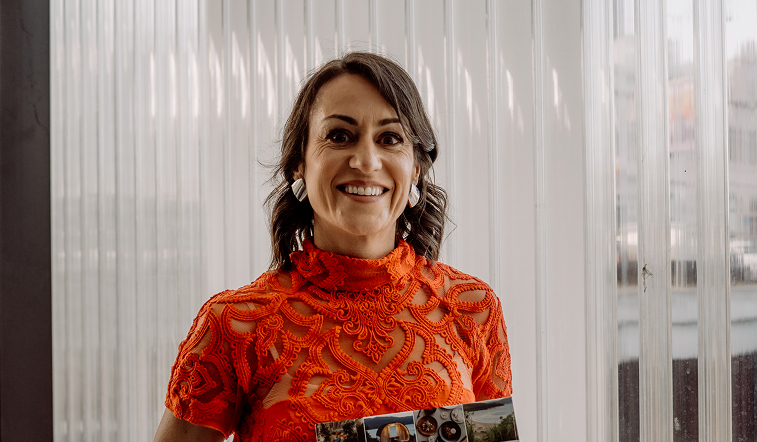
Alice doesn’t fit the picture most people have in their heads when they think about alcohol dependence. She was a top-20 junior Australian tennis player in her teens, training daily on a tennis scholarship in the United States. She finished her university degree while competing. She came home to Tasmania and built a career in tourism, working as a travel writer for Tourism Tasmania, launching her own tourism brand, Tailored Tasmania, and even building a home that featured on Grand Designs Australia. She hosted events that drew hundreds of people. On paper, she was thriving.
The drinking sat alongside all of that.
She wasn’t waking every morning needing a drink. She wasn’t unemployed. She wasn’t visibly unravelling in public, at least not at first.
“I could hold everything together. Until I couldn’t.”

“Who have I let down this time?”
For a long time the daytime version of Alice’s life held. She was working, exercising, socialising, showing up. But she was also drinking before catch-ups, cancelling plans, and waking with a familiar dread, trying to piece together what she’d said or done the night before.
“I’d wake up thinking, who have I let down? What did I say? How has the ‘agent of chaos’ caused damage this time?"
Where it began
Alice knew from a young age that she was gay. Growing up in a Catholic community in 1990s Tasmania, she learned early that it felt safer to keep that to herself, and the strain of hiding, year after year, was isolating. Drinking became a way to cope.
“It was easier to adopt the A-student and tennis player identity than to be honest about who I was, at a time when being gay was still illegal in Tassie.”
It softened the nervousness and added a bit of excitement to social occasions. At first it was ordinary teenage binge drinking; a way to fit in and kiss the boys. Over time, it became something she reached for whenever she felt overwhelmed or unmoored.
Coming back from the United States in her early twenties made that worse, not better. She’d lost the daily structure of elite sport, and the identity that came with it.
“I went from training three hours a day to not knowing who I was. I thought I’d come home and my Aussie life would be where I left it. Naturally, it doesn’t work like that.”
The revolving door
Alice entered rehab for the first time in 2008. Over the following years, she would return again and again, twenty-six admissions in total.
Each one followed the same pattern. She’d detox safely. She’d stabilise. She’d feel clear-headed and determined. Then she’d be discharged, and within days, weeks or months, she’d relapse.
For a long time she saw that as a personal failing. She doesn’t anymore. After detox, cravings intensify, sleep is disrupted, emotions run close to the surface, and life picks straight back up at full pace. Without structured follow-up, Alice now understands that relapse is common. Not because people are weak, but because the scaffolding drops away the moment they walk out the door. And in Tasmania, ongoing specialist care was hard to come by. The support was concentrated in acute settings, and aftercare was thin.
The admissions began to feel like a loop.
“I’d see the same faces. Patients coming back. Not because they didn’t want to get better, but because there was nowhere else to land, and we’d hit repeat on the same program of support. I feel most grateful for the soft landing, but something was missing for me, personally. I haven’t been back to rehab since 2019 … another way called.”
High-functioning, and hiding
Throughout all of it, Alice kept working. She kept up relationships. She kept exercising. She appeared, to most people, entirely capable, and that contrast created its own kind of isolation despite the unwavering support of family and close friends throughout her plight.
At home, she hid bottles in the washing basket or outdoor shrubs.. She rearranged plans around access to alcohol. She got very good at playing down how much she’d had.
“Managing a drinking life is a full time job. It’s exhausting.”
She’s someone who tends towards all-or-nothing, she says, and that ran through everything.
“If I trained, it wasn’t for a 5k but for a marathon. If I drank, I applied the same rigour and drank hard.”
In recovery models that measured sobriety in days, a single slip felt catastrophic, enough to trigger a spiral of self-reproach. It took years to understand that a relapse didn’t erase everything that came before it.
“You can learn from it, use it as a data point. Or you can punish yourself. Punishment never worked for me.”

A different approach
The shift came when Alice found recovery framed not as moral correction, but as long-term medical care.
Through Clean Slate Clinic, she came across a model that carried on well past detox. Telehealth consultations gave her continuity. Regular check-ins created accountability without shame. Most importantly, the support continued through the period that had always undone her before: the weeks and months after the initial withdrawal, when she was at her most vulnerable.
Rather than hoping she’d simply be stronger this time, she had structure. She was helped to plan for the moments she knew were coming: Christmas, birthdays, work events, grief, loneliness.
“I remember smiling with relief during my first doctor consult with Clean Slate. Finally I was heard, met right where I was in a non-judgemental and deeply encouraging way. Suddenly the journey ahead, no matter how apprehensive I was about it, felt shared with experts. These were professionals who could anticipate the bumps, offering guidance as we navigated the challenges and triumphs across a full year. The acceptance and kindness I felt through this comprehensive care ... really mattered.”
Life now
Alice is sober, and open about who she is and her recovery. She trains for marathons. She runs trails. Climbs mountains. She wakes up without dread.
Hard days still come. The difference is that she meets them head-on.
“If the day turns south, I deal with it. I sit in the hard feelings and don’t soak them with alcohol. Nothing is unmanageable this way.”
What had been missing through all those years of crisis and discharge, Alice came to understand, was connection. Not just clinical containment, but people who stayed alongside her, and a reason to stay present in her own life. The support that finally held was the kind that didn’t end when the detox did.
Today, that connection looks like wellness retreats she runs in Tasmania through Wild Wellness Method, movement and conversation, and mornings that begin clear-headed rather than guilt-filled. The small things, a friend reaching out, a plan she can keep, are the ones that tell her how far she’s come.
The shame that kept her silent for so long has softened, and she talks about all of it now because she knows how many capable, high-functioning people are quietly wondering whether they’re the only ones who can’t “just moderate.” She shares her story in the hope that it gives others permission to talk.
“It’s a lonely bloody road when you try to battle it on your own.”
She believes remorse and secrecy are weary sisters of drinking itself. Once people know you’re struggling, she says, they don’t want to see you drink, so you get better at hiding it.
“It just becomes more secretive and shameful. In turn, the people I loved the most had to suffer through my dishonest ways when it came to the bottle. Values I stood by were drowned by taking another sip.”
If she could say one thing to someone stuck in that cycle, it would be this: don’t go it alone.
“The opposite of addiction is connection. If you’ve tried shifting your relationship with alcohol alone before … How has that gone for you? Don’t take 30 years to climb out like me … fast track the journey and grab a trusted hand … a guide by your side.”
.svg)





Ready to get started?




Subscribe


.avif)