.png)


Lisa's Story

When normal life feels extraordinary
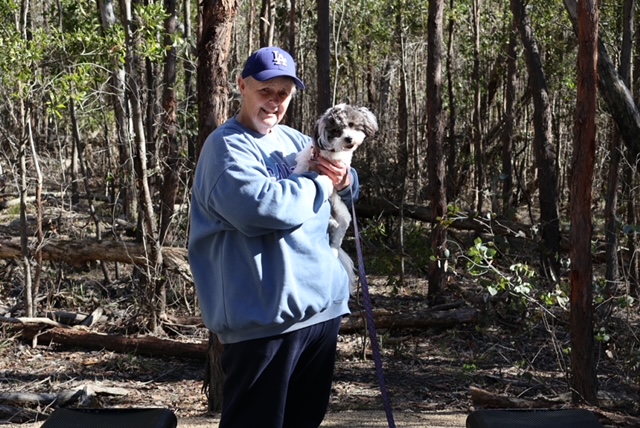
Lisa now walks to the beach every morning from her new place. It's less than five minutes away - the prettiest beach in town, she says. There's a nature reserve nearby. Her mum is there with her. Everything just... works.
"Everything I touch turns to gold," she told her nurse recently. She had to stop and think about that.
"At first I thought - I'm so lucky," Lisa says. "But I don't know if it's all luck. Now, when I look at the good things happening to me - it's normal. Good things can happen. It's just that because I was drinking, because my life was always chaotic or boring or blending into one... that was my normal."
Six months ago, Lisa's normal was very different.
When wine o'clock kept creeping earlier
By her mid-fifties, Lisa had what she now recognises as a high-functioning alcohol dependence - though she was in denial about it at the time.
She'd wake up in the morning saying, "This is it. This is the last day." She was still working full-time, still caring for her mum, still functioning. But life was becoming increasingly isolated and overwhelming.
"Now that I look back, it was probably the alcohol that was becoming overwhelming," Lisa says, "Or the alcohol consumption was making everything else overwhelming."
She was a home drinker and recalls having glasses of wine scattered around the house - in the bathroom, the bedroom, and anywhere else that had slipped her mind. If it was raining on the weekend, she'd look at the weather and think: That's the go-ahead for me to stay home and drink today.
"That justified my actions at that point in time", she explains.
In the meantime, wine o'clock was creeping earlier and earlier. Five o'clock became two o'clock, and then she'd be in bed by eight because she’d drunk too much. Then she’d wake up and do it all again.
"I was sick of waking up feeling sick," Lisa says. "I was sick of just trudging through days, waiting till five o'clock came so I could drink."
She also knew that her drinking was affecting her health, having received poor liver function results years ago. Lisa explains, "I was starting to get really lazy. My weight was fine, but I wasn't exercising. I was just... plodding through life."
The long shadow
Over a decade before, Lisa experienced a series of traumatic events. What followed were years of being in survival mode - hypervigilance, fear, and alcohol as the only thing that made her feel strong enough to keep going.
"At first I was using it to numb my emotions," Lisa says. "It felt good when I was drunk - like I could handle anything."
She was drinking till two in the morning, then getting up and going to work at four, running on adrenaline and alcohol.
She was jumping at everything, even running red lights out of fear.
"In the scheme of everything else going on, the drinking was under-appreciated," she explains. "Which I'm not blaming anyone for. And I don't blame myself either. But that was my turning point."
For many years, she carried that weight, and it would take time before she was ready to put it down.
Lisa had tried to quit drinking twice before in her thirties, doing seven-day inpatient detox programs.
"It felt like a bit of a holiday," she says. "Seven days with no alcohol, some exercise. I got a little bit out of it. But as soon as I got out, I went straight back to drinking." Lisa explains, "I was a home drinker, and my alcohol consumption had become so much of a habit, I needed to break that habit in the place where I was doing it."
The night everything changed
One night, after a few too many scotches, Lisa sat down at her computer. She'd been thinking a lot about what was going to happen to her, and she knew that she didn’t like the way her life was progressing.
"I just was sick of it," she says. "I was just ready."
She Googled something about alcohol support and Clean Slate Clinic came up. At-home detox. She read it and thought: That is me. That’s exactly what I need.
She completed the suitability test and booked a call for 8:45am the next day.
"I thought, 'Yeah, this call sounds good,'" Lisa remembers. "Then I woke up thinking, 'Crap, what have I done?’"
But that immediate follow-up call changed everything.
"It didn't give me that second chance to back out," she says. "And it certainly opened my eyes up when I was sober."
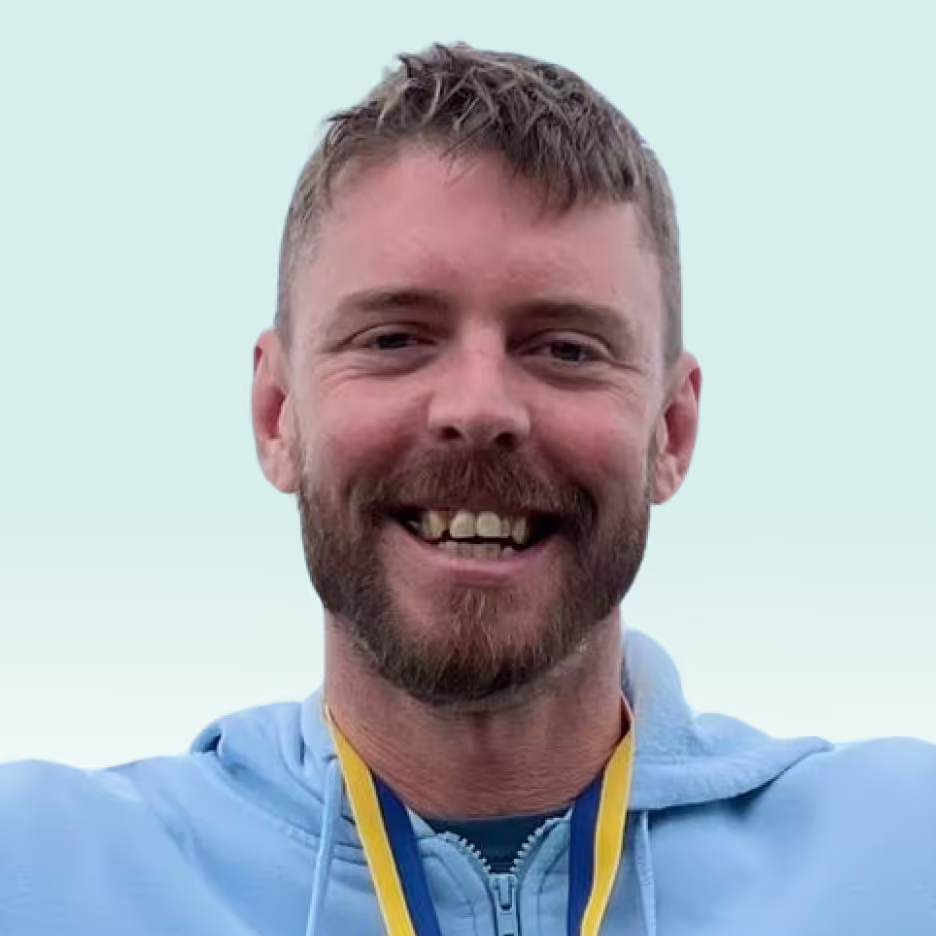
After speaking with Andrew, a lived experience member of the Clean Slate team, Lisa finally felt like someone understood what she was going through - and she realised that she was ready to make a change.
"I'm more scared about what life will be like without it"
Lisa told her family and friends about starting the program, feeling excited (and terrified).
"Everyone was overwhelmingly supportive," she says. "They kept asking, 'Are you scared?' And I said, 'Yeah, I am scared. I'm more scared about what life's gonna be like without it than actually doing the detox.'"
She visited her daughter before starting the detox, planning to go out with a bang. But something had already shifted.
"I hardly drank anything. But when I did, I was really quiet and I was present," Lisa says. "My daughter just said, 'Wow.' Even when she offered me wine at two o'clock on the weekend, I'd say, 'You know what? I don't even feel like one.' I was already working on it - it was just coming naturally for me."
When she got home, she started the preparation phase of the program. And within two weeks, she’d had an epiphany and decided to retire and move interstate.
"There were really, really good barriers," Lisa says. "But I looked at my life and thought: the ducks need help lining up. You have to pull them. You can't just wait."
Going from strength to strength
Lisa then went through her detox at home while packing up her entire life.
On day one, she put her Fitbit back on and started exercising again - something she hadn't done in years. She set goals every night for the next day. She dealt with the stress of relocating. And she just managed it.
"I just took control," Lisa says. "I just did it."
She now plays simple games with her mum every night, like Scrabble, and they laugh until they cry. "We haven't laughed so much in years," Lisa says.
Sometimes when they're doing something together, Lisa tells her mum: "You know what? I wouldn't have been able to do this if I was drinking."
.jpg)
Lisa takes a moment to reflect, sharing, "Life was just too hard before; it had one massive, day-in, day-out barrier. And now that barrier's gone."
Lisa's relationship with her children has also changed completely, with both having seen her through tough times.
"When my son used to call me - I look back now and I think he was only calling because he felt he had to," Lisa says. "There was no real conversation, probably because he thought I'd forget - which I would. My memory was terrible. I'd have serious conversations at nighttime and have no idea the next day. Now when he calls me, it's just... different. It’s real."
"I'm double as good at everything I was scared of"
Lisa's biggest fear before quitting drinking was losing herself.
"I thought I wouldn't be funny. I wouldn’t be confident," she says. "I'll be the third wheel. I'll be the stick in the mud. I'll be boring. I won't want to go anywhere."
She laughs now at how wrong she was.
"I cannot be any further from the opposite," Lisa says. "I'm funny, I'm confident, I'm fit, I'm strong. And I'm still the life of the party."
She’s now replaced the scattered glasses of wine with green juice, sharing, "It wasn't because I was craving wine. It's just that every time I went to pick something up, I would think of wine. So I put green juices around instead."
From the minute she wakes up
"When people ask about my favourite part of the day, I say: from the minute I wake up, everything is my favourite," Lisa says. "I look forward to my walk, to getting home and having coffee, to going out for lunch, to my nap. I look forward to everything."
Lisa’s now been alcohol-free for six months. She's retired. She's living near her daughter and her grandchildren. She's caring for her mum. And she's at the beach every morning.

"I used to think this was a holiday," she says. "Like, I'd be doing something and think, 'I'll have to go home soon' - because in my head I was on a holiday. Then I’d have to remind myself, 'This is real. I live here.'"
Everything she touches turns to gold. But it's not luck. It's what happens when the barrier that made life too hard - the day-in, day-out habit that blended everything into one - is finally gone.
"Good things can happen," Lisa says. "It's just normal now. And normal feels extraordinary."
If this story brings up difficult feelings for you, or if you or someone you know is struggling, support is available. Please contact Lifeline on 13 11 14 (24/7) or visit lifeline.org.au.
.svg)






Ready to get started?





Subscribe


.avif)