.png)


Greer's Story
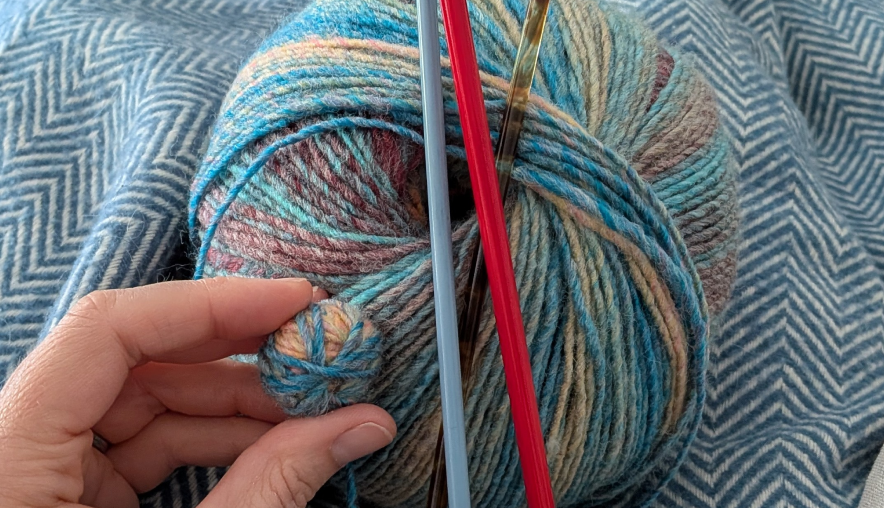
This client has chosen to share her story under the pseudonym, Greer, to protect her privacy. Her experience, her words and the photographs are all her own - only her name has been changed.

"She celebrated progress, not perfection"
If you ask Greer what made the biggest difference in her journey, she won't hesitate.
"Progress, not perfection. That was probably the biggest thing that helped me give up, I reckon."
In many traditional programs, one mistake means starting again from the beginning. It can feel like failure. This way of thinking often leads to shame and discouragement, which makes change harder instead of easier.
But her nurse offered a different lens: If you slip up twice in 100 days, you're 98% successful.
"It wasn't about perfection," Greer explains. "It meant that okay, I've messed up, but tomorrow's another day. Even though I drank part-way through my program, I'm still 98% succeeding. It didn't make me feel defeated and think, 'Oh, I may as well not bother. It's too hard because I have to keep going back to day zero.'"
This reframe changed everything. It meant Greer could be honest when she slipped - no lying, no hiding, no shame.
"I didn't feel like I would disappoint my nurse. I could tell her the truth about when and how and why."
Being able to be honest, feel safe, and have small successes recognised helped Greer make long-term change - and sixteen months into her journey, she's living proof that it works.
The gutless robber
Greer speaks honestly and clearly about how alcohol affected her life.
"It's a gutless robber," she says. "It steals from every aspect of your life - physical, mental, emotional, your energy, confidence, work, hobbies - all of it. And it does it in a sneaky way, without you realising the impact."
For many years, Greer believed she needed alcohol to cope. While working as a nurse and living with trauma, ongoing health problems, and severe sleep difficulties, it often felt like the only thing that helped.
It relaxed her muscles when the pain flared. It quieted the nightmares, at least temporarily. It gave her a brief escape from ongoing stress.
"I was using it to numb my feelings," Greer explains. "To help regulate my nervous system. But also, for my pain - alcohol relaxed my muscles. I found it was even more effective than prescription pain relief."
At the time, Greer did not realise she was also trying to manage undiagnosed neurodivergence. She was later assessed for ADHD and autism after joining the program, which helped her better understand her experiences.
"The whole neurodivergent role that my life has played, the part that addiction to alcohol played in trying to self-medicate, trying to regulate my nervous system, satisfy that dopamine-seeking behaviour - it all made sense," she reflects.
Looking back now, sixteen months into her journey, she sees it all differently.
"I thought I wouldn't have any joy without it. I thought I wouldn't be able to cope. But it's actually better without it. You get so much more back than alcohol ever gave you."
When coping became dependence
Greer’s relationship with alcohol was relatively healthy for most of her adult life. Social drinking, nothing excessive, nothing that raised red flags.
"I started drinking to cope," she says simply. "And it was gradual. It just got more and more."
She wasn't drinking in the mornings. She wasn't drinking every single day. She wasn't what most people picture when they think of addiction.
But the role alcohol was playing in her life was undeniable - and unsustainable.
“You’re not drinking enough”
When Greer decided to seek support, she hit an unexpected wall.
She reached out to a local health service for help with her drinking. But the service she contacted was a detox-only program - and because Greer wasn't experiencing significant withdrawal symptoms, they weren't able to support her.
"The local agency wasn't able to support my withdrawal because it was only a medically supported detox program, not detox and rehab," Greer explains. "Basically, I didn’t require the medication as I wasn't drinking enough to give me the withdrawal symptoms, and there was nothing else they could offer me, as that was the basis of their service."
This highlights an important reality: alcohol dependence can look very different for different people and take many forms. The main issue isn't necessarily the quantity you drink - it's whether you have a healthy relationship with it.
Because Greer's drinking didn't align with the clinical markers that made her "severe enough" to qualify for that particular service, it became harder to find the right support.
She knew alcohol was becoming a problem. Why did she have to wait until it got worse?
Then there was the other issue: privacy.
As a nurse in a small community, Greer knew she would be easily recognised in in-person support groups.
"I wanted to protect my privacy," she explains. "Having this lived experience definitely helps me understand and have empathy for my patients - but they don't need to know."
Through a different local health service, she heard about Clean Slate. The telehealth model meant confidentiality. The program was evidence-based and structured. And when her health insurer didn't initially cover it, the Clean Slate team worked with her to make it happen.
"I'm really grateful they came on board," she says.
"We've got you"
From her very first appointment, Greer felt something she hadn't felt in a long time.
Safety.
"There was this sense of 'we've got you, we believe in you, you can make it,'" she recalls. "Even though I didn't believe in myself, having people I respected hold that space for me was crucial."
She'd lost her ability to have faith in herself. The trauma, the pain, the exhaustion - it had all worn her down to the point where she couldn't see a way forward.
"I really needed someone to have that faith for me and hold that space."
Her nurse made all the difference. Empathetic but professional. Knowledgeable but not clinical. And most importantly - authentic.
"It wasn't textbook," Greer explains. "It didn't feel like she was just applying some protocol. I felt matched with someone I really connected with, someone so easy to talk to."
Her nurse spoke to her on equal footing. Never made her feel inferior or ashamed. Instead, she empowered her.
"She enabled me to feel like it was possible to still respect myself. That I didn't have anything to be ashamed of."
And the support was holistic. Their conversations weren't limited to alcohol. If Greer was struggling with her mental health, her chronic pain, a difficult situation at work - her nurse was willing to discuss it all.
"She helped me break things down, did cost-benefit analyses on different issues," Greer says. "She could see holistically that addressing whatever was concerning me was smart and wise, even if it wasn't directly about drinking."
The SMART meetings also became very important to her. At first, they gave her structure and support, helping her stay on track. Over time, they also helped her see her situation more clearly.
"There were several healthcare workers in my group," she remembers. "Lots of people from different contexts. It gave me an understanding of how many different people are affected by this. The problem's greater than just my own."
Seeing that she wasn't alone, that addiction didn't discriminate, made her less hard on herself.
What's different now
Greer is now sixteen months into her journey, and when she talks about what's changed, the list is long.
Her relationships are stronger now. When she was drinking, people close to her noticed changes in her behaviour, such as becoming more irritable or the occasional comment she wouldn't even remember saying. It created distance between her and the people she was closest to.
"I was normally a very gentle person, but when I drank too much, it would make me kind of irritable and a bit negative. People honestly didn't think I would even notice I was being like that."
Now? The people in her life tell her how proud they are and feel closer to her than ever.
The mental fog has lifted. "I felt like a brain fog had lifted," Greer says. "I could retain things in my mind better. My working memory before was really rusty and fuzzy. I couldn't hold things in my brain."
She now has more energy. When she was drinking, it left her feeling tired and worn out. Without alcohol, she feels stronger, more focused, and more present in daily life.
Without alcohol, she's had to find new ways to manage her chronic pain - something she's still working through. But that work, she says, feels more honest than numbing it. The nightmares she had for years are now much less severe.
Greer was deliberate about filling the space alcohol had left. She sought out psychological support, leant into exercise and breathwork, and explored alternative approaches to managing her chronic pain. Replacing the coping mechanism, she found, was just as important as removing it.
And perhaps most important: she found joy again.
"I had lost the ability to find joy and the ability to think I would ever feel it again," she reflects. "Now there's hope, excitement, prospects. I've got new hobbies, I started knitting!"
Near the end of the program, Greer tried a glass of red wine, the flavour profile she'd once loved most. The one she'd spent years developing an appreciation for.
It tasted like poison.
"Why did I ever think this was nice?" she wondered, genuinely baffled. "Why did I spend so much time acquiring a taste for poison? There's no logic in that. It sounds insane to me now."
Her view of alcohol has completely changed. She now notices how common it is in everyday life, in media and social settings. She also sees how much mental effort it once took to think about drinking, including when, what, and how much to drink.
"It removes all that," she says. "I have decision fatigue as it is. I'm so much better off without it. I almost feel lucky. I don't have to stress about it anymore."
You have to do it, to feel it
When asked what she'd tell someone who's scared of what life might look like without alcohol, Greer’s answer is characteristically direct.
"You don't realise the impact until you stop. You have to do it to feel it."
Before she quit, she thought she needed alcohol. Believed it was helping her cope with trauma, with pain, with stress, with everything. Those were the stories she told herself.
"But I can tell you: you get your life back in every aspect. You just get so much more back than alcohol ever gave you."
For Greer, accepting that she had a problem with alcohol was the hardest step - admitting it to herself, not just to others.
"Denial can be so strong," she reflects. "I felt like I was clinging so tightly to the denial like it was life and death. For me it was because of the judgements I unconsciously placed on myself - the shame of being weak, of being controlled by a substance."
But once she took a leap of courage - not wanting things to get worse, recognising the progression of dependency and tolerance, noticing how she was starting to think about drinking all the time - and acknowledged she had a drinking problem, the hardest part was over.
"Then I could start challenging my shame," she says. "And with my nurse's help and that of the group, I realised there are many factors in our biochemistry, neurotype, trauma, mental health, upbringing - so many things that can predispose us to falling into this unhealthy coping mechanism trap. And then there is the fact that drinking is so highly ingrained in our culture."
She wants people to know, especially healthcare workers who might be reading this, wondering if it's okay to seek help - that alcohol dependence doesn't look the same for everyone. You don't have to be drinking specific quantities or experiencing severe withdrawal to have a problem worthy of support.
You don't have to wait until you're "bad enough." If alcohol is playing a role in your life that concerns you, that's enough.
"Trust the process," she advises. "Surround yourself with positive people. Remember: progress, not perfection."
If you're worried about how you will fill your time or keep your mind busy without alcohol?
"Ask yourself: if you could do anything, what would you want to do? For me, it was learning to knit. Find something that gives you satisfaction, keeps your hands busy, replaces that habit with something meaningful."
She pauses, then adds something that surprises even her:
"And know that it won't feel like a sacrifice. It'll feel like freedom."
Today, Greer is thriving. More present in her relationships. More capable at work. More hopeful about the future. The gutless robber no longer has a hold on her.
"I thought I needed alcohol to cope," she reflects. "But what I've learned is that I cope so much better without it. Life is genuinely better on this side."

.svg)







Ready to get started?





Subscribe


.avif)