.png)




Blog Posts
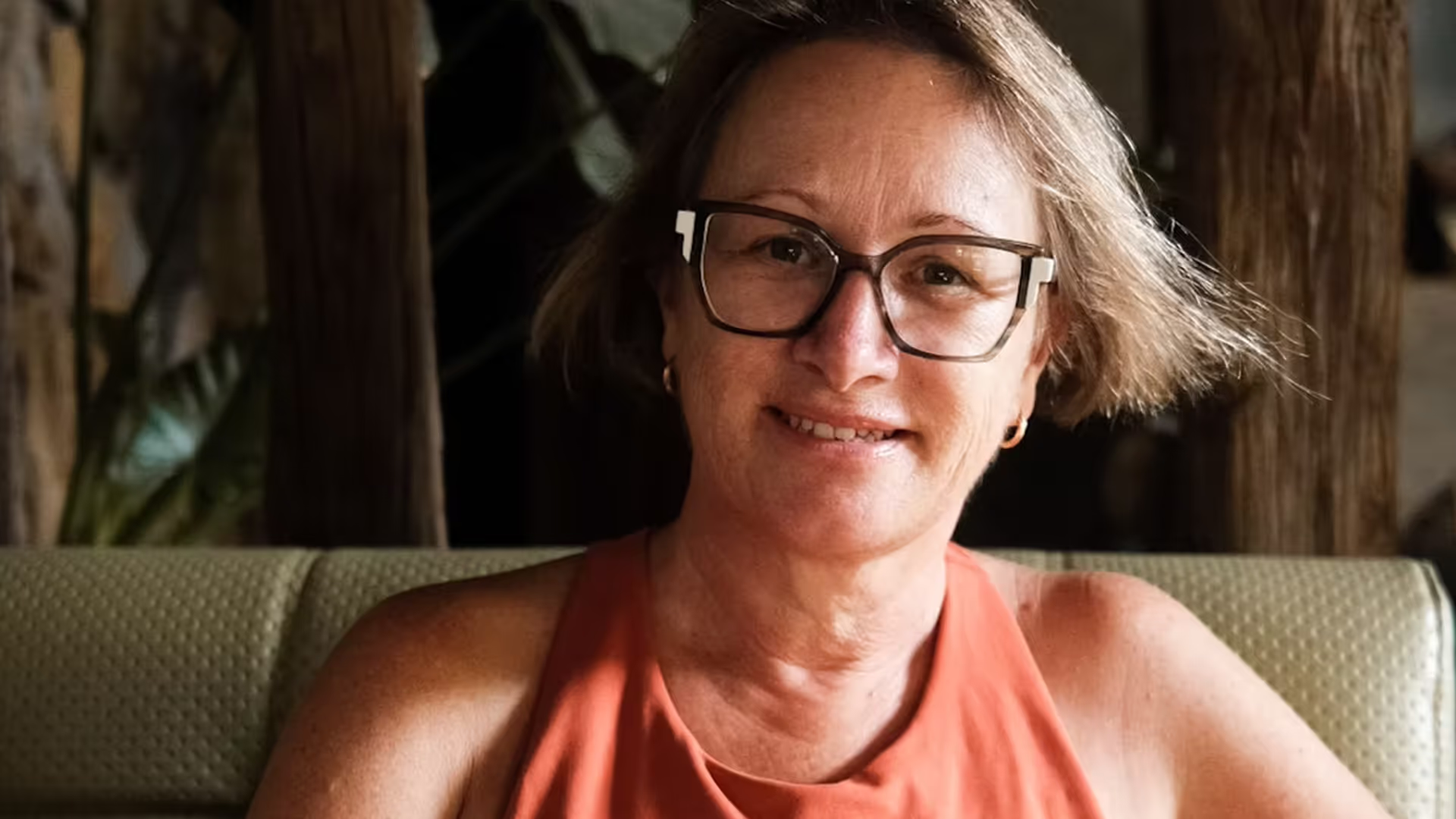
A Chapter of a Journey.
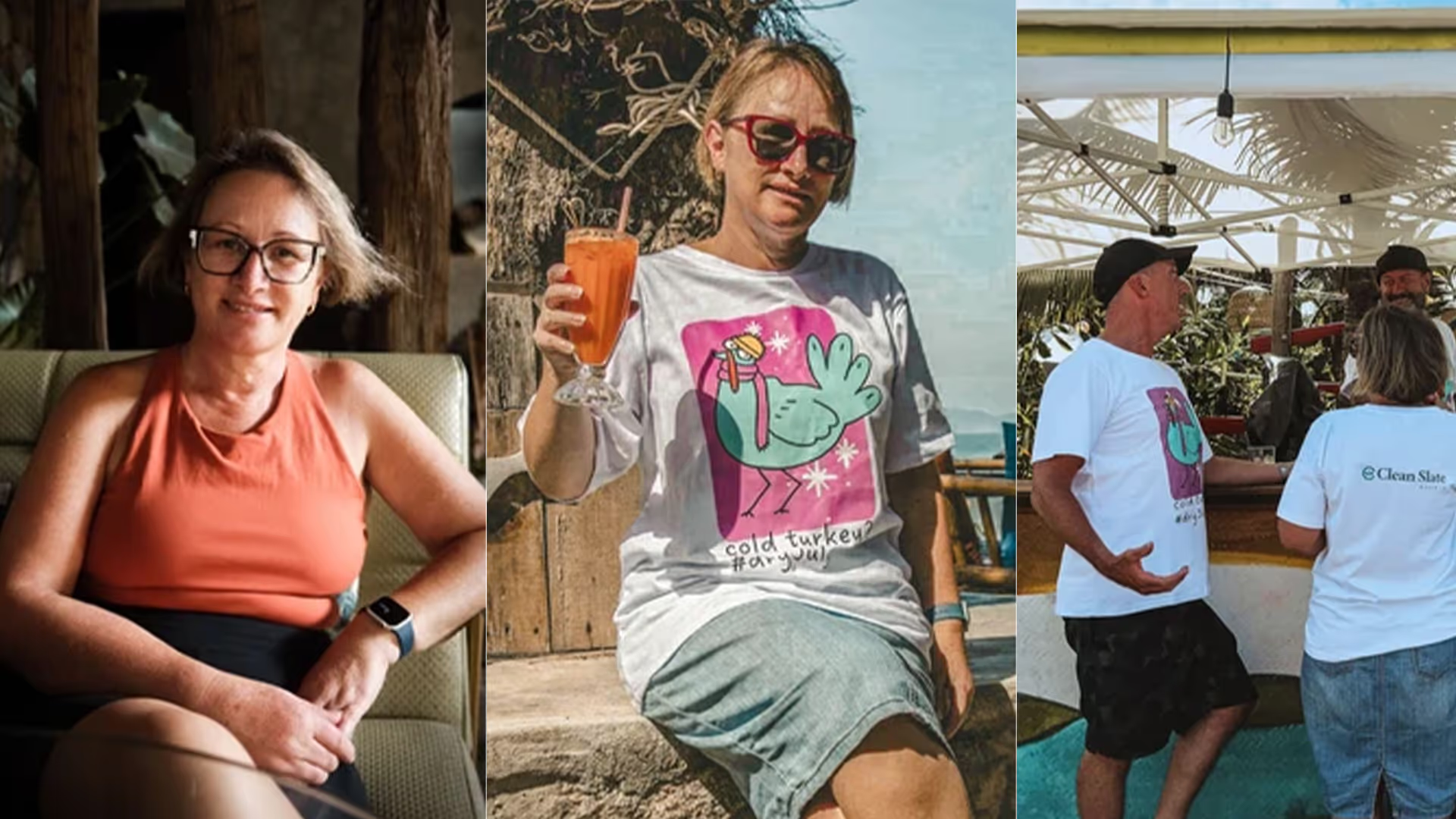
I recorded Louise’s story in a bar. The icebreaker into the conversation started when Louise ordered her mocktail. She couldn’t recall if it was called ‘no sex on the beach’ or just ‘safe on the beach’ (it was the latter).
Louise is a mum first. With two adult children, aged 25 and 20, she is openly proud of their maturity and achievements. Professionally, she has functioned well as a successful accountant and business advisor, a role that requires significant mental acuity. But alongside her indelible nature, love for people and strength in her business, Louise admits to having consumed alcohol in excess.
She’s unfiltered, and didn’t hesitate to admit that she had been addicted to alcohol and that she’d weighed up to 90kg not so long ago. Photos of her former self look like a relative - not the wispy fair-haired, petite-faced woman in active wear sitting before me.
Louise had a couple of rough years where her mother and stepmother passed away in close succession and for a long time, used alcohol as a crutch, justifying the habit by telling herself that she worked hard and deserved it, as she didn’t engage in other vices - had no other substance abuse issues, and was a working professional.
“I would sit in front of the television every night basically and just drink a bottle or a bottle and a half of wine just because I could, and I would justify that to myself by telling myself that I worked hard and I was a good person and I didn't do drugs or any other things so this was my thing that I did and that it was okay.”
Louise took a short trip to Vietnam - mostly with the intention to lose weight and live more healthily. She said if she had to get food or alcohol, she’d have to ride or walk. Her decision to travel was a simple intuition swept along by dogged determination to make change. And around the somewhat impulsive call for action, came corrective serendipities that nudged her, this way and that, along a healthier course of life.
In May, Louise turned 50 and celebrated with a milestone birthday party - which was accompanied by the usual collection of beers, wines and spirits. The celebration inevitably led to further weeks of overindulging in alcohol, and by June - she called a 28-day ‘cold turkey’ challenge, and up until now, she’s gone on to remain booze-free.
“I did it with someone else. We said that we'd do a four-week detox. They didn't, they sort of took a little bit of a different turn partway through, which is where they're at. That's fine. But I realised after about a week and a half in what it was about. It wasn't just about the health benefits. It was more the long term and just taking back control and that I was in control of what I was doing.”
This ‘taking back control’ is something that is so liberating about sobriety. You are forced to live life on life’s terms, without the insulating effects of alcohol or drugs. By being sober, Louise learned her true and complex relationship to the world. She also found, to her surprise, that happiness is possible as life broadens into something intricate and deeply fulfilling.
Louise acknowledges the cultural challenges of sobriety in Australia, where alcohol is well and truly embedded in social activities.
“It's hard in Australia because it doesn't matter what we do, whether we win the game, lose the game, you know, babies, weddings, funerals, everything, we celebrate and mourn with alcohol.”
“It's absolutely everywhere. We go camping with alcohol, we go fishing with alcohol, we go have a dinner. It’s just such a huge part of our culture.”
Despite this, she found that people were supportive and genuinely curious about her journey. Their encouragement, rather than judgment, provided additional motivation.
“Everyone was really good. They were like, ‘Oh, I wish I could do that’. People did ask me (about not drinking). But they genuinely wanted to know why.” ‘Was it for a health thing? Was it for a bet?’ They're just curious. And I think it's genuine curiosity. I don't think it's judgement or calling you out. I think it's like, ‘Oh, I wonder if she might say something that might, inspire me.’ which is important, especially when you're in a community where people do have that, that dependence and that habit of alcohol.”
We all have a story. We all have chapters. They make up our lives and our big biography. What matters is that if some chapters aren’t so great, then we learn from those and make improvements for the next ones. We become wiser - and maybe no-one will notice - but importantly, when you are sober, you will notice.
The chapter that Louise shared evokes a little grief of loss and trauma, but mostly, offers hope. And for those who feel they might have the capacity to change, her words inspire actionable encouragement towards re-evaluation and growth.
Louise is still in recovery. These are early stages. But it’s a really important junction point for many people to be inspired by. Too far along - sometimes it can feel preachy or too far from achievement. Louise is happy with her day-to-day achievements. Sometimes it’s easier to hear from people in recovery not out of it - to motivate you.
She’s been doing art classes, taken singing lessons (but with a laugh admits that was not a strength of hers), and just completed her diving certificate. She advocates for doing what we love with our time and rewarding ourselves with healthy activities rather than harmful ones.
We are all full of worry until we begin the task, but Louise shows that in the end, things tend to find their way if you trust your intuition.
After our chat, Louise is off to deliver flyers for her gym’s circuit instructor - putting them in cafes and hair salons. Places where people might be encouraged to join.
I passed Louise later that evening while walking past the local pub. There she was with her mineral water, sitting with the raucous group of regulars - and to my surprise, another bloke had joined her - also with a mineral water in hand. Unintentionally, it was catching on.
Listen to Louise and her story.


Breaking it Down: Alcohol & the Brain
Ever wondered why a glass of wine might help some to unwind, or why it can be hard for others to stop at just one drink?
Understanding alcohol’s impact on mind and body could help you to assess and, if necessary, modify your drinking habits.
Why does it feel that way?
The short answer is that alcohol triggers the brain’s reward system, which can help people feel more relaxed or sociable. That’s why it can be such an effective quick fix for those struggling to achieve either (or both) states.
Unfortunately, alcohol also changes how the brain handles stress and anxiety. Which is why some of us experience that dreaded morning-after nervousness (you might know it as 'hangxiety') - and over time, alcohol actually makes our stress worse.
The more you drink to relax, the more your brain struggles to regulate stress on its own, leading to more serious changes in the brain over time - including reduced sensitivity to GABA (a calming neurotransmitter) and increased cortisol production. This means that when you're not drinking, you’re more likely to feel anxious, overwhelmed, or even low on energy.
The science bit
When alcohol enters the system, it affects four key brain chemicals (known as DOSE) – dopamine, oxytocin, serotonin and endorphins.
Here’s how they can change the way you feel, and behave:
Dopamine
Dopamine acts like your brain’s cheerleader. Commonly known as the 'reward' neurotransmitter, it appears naturally when we accomplish something meaningful – like winning a race or reaching a goal. It signals pleasure, energy and confidence.
Alcohol hijacks this reward system, delivering those feel-good sensations without any actual achievement. Unsurprisingly, this can leave you wanting more and more alcohol to keep your dopamine levels up.
Oxytocin
Oxytocin is like your inner social butterfly – it makes you feel warm and fuzzy around others. When it’s boosted by alcohol, everyone at the party may feel like your best friend. That’s why someone might find themselves sharing their life story with strangers or sending an ill-advised "I love you" text to an ex – shudder.
Serotonin
Serotonin is the brain’s mood regulator, influencing happiness, appetite, and sleep patterns. While alcohol can temporarily boost serotonin levels, the rebound effects may include low mood and sleep disruption.
Natural ways to boost serotonin (that don’t lead to ‘hangxiety’) include physical movement, spending time in sunlight, a balanced diet and engaging in activities you enjoy.
Endorphins
Endorphins are the natural painkillers and mood elevators produced by the body. The artificial stimulation of endorphins from alcohol can lead some people to develop dependence, as the brain begins to rely on drinking rather than natural sources of endorphins.
Pausing for thought
Anyone reconsidering their drinking habits should take time to consider why they drink, says Dr Chris Davis - addiction specialist, GP and co-founder of Clean Slate Clinic.
Is it to self-medicate? To relieve stress? To conform to social norms? Or to enhance the experience at events like parties? Whatever it is, this knowledge is the key to identifying and managing triggering situations.
Keen to cut down, or stop entirely?
Rather than just removing alcohol, Dr Chris recommends leaning into existing strengths, such as family support, physical activity or creative hobbies. Something familiar and accessible may be an ideal starting point for positive change.
Next, start exploring new activities – things you genuinely enjoy without drinking. You’re looking for natural sources of those DOSE chemicals! Here’s some more helpful tips:
Build a support network
Surround yourself with people who champion your healthy choices. This may involve gradually distancing yourself from those who promote drinking, while cultivating friendships with non-drinkers in your social circle.
Share your goals
Being open about your intention to cut back or stop drinking alcohol may help you be more accountable, which can provide the motivation needed to stay on track. Consider sharing your goals with trusted friends or family members who can offer encouragement and support. Online communities of people on similar journeys can help with this too.
Set clear limits
Go into social drinking situations with a plan. This may involve counting your drinks carefully, alternating between alcoholic and non-alcoholic drinks and/or choosing low-alcohol options or mocktails.
Volunteer your services
Put your hand up to be the designated driver. It’s a practical way to limit drinking and it saves you money (on drinks and taxis). You’ll also help keep everyone else safe.
Be kind to yourself
Understand that it can take 6-12 months to rewire ingrained drinking habits in the brain. During the inevitable highs and lows, try to treat yourself with the same empathy you’d have for a loved one.

Reach out (if you could use some help)
Please know you don’t have to do it alone. If professional help is the way to go, you could check in with your GP, or complete our suitability test in the privacy of your own home.
Whatever you decide, being honest about your struggles and taking actions to address them are crucial, courageous first steps. That alone is something to be proud of.

The Pursuit of Progress Over Perfection
In moments of self-reflection during recovery, we can confront an uncomfortable truth - that the journey is rarely linear.
The path towards change — whether breaking free from alcohol or overcoming other substance dependence - demands we embrace an essential paradox; that true healing often emerges from our perceived setbacks.

As Dr. Chris Davis (Clean Slate co-founder, GP and AOD specialist) will tell you, "Recovery isn't about never falling; it's about learning to get up each time with an improved understanding of ‘why’ we fell in the first place."
Consider a marathon runner. They don't sprint from start to finish but rather find their rhythm, adjust their pace, and sometimes, slow down to ensure they complete the distance. Similarly, meaningful personal change is not about racing to perfection but about sustainable progress.
"Sustainable growth towards change comes from building consistent, manageable habits rather than attempting dramatic overnight changes." Dr Chris says.
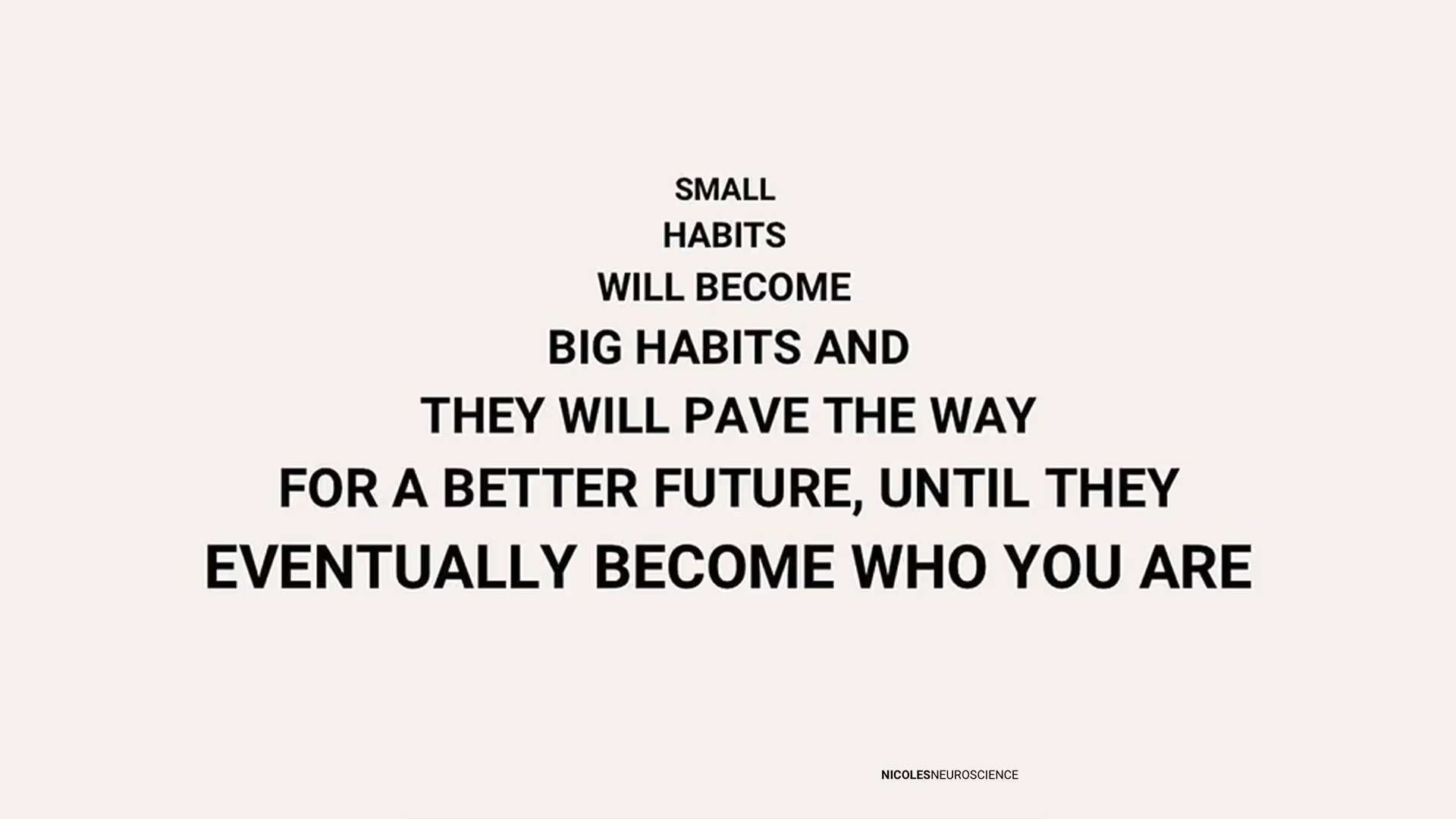
So how should we respond if we relapse? Rather than surrendering to self-judgment, we can choose to approach these moments with curiosity.
Ask what circumstances surrounded the slip up? What internal narrative were we telling ourselves? Was it confidence we craved? A temporary escape from anxiety? Often, stress emerges as a primary trigger for substance use, pushing us toward familiar but harmful coping mechanisms.
By identifying these underlying triggers, we can begin to map the whole landscape of our dependence and work out the best path to recovery.
Instead of ruminating in regret, we can use these junction points to create practical strategies for maintaining a healthy relationship with alcohol. This might mean identifying when to reach out to your support network, attending additional SMART recovery meetings, or ensuring you have healthy coping tools readily available.
Chris Gimpel, who leads our SMART recovery groups as Head of Client Engagement at Clean Slate, sees these concerns come up regularly in group discussions. Having navigated his own journey with alcohol dependence, Chris understands deeply how setbacks can impact someone's confidence and mental wellbeing.
He shares, "You know what? These questions come up in almost every session - you're definitely not alone in this. What I've learned, both personally and from our group members, is that reaching out after a lapse is one of the bravest things you can do. Just having that conversation, whether it's with a support person or even in the SMART Recovery group, can give you that spark to keep going. That's where the real strength is - in being open about it and letting others support you. After any slip up - you actually have completed an experiment and now have all the data you need to choose the next steps"
Ultimately, progress isn't about achieving perfection - it's about developing a deeper understanding of ourselves and building a toolkit that works for our own individual circumstances.
Each step forward—and yes, even each step back—contributes to this growth mindset. Seen through this perspective, these moments don’t become a point of failure, but opportunities for deeper learning and stronger resolve.
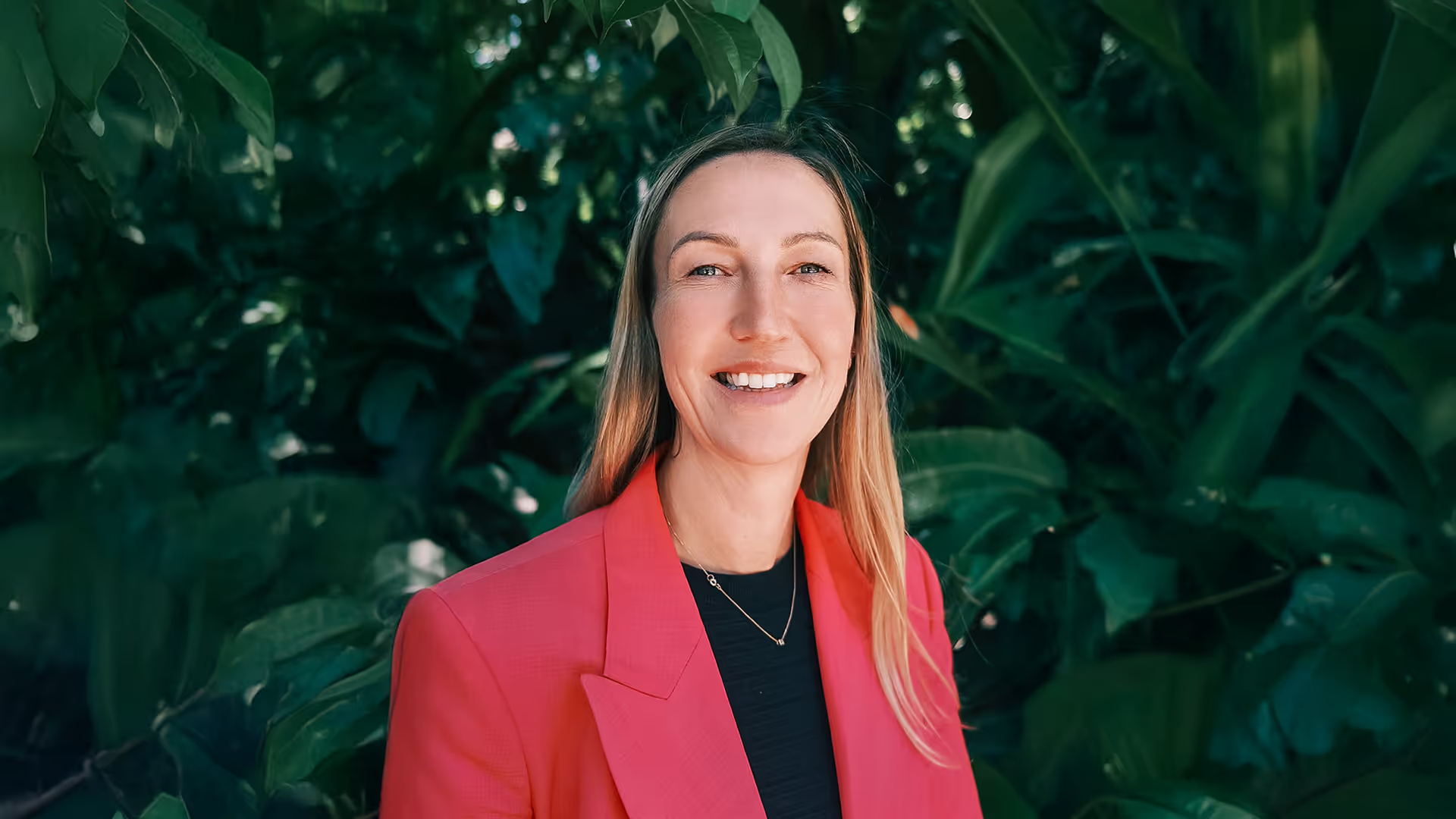
Spotlight On - Pia Clinton Tarestad
Like many of our clients, CEO of Clean Slate Clinic, Pia Clinton Tarestad's journey to recovery began with an uncertain Google search.
"I remember sitting there, typing 'Am I an alcoholic?' into the search bar. It was the only term I knew, the only language I had to describe what I was experiencing."*
Pia’s personal story is imbued with inspiration, and when it comes to this truth-telling, Pia herself is uninhibited. But although the barriers are down when speaking of her journey, she’s also the first to point out her privilege in the circumstance.
“When I recognised that I had a problem with alcohol, I was probably sitting in the most privileged position that you can be. Very good job, very high health literacy - I had been working in healthcare for 20 years plus. Even still, I didn't know where to turn for help.
“I was incredibly ashamed. I had an image in my own mind of what an ‘alcoholic’ was, and that's a term, that's the only term that I knew.
“There is a shame, a fear of being labelled. And it stops people from reaching out.”
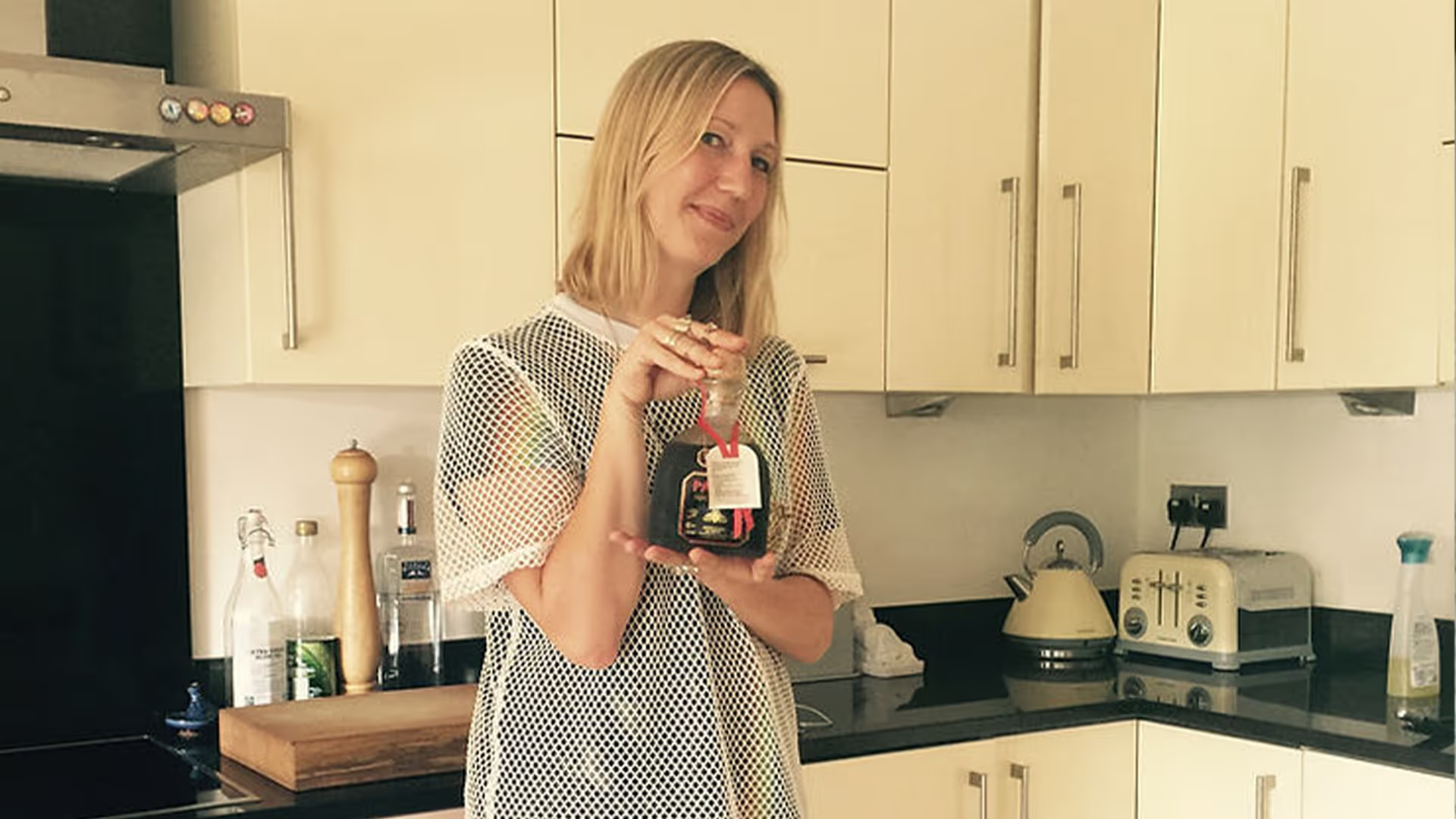
Today, having worked through this part of her life journey, Pia is now a titan of activism and advocacy for people with substance dependence.
Speaking to her, you get a sense of this determined and driven self. The one with the Masters in Healthcare and with an impressive professional profile working in the public and private sectors as the Head of Specialised Commissioning in the NHS, and as a Partner in healthcare strategy at Deloitte. You sense that she is a woman with a strong work ethic who genuinely wants to get the job done well.
Of course there is also the Pia who recalls having her first sip of alcohol and a cigarette at maybe 11 or 12 in her hometown in Guernsey - an isolated but beautiful island in the British Isles that few people have heard of. The Pia who, in order to get ‘beer money,’ went out and got her first job as a secretary on a vascular ward in London. And the Pia who found alcohol became an entitled perk in the corporate world, where a ‘networking’ culture would serve as a euphemism for drinking.
These different sides of Pia are not at odds though - they are simply facets of being a human. Like all of us, she contains multitudes: determined yet vulnerable, driven yet honest. She has been through the paces of life experience and has had her world shaken up like a snow globe, but ultimately - has set her compass back on course and found a true path without dependence on alcohol.
When Pia started Clean Slate (or as she labels her role - an ‘accidental’ founder and ‘reluctant’ CEO), it was driven by both her personal interest, with her unresolved issues with alcohol and her professional passion for healthcare equity. As it turned out, Pia was patient zero when testing the program, and successfully completed the 12 month trial including the medicated detox and aftercare - which gave her the confidence to really want to push the service.
“We did friends and family testing where the idea was we were going to take 10 friends and family through the process just so they could experience the telehealth consultation with the nurse.
“And I was the one of those that actually met the criteria to go through the service, which wasn't a huge surprise to me, but it was a bit of a shock to Chris, I would say.
“I did my detox, went through the aftercare part of the program, and came out the other side. So I knew what we had was something kind of special.”
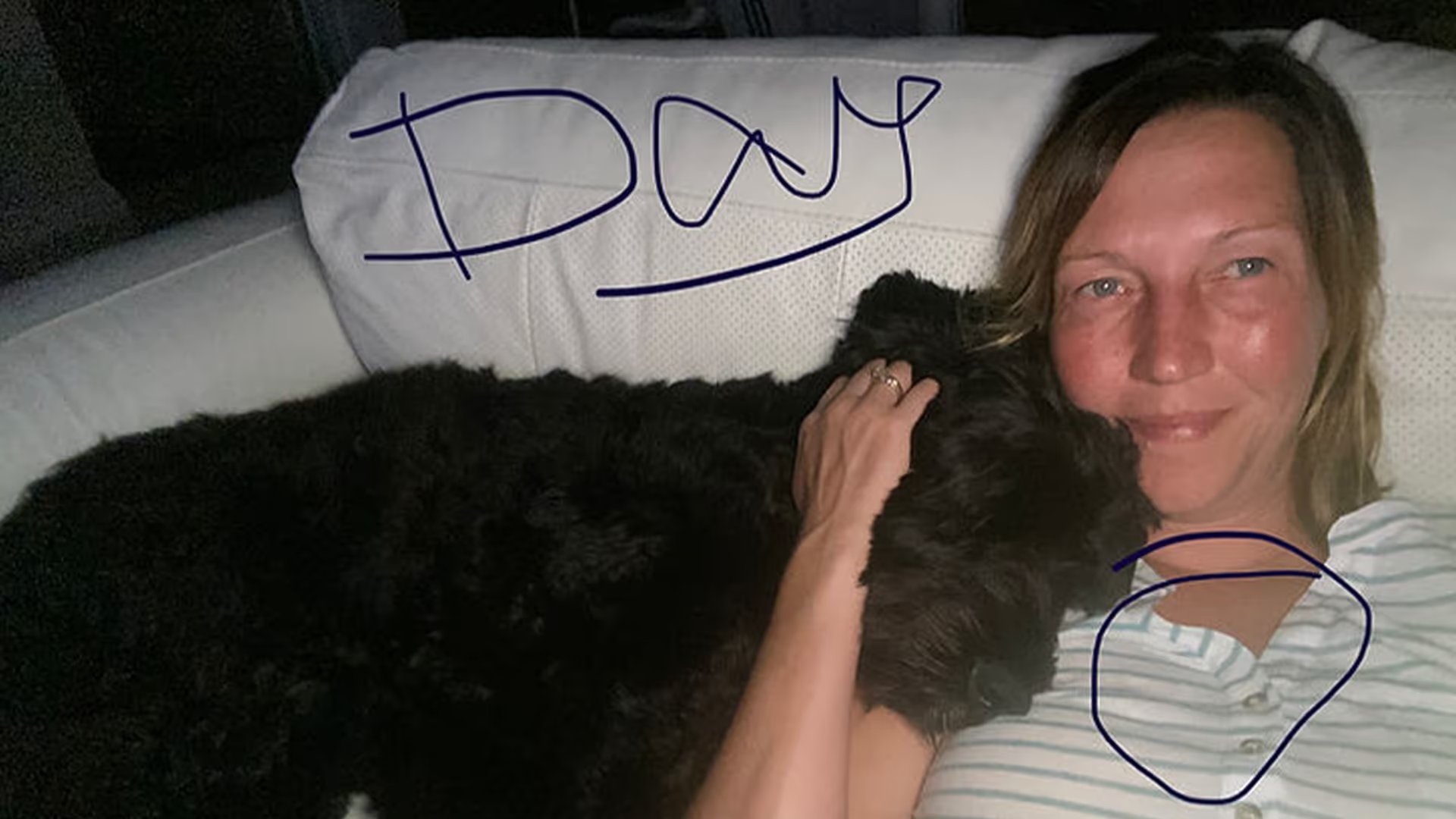
Today, Pia is viscerally determined to make a difference to the lives of others. There is a genuine desire to leave the world better than she found it. She’s now one of over 1000 clients who have gone through the Clean Slate service which is a testament to the sustained growth of the organisation. This year, Clean Slate was one of 18 mission-driven ventures to receive funding from the Harvard Innovation Labs Social Impact Fellowship Fund. On top of this, several insurance partners now offer the service free to their members, and plans are in place to scale to the UK this year.
But what drives Pia isn't the numbers or accolades - it's the understanding that everyone deserves access to compassionate, effective care.
“We set up as a social enterprise which has a social justice heart and that’s really important to me.
“We’ve done an amazing job in reducing stigma. We’ve done an amazing job at reducing geographical barriers to access, and financial barriers to access. And we are supporting some women’s shelters to support women fleeing domestic violence
“We’ve also done incredible work with Aboriginal and Torres Strait Islander community partners to make our service more accessible in terms of making it culturally safe. But actually to have the funding to provide the service for free to those communities - we’re not there yet.
“We have small pockets across the country, but I have a burning ambition and fire in my belly to get more funding.”
This fire in her belly is certainly evident, and it radiates through the Clean Slate internal operations team of doctors and nurses, where all staff members share not only a deep sense of purpose in helping others, but also nurture a strong workplace culture and sense of community.
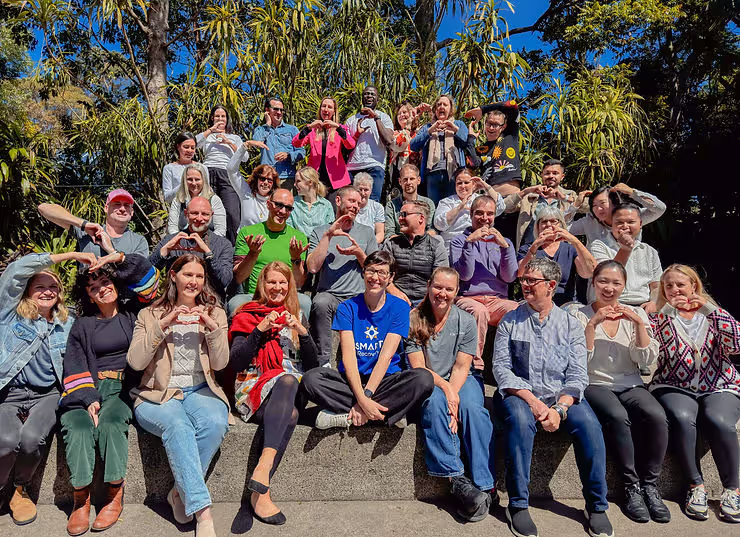
After a recent team professional development weekend in Melbourne, Pia teared up and said; “To see 40 people in the room who only had great things to say about the organisation was a really humbling and really proud moment.
“We’ve been really focussed on the impact on communities, but to see the impact on the team - and that everybody feels motivated and connected to the purpose - I’m just so proud that we’ve managed to create that.”
From Pia’s first tentative Google search seeking to understand her own alcohol dependence, to becoming CEO of Clean Slate Clinic, her journey demonstrates the power of change. Not only has she rewritten her own story, but she's built a platform that empowers others to reclaim their lives through accessible, dignified recovery care. And as Pia says; “I’m committed to both equity and quality. And am determined to make underserved communities receive access to our service. We can do more and we will”.
*For the record, a better Google search might be ‘Do I have alcohol dependence?’ or ‘Do I have alcohol use disorder?’ - And yes, ‘alcohol use disorder’ is recognised as a chronic disease in global diagnostic manuals that is treatable and should not come with an ounce of shame. For judgement-free support - maybe just google Clean Slate Clinic!

The Psychology of Shame - Drinking & Sobriety
This Clean Slate Clinic webinar explores the role of shame in alcohol and other dependence, and the practical strategies that can be deployed to tackle shame, including:
- Understanding Shame: We delve into the psychological underpinnings of shame and its pervasive impact on behavior and self-perception.
- Shame and Drinking: We explore how shame can both trigger and be exacerbated by alcohol consumption.
- Sobriety and Self-Compassion: We discuss strategies to overcome shame in the pursuit of sobriety and a healthier, more fulfilling life.
- Real Stories, Real Change: We share firsthand experiences from those who have navigated these challenges.

The 3Ds Approach to Kicking Cravings
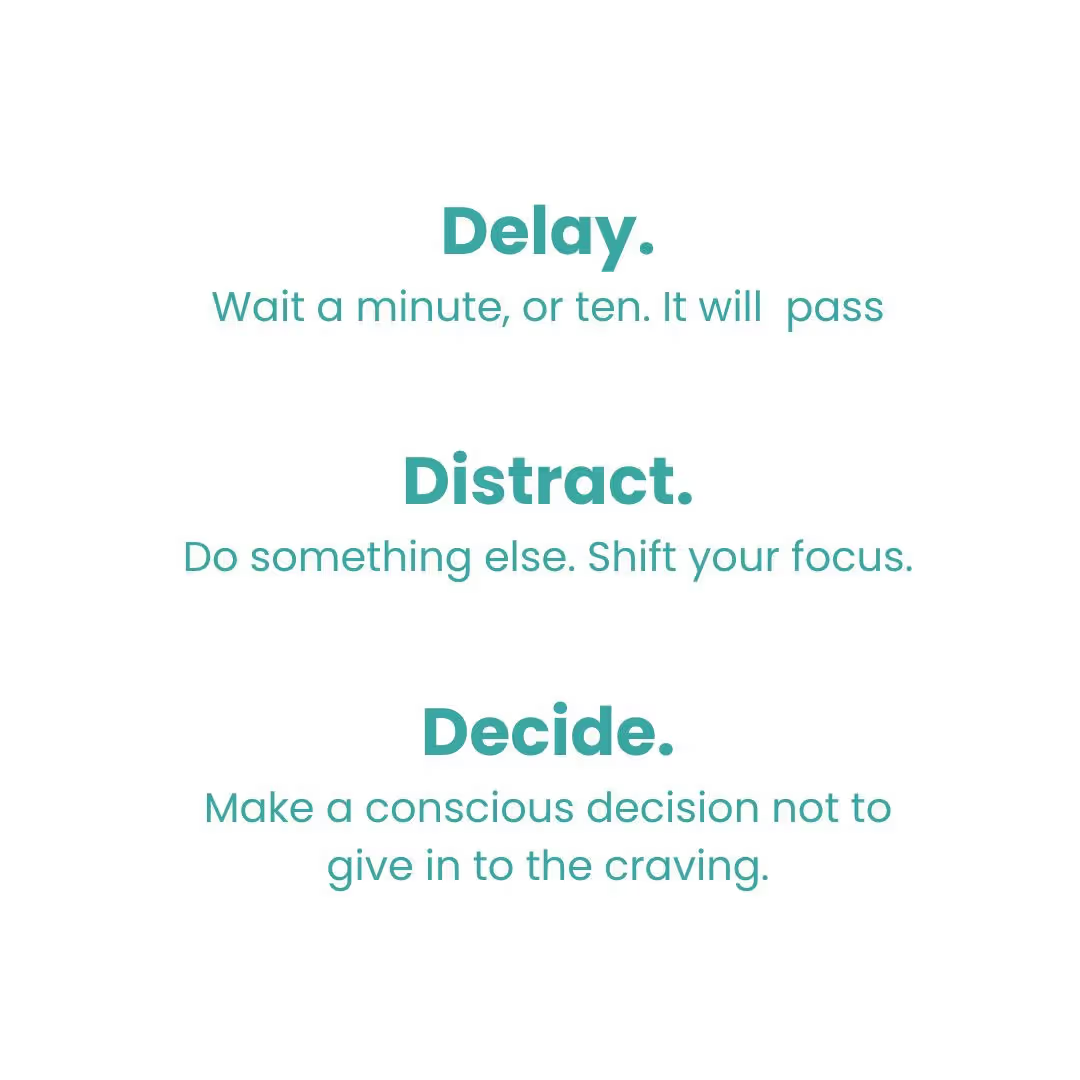
Delay. Distract. Decide. If you're struggling with cravings, try this approach to remove their power, allow them to pass, and stay focussed on the goals that matter to you.
The 3Ds.pdf

Coping with Cravings
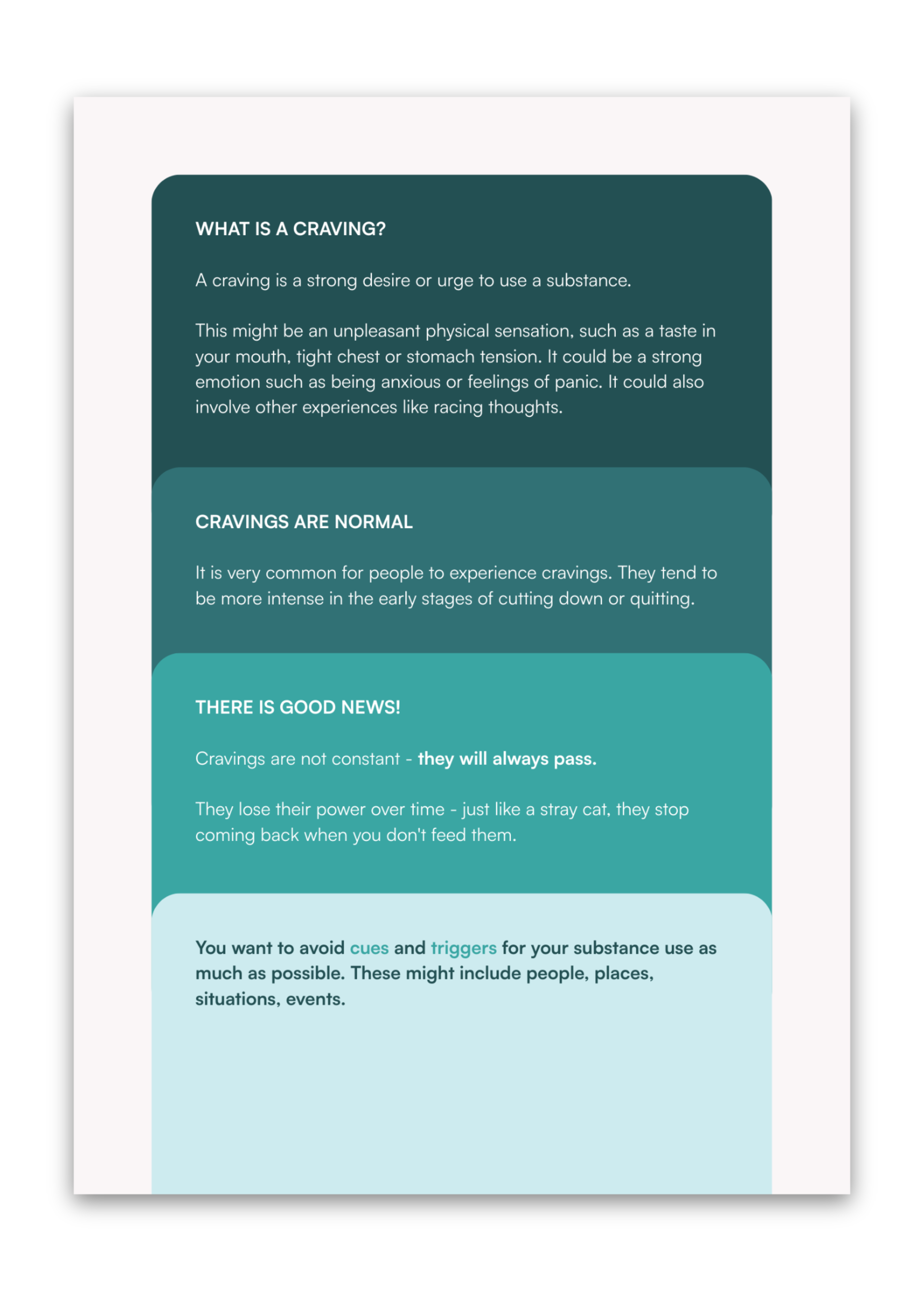
Cravings can be really challenging when you're trying to reset your relationship with alcohol, or any other substance, and can come out of nowhere when you least expect them, or appear at the familiar time when you were used to picking up a drink or other substance. They can feel intense too. The good news is that they do lessen over the time, and in the meantime there are lots of strategies you can deploy to manage and get through them.
Read our factsheet for quick tips and tricks to help you stay on course.
Download the factsheet:
Coping with cravings - fact sheet.pdf
Preview:
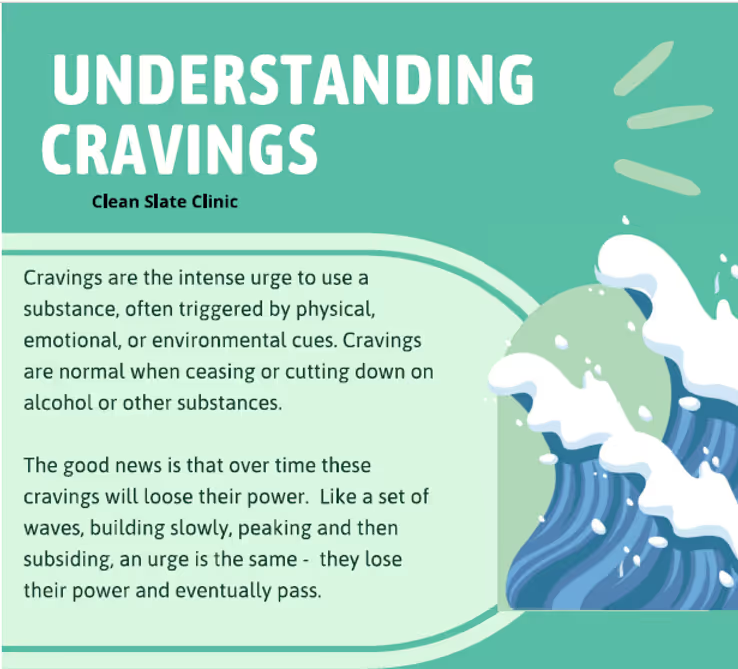
We also have a comprehensive guide below with everything you need to know about managing triggers and riding out the urge.
Download the guide:
Coping with cravings - guide.pdf
Preview:
Plan Ahead for a Clean Slate in 2024
Are you considering a change to your relationship with alcohol in the lead up to Christmas?
Making a commitment to the decision to make this transformative change in your life can be a powerful and inspiring act. While it can often be a challenging journey ahead, it's the most important first step. Take it all in, and use this renewed sense of purpose to hold yourself accountable with a bit of a plan ahead.
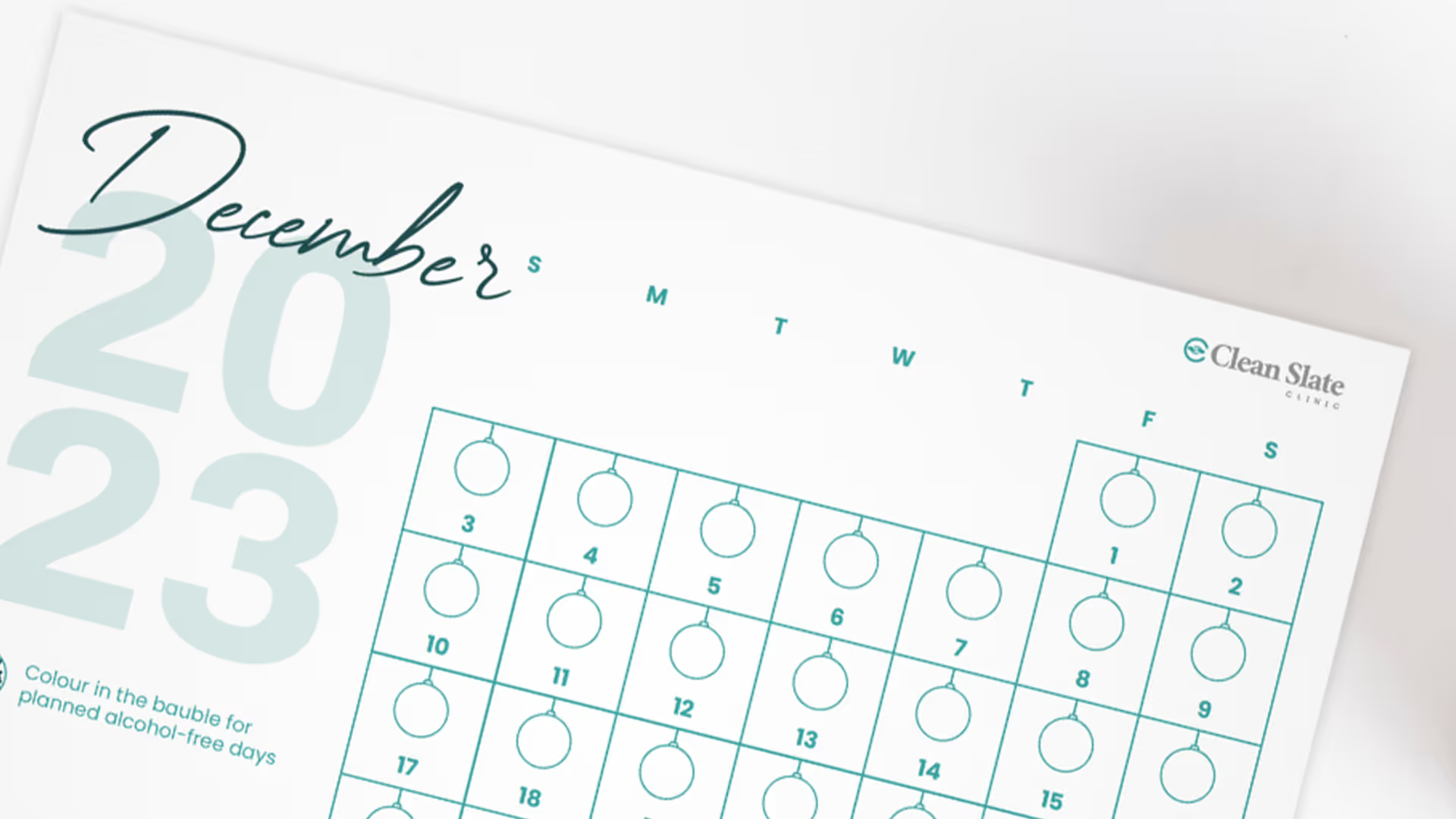
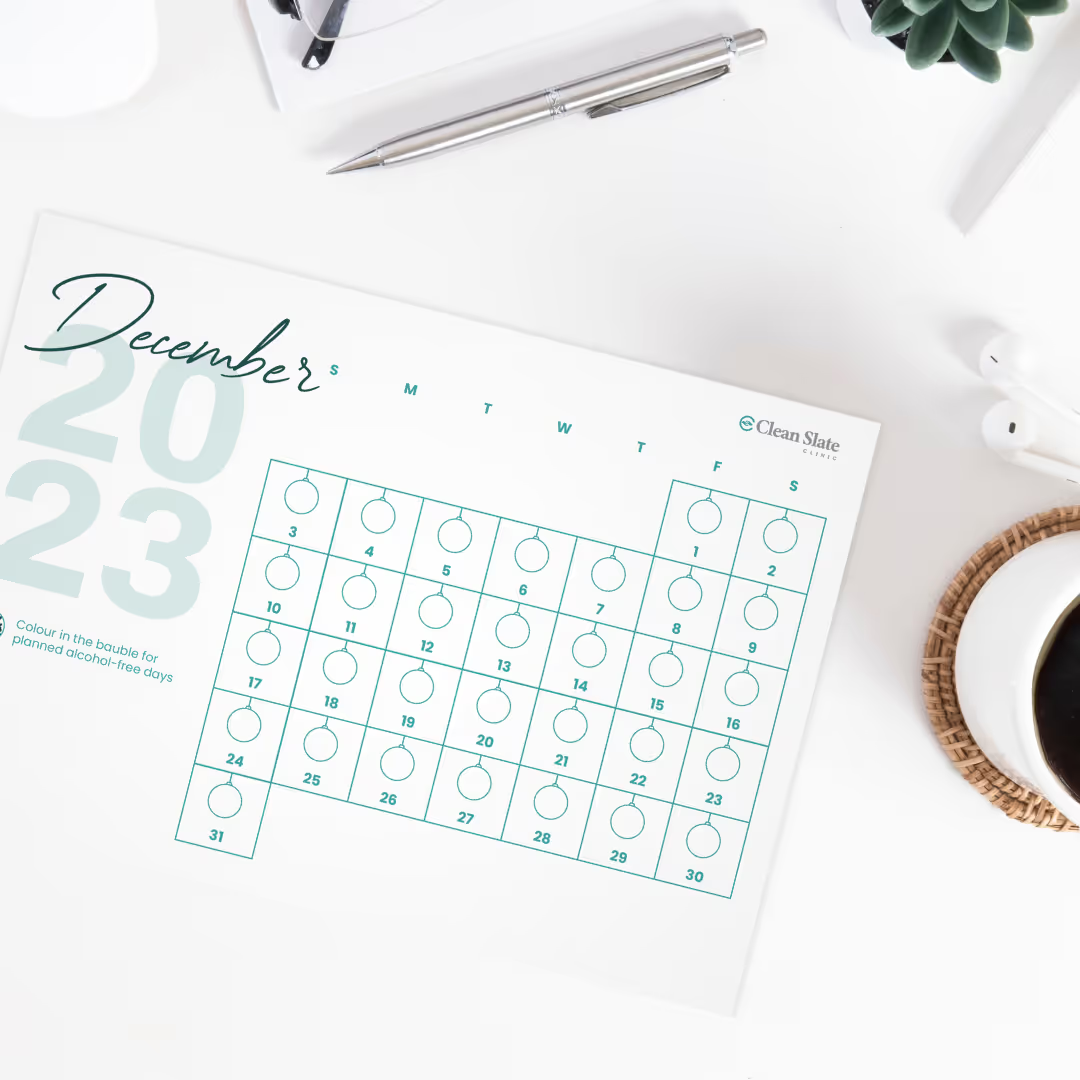
You don't have to dive right in, ease into the new year with planned alcohol-free or alcohol-lite days over December using our calendar template.
Download here

Evaluation of the Clean Slate Clinic Program by The University of Sydney
Read the full evaluation of our our program by The University of Sydney, demonstrating the high adoptability, acceptability and effectiveness of our model in successfully supporting individuals into recovery from alcohol dependence.
Clean Slate Home Detox Evalution.pdf

Developing Thiamine Deficiency from Alcohol Use
Thank you to the Alcohol and Drug Foundation for providing the following content on Alcohol and Thiamine. You can read the original article here.
Thiamine, also known as vitamin B1, is an essential nutrient used by the body to convert food into energy.
Thiamine takes the fats, proteins and carbohydrates we consume and uses them to fuel functions of the heart, nerves and brain.(1)
Because the body cannot produce thiamine, it must be consumed through foods like:
- whole grain products such as cereals, rice, pasta, and flour
- wheat germ
- beef and pork
- trout and bluefin tuna
- eggs
- legumes and peas
- nuts and seeds.(2)
Smaller amounts of thiamine are present in fruit, vegetables and dairy products.(2)
Thiamine is also added to food products like bread and is available as a dietary supplement.(3)
Thiamine deficiency
Thiamine deficiency, although rare in most developed countries, is common in people who drink excessive amounts of alcohol.
Up to 80% of people with an addiction to alcohol develop thiamine deficiency.(1)
Heavy alcohol use causes inflammation of the stomach lining and digestive tract, which reduces the body’s ability to absorb vitamins. Poor dietary choices and a lack of nutrition also rob the body of essential vitamins.(4)
Thiamine deficiency can cause:
- loss of appetite
- constipation
- fatigue
- blurry vision
- changes in heart rate
- irritability
- nausea and vomiting
- reduced reflexes and tingling sensation in the arms and legs
- shortness of breath
- muscle weakness.(1,5)
Other people at risk of thiamine deficiency include older adults, people who’ve had bariatric (weight loss) surgery, and people with HIV/AIDS or diabetes.(1)
What happens if I’m thiamine deficient?
The early stages of thiamine deficiency often go undiagnosed as the initial signs – decreased appetite, constipation and fatigue – are non-specific. If the body continues to experience a lack of thiamine absorption, it can lead to serious health conditions including beriberi and Wernicke-Korsakoff syndrome. Both conditions can be fatal if not treated.(1)
Beriberi
There are two types of beriberi - wet beriberi and dry beriberi.(6)
Wet beriberi affects the heart and circulatory system and in extreme cases can cause heart failure.(6)
Dry beriberi damages the nerves and can lead to decreased muscle strength and eventually, muscle paralysis.(6)
Wernicke–Korsakoff’s syndrome
Wernicke-Korsakoff’s syndrome most commonly occurs in alcohol-dependent people.
This nerve and brain disease is made up of two conditions/phases – Wernicke encephalopathy, which occurs first and then progresses to Korsakoff’s syndrome.(1)
Wernicke’s encephalopathy is life threatening. Symptoms include:
- confusion
- loss of memory activity
- loss of muscle coordination and leg tremors
- double vision, abnormal eye movements or eyelid drooping.(1,4)
Wernicke’s encephalopathy is usually reversible through treatment but can progress to Korsakoff’s syndrome - a chronic and disabling condition characterised by severe short-term memory loss, hallucinations and impaired ability to acquire new information.(1)
Treating thiamine deficiency
Thiamine deficiency can be treated by stopping alcohol consumption, eating a nutritious diet and by taking vitamin B1 supplements.(1)
However, diet and supplements alone are not effective if heavy alcohol use continues because alcohol will block absorption. If you’re concerned about vitamin depletion as a result of drinking alcohol, talk to your health professional.
References
- National Institute of Health (NIH). Thiamin [Accessed 27 October 2021].
- Medline Plus. Thiamin [Accessed 27 October 2021].
- Food Standards Australia New Zealand. Thiamin levels in Australian breads: Results from the 2010 and 2012 national bread surveys Food Standards Australia New Zealand [Accessed 27 October 2021].
- Medline Plus. Wernicke-Korsakoff syndrome [Accessed 27 October 2021].
- Healthline. 11 Signs and Symptoms of Thiamine (Vitamin B1) Deficiency [Accessed 27 October 2021].
- National Health and Medical Research Council (NHMRC). Thiamin [Accessed 27 October 2021].
.svg)




Ready to get started?





Subscribe


.avif)