.png)


Shellie's Story
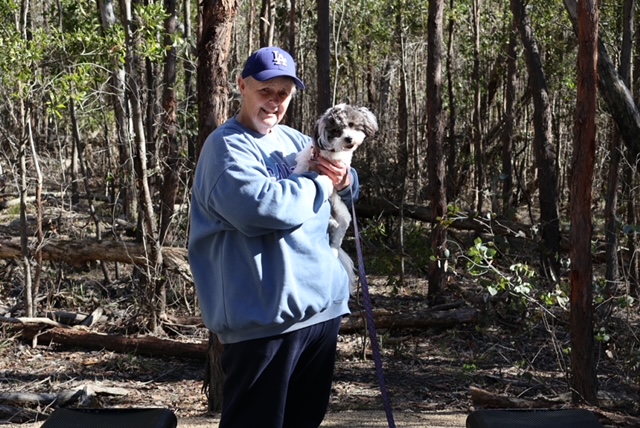
The party she never thought she'd have
Shellie spent an hour hiding out the back before her 60th birthday party began. She was nervous. Anxious. Convinced that maybe ten or fifteen people would show up - if that.
When she'd told friends she was planning a party, her first thought had been: Who will I invite? No one will show up. But the RSVPs kept coming. Ten became twenty. Twenty became forty. By the time the day arrived, sixty people had said yes.
There was something else unusual about this party: it was completely dry. No alcohol.
"It's not often you go to a dry party," Shellie says. "I felt guilt about it - how can I say people can't drink at my party? But people kept telling me, 'It's your party, you do what you want.'"
Standing in front of those sixty people - some who'd known her for 45 years, some who knew her whole story - Shellie made an announcement: she was also celebrating a year of sobriety.
"Some knew in the room that I was on that journey and some didn't," she remembers. "But it was just so empowering to be in that space without alcohol, with so much love and fun and good times."
What Shellie discovered that night was something she'd feared would never be true: people loved her for who she was. Not for being fun at the party. Not for having a drink in her hand. Just for being Shellie.
"I thought if I took the drink out of my life and I wasn't fun at the party, I would have nobody," she says. "But they still love me for who I am."
The bottle was her best friend
For most of her life, that hadn't felt true at all.
Shellie started drinking at 12. By her late fifties, she was a binge drinker - a bottle of vodka in a night, alone, in isolation. She didn't drink every day, and for years, that's how she convinced herself she didn't have a problem.
"I always made allowance for myself that I don't have a problem because I didn't drink every day," she explains. "But my biggest fear is when I do drink, I can't stop."
The bottle became, as she puts it, her best friend. It helped her cope with emotions she didn't know how to handle. It quieted the anxiety that made social situations unbearable. It numbed everything.
"When I have a drink, everything just goes away. It's a miracle," Shellie says. "I don't have to stress or worry about anything. But then it's the after effects - the impact it has on the quality of my life."
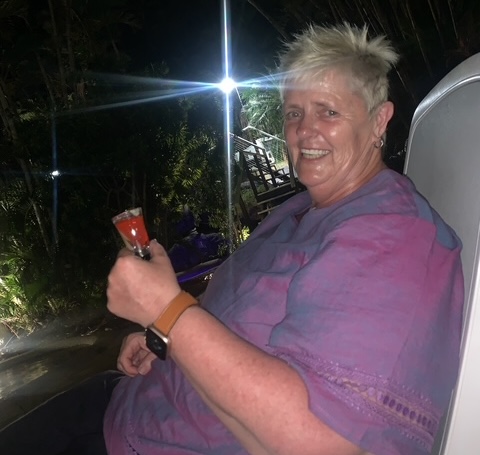
Those after effects were severe. Shellie lives with bipolar disorder, anxiety, and depression. For years, her drinking and mental health crises fed into each other in a relentless cycle. Life stressors would trigger binges, and binges would trigger mental health episodes.
"You put the two together and they just feed into each other," she says.
Her children had been on this journey with her since they were born. They'd seen the hospital visits, the relapses, the disappointment and worry. Shellie carries the memory of her son's face when she told him she'd started drinking again.
"The disappointment I saw in his eyes really broke me," she says. "As much as he was supportive and said, 'Mum, what are we going to do about this?' - just seeing that disappointment... those are all little snippets that stay in my head to remind myself not to pick up again."
She'd tried to get help before. Seven years earlier, after losing her mum, she'd spent six weeks in an inpatient rehab over Christmas - "one of the hardest things I've done." But she'd left saying she'd drink socially again.
"Which I can't drink socially and I can't drink at all," she says now.
The cycle continued. When her GP suggested connecting her to alcohol and other drug services, Shellie walked out.
"I said to her, 'I don't have a problem. I don't know what you're talking about,'" she remembers. "My picture of an ‘alcoholic’ was someone sitting in the gutter or down a laneway drinking out of a paper bag. I used to always go, 'That's not me. So I don't have a problem.'"
"Nanny, you were very silly last night"
It was her grandson who first planted a seed of change.
Shellie had started spending more time with her daughter's family, where weekend drinking was acceptable and normal. She was fun, laughing, the life of the gathering. Until one morning, her grandson looked up at her and said: "Nanny, you were very silly last night."
"That really touched me," Shellie says. "I thought, I need to be a nanny and a role model to my grandchildren."
But the real catalyst came on a camping trip with her daughter's family. Shellie drank so much that she nearly fell into the fire, and then she blacked out.
"That was my scary turning point," she says. "I could have fallen into the fire. Imagine how much my life would be different. I may not even be here."
That image stayed with her. As did another growing fear: she was getting older. Recovery from binges was taking a week instead of a day. She lived alone. What if she fell? What if she hurt herself and no one found her?
"As you get older, if that was to happen here at home on my own and I was to have a fall or knock myself out or break a hip - who's going to find me?" she explains.
Approaching 60 became a moment of reckoning. Shellie found herself asking: how do I want my life to look for the future?
"I choose not to drink again"
When Shellie's therapist from Mind Australia mentioned Clean Slate Clinic, Shellie went online and completed the suitability test. She was 59, scared, and still telling herself she didn't really have a problem.
But she reached out anyway.
"That fear - I always go back to that memory of falling in the fire," she says.
By the time she connected with Clean Slate, Shellie had already stopped drinking. The camping trip had frightened her enough that she quit on her own, determined not to start again. This meant she didn't need the formal detox week - instead, those check-ins became additional support time with her nurse.
"What I found is the program is flexible to your needs," Shellie says. "It's not a one-box-fits-all program."
From day one, Shellie was matched with Carol, a nurse who would stay with her throughout her entire journey. And something about Carol made all the difference.
"Carol's background and her experience made a big difference," Shellie explains. "I just saw her belief in me - the belief that she had in me that I would get through," Shellie says, her voice catching. "She held that torch of hope where I didn't hold that myself. I just thought, you know, I've done this my whole life, it's just going to be another cycle."
Carol became Shellie's cheerleader, celebrating milestones when Shellie couldn't celebrate herself because she was too afraid of failing again. The appointments gave Shellie something else she desperately needed: accountability.
"I don't want to hop on the screen and let anyone down," she says. "And knowing that I have an upcoming appointment, I can get things off and out of my headspace. It gives me the opportunity to look at things in another light, and then I go away and reflect and try to bring that into my life to move forward."
Shellie also started using the "I Am Sober" app, setting mantras and goals. Her mantra this time was different from seven years ago. Not "I'll drink socially again." This time: "I choose not to drink again."
The program worked around her life. Appointments were flexible. She could do everything from home, allowing her to work through her daily stressors as they came up.
"These stressors in life - we're in them every day," Shellie says. "By doing the program online, I could live and cope with all those stressors - rather than having to face them on the other side of my treatment.”
Discovering the other side of the fence
Shellie has a metaphor for what her life feels like now versus before.
"I spent my life on the side of the fence where the grass was dry - drought season," she says. "But now I'm on the other side of the fence where the grass is greener, the flowers are popping, the rainbows are out. Can you imagine that vibrance? That's just how my life is now."
Fifteen months alcohol-free, the changes are both profound and practical.
The brain fog is gone and her memory has improved immensely. She used to struggle to remember names, but now "there seems to be a lot more space up there to retain information." She's working three days a week. Her health and fitness have improved. And most importantly, she finally feels in control of her mental health.
"I'm a lot more balanced than what I have been," she says. "Bipolar is chaotic already, and when you put the drink on top of that, it just explodes. But now I'm quite balanced. I'm engaging in life, I'm being a mum and a nanny and a good friend."
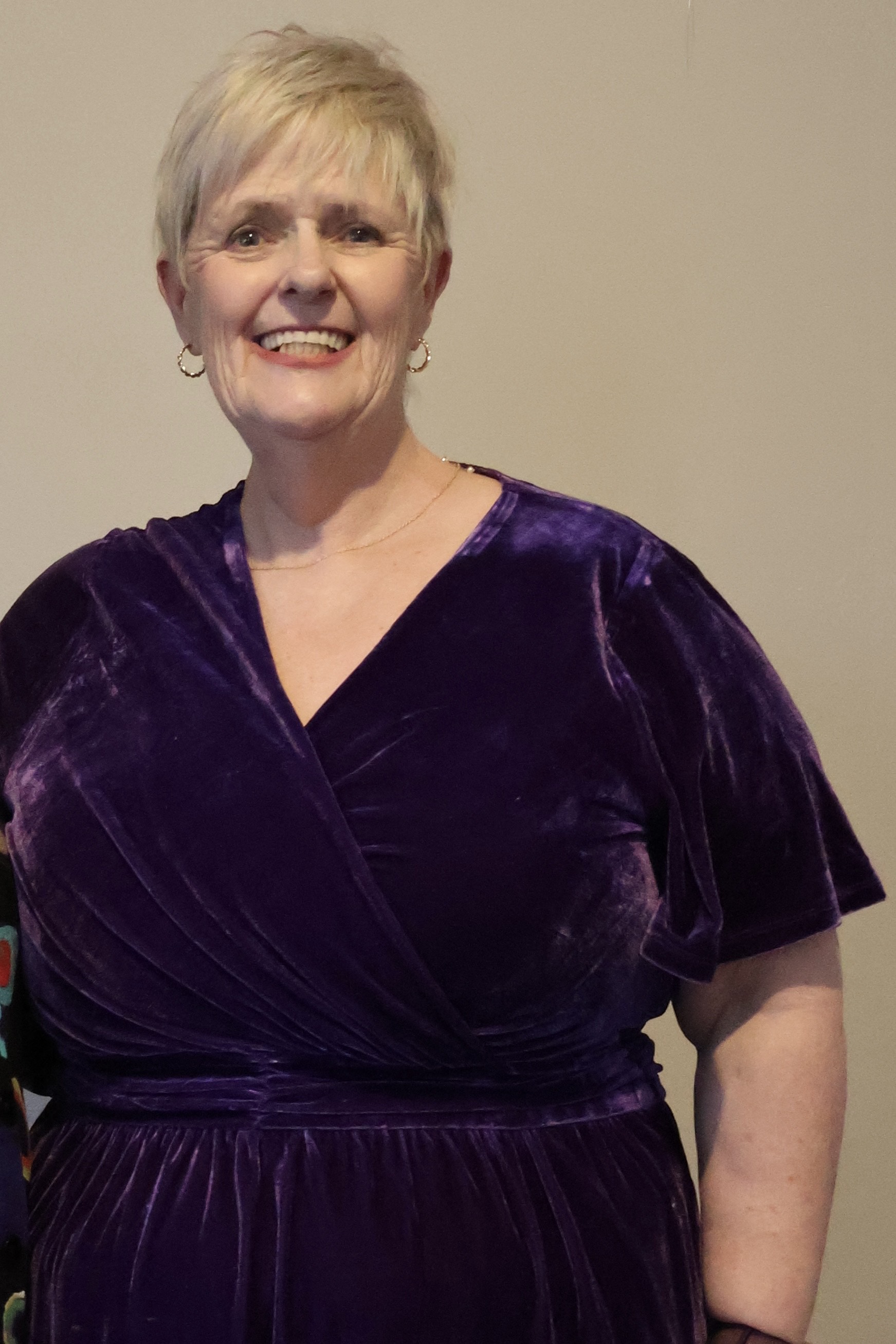
The emotional shift is perhaps the biggest change.
"I'm now experiencing the positive emotions of life," Shellie says. "Before it was all black and grim. But now I can see joy and happiness and fun."
She's also proud of herself in a way she's never been before.
"I would always go through life feeling worthless and helpless and unloved and minimised," she says. "But today I'm proud of myself. I'm proud that I can be there as a mum and as a nanny to my grandchildren. I'm a lot more present."
When her son and his partner announced they were expecting a baby, they said something that stays with Shellie: "It's even more reason to stay sober."
"That's always in the back of my head," she says. "As much as I'm doing it for me, the drain it puts on the family when I ring them up and say I've started drinking again..."
She trails off, then adds: "I want to live today. There were many times throughout my life where I didn't want to live, but today I want to live. And I'm living a sober, happy, healthy life now."
"You have to be brave"
When Shellie thinks about what she'd say to someone considering reaching out for help, someone who's scared of what life might look like without alcohol, her message is straightforward.
"You have to let down your barriers and be humble," she says. "There is help out there, and it's okay to get help. The people you're getting help from have the professionalism and the knowledge. They can teach you so much that can assist you on your journey. But you can't stay stuck where you are and not have quality of life without trying."
She also wants to challenge the narrow picture of what addiction looks like - the same picture that kept her from getting help for so many years.
"I used to think an ‘alcoholic’ was someone in the gutter with a paper bag," she says. "That's not me, so I don't have a problem. But I was a high-functioning binge drinker. I didn't drink every day, but when I did drink, I couldn't stop. You don't have to fit that stereotype to need help."
For older people especially - people in her generation - Shellie wants them to know they're not alone.
"You don't hear stories about people like us - it's more the younger ones," she says. "But in our generation we go through a lot of stressors too. Kids move on. There's loneliness. You're feeling isolated. Your body changes as you age. It's okay to reach out."
She also emphasises something that was critical to her own recovery: addressing mental health and addiction together.
"Mental health and addiction - the two come together," Shellie says. "If that stuff had been addressed early and looked into, my journey may not have been as chaotic. The two need to work together. There's enough stigma with mental health, but then you put addiction on top of that - that's more stigma. Let's remove the stigma and move forward and get the help."
Her final message is simple: "You have to be brave."
The torch of hope that Carol once held for her? Shellie's holding it now, too.
.svg)




Ready to get started?





Subscribe


.avif)