
Blog Posts

Sober For The Holidays
The holidays can be amazing, overwhelming, and a little unpredictable - sometimes all at once.
In this free webinar, we have a real, honest and slightly awkward conversation about what it’s actually like to move through the festive season without leaning on alcohol.
It’s a time filled with joy, pressure, family dynamics, back-to-back events, not enough downtime, and always someone saying, “Go on - it’s Christmas!”
Clean Slate’s Dr Chris Davis and Sober Awkward's Victoria Vanstone unpack the whole messy mix together with humour, honesty and zero judgement.
Speakers:
Dr Chris Davis | Clean Slate Clinic
Dr Chris is a GP, Addiction Medicine Specialist, and the co-founder & Medical Director of Clean Slate Clinic. With over 10 years of experience, he’s passionate about breaking down stigma, speaking openly about the things people often hide, and making support feel human - not clinical.
Victoria Vanstone | Sober Awkward
Victoria is the co-host of the Sober Awkward podcast and a passionate advocate for honest, alcohol-free living. After years of being the life of the party, she made the decision to quit drinking in her 40s and hasn’t looked back. Victoria brings humour, heart, and a refreshingly real take on sobriety - especially the messy, awkward bits.
Want more real, relatable sobriety stories? Check out the Sober Awkward podcast or join their online community at cuppa.community.
Holiday Support Options
If you feel like you need additional support over the holiday period, please contact your GP or psychologist. The below services also offer free & confidential care:
- ADIS 24 hour support line - 1800 250 015
- NSW Mental Health Line - 1800 011 511
- Lifeline Australia - 13 11 14
- Beyond Blue - 1300 22 4636
- MensLine Australia - 1300 789 978
- Kids Helpline - 1800 551 800
- Suicide Call Back Service - 1300 659 467
- 13YARN - 13 92 76
- 1800RESPECT for domestic violence support
An Interview with April Long
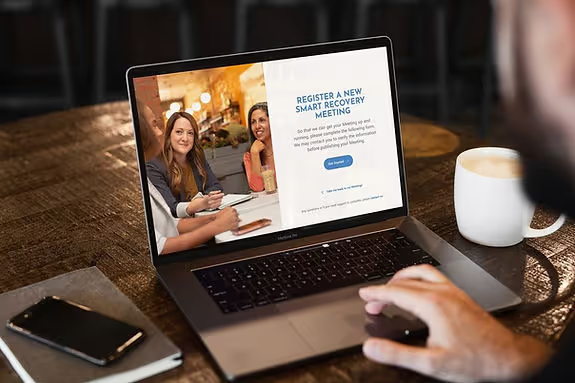
April is the CEO of SMART Recovery, one of our trusted partner organisations. Recently, we sat down with them to hear about their thoughts on addiction support sector.

Can you tell us a bit about Smart Recovery?
SMART Recovery is designed to support individuals seeking recovery from addiction and problematic behaviours. It provides a science-based approach to addiction recovery and offers tools and techniques for self-empowerment.
We train organisations and individuals to run their own SMART Meeting with their community online or in person. We currently have over 250 meetings around the Australia.
SMART Recovery Australia proudly stands as a secular champion of recovery, partnering with over 75 Member organisations nationwide to deliver more than 250 local recovery meetings.
We believe in acting locally while thinking globally, as part of a global community of 3000 mutual-support groups led by SMART Recovery International.SMART Recovery Australia reduces the time taken to seek help by addressing the traditional barriers associated with seeking and accessing help for addiction.
Can you tell us a bit about yourself?
I joined SMART Recovery as CEO just over 12 months ago. Prior, I had been working with children with a parent in prison at SHINE for Kids trying to reduce the impact of intergenerational incarceration and ensure healthy thriving families. I have seen a huge number of parents in custody who had not been given support but criminalised because of addiction, trauma and coping mechanisms that were not working for them.
I have my own lived experience of parental incarceration and addiction, and I am dedicated to supporting others on their healing journeys. I am driven to create a society that fosters support rather than stigmatisation.
What inspires you to do what you do every day?
What inspires me every day is my family and the courageous individuals who join SMART meetings to initiate the change they desire. I am motivated by those who, despite experiencing trauma, life challenges, and societal pressures, take that brave first step toward seeking a different path. Whether its attending a SMART Meeting, AA, undergoing home detox, or seeking residential support.
What do you see as the main benefits of home detox?
Home detox brings comfort, privacy, cost savings, and the ability to self-manage health with proper medical supervision. One of the most significant advantages is the comfort and emotional support it provides. Detoxification is a monumental step for most people, and being able to go through it in a familiar environment surrounded by their own comforts and support systems can make a world of difference.
What do you see as the potential of digital interventions and services in addressing addiction service gaps?
One of the key advantages of digital interventions is the increased accessibility they provide. Not everyone has equal access to in-person services, and digital platforms can bridge that gap. They reach individuals who may be geographically isolated or have limited mobility, offering them a way to access treatment and support from the comfort of their own homes.
The initial first steps in seeking help through digital platforms can be a powerful catalyst, leading individuals to pursue more intensive face-to-face treatment options if needed.

What other changes would you like to see in how we think about and treat addiction?
Addiction is not a moral failing. Some of the greatest people I know and love have been impacted by addiction. They are kind, successful, loving, have good values and morals. They work hard and they care about their family and their community. It is vital to understand that addiction does not define a person’s worth or character.
As individuals, we have personal responsibility for seeking help and making positivechanges. However, as a community, we share a collective responsibility to support and understand our brothers, sisters, aunties, and uncles who are facing addiction.
Instead of judgment and blame, we must offer understanding and support. By walking alongside them, we can foster an environment of empathy and compassion.To challenge the stigma and shame associated with addiction, we need to change public attitudes and beliefs. This requires open dialogue and the sharing of diverse experiences to help break down stereotypes and create a more inclusive and supportive society.
Policy reform is also necessary to create a more compassionate and supportiveenvironment for those affected by addiction. We should advocate for policies that reduce stigma, improve access to healthcare services, and prioritise a comprehensive approach to addiction treatment and support. This involves addressing systemic barriers, increasing funding for prevention and treatment, and ensuring that individuals can access the care they need without fear of discrimination or obstacles.
What do you see as the value or potential of your relationship with Clean Slate Clinic (to you / Smart Recovery)?
The primary focus of our partnership is to promote understanding, foster compassion, and ensure accessible and effective treatment for all individuals affected by addiction. People who are already falling through the cracks don’t need more gaps and a disconnected service system. By joining forces, Clean Slate Clinic and SMART Recovery enhance the support available, ensuring that no one is left behind.
What advice would you give someone who is looking to change their relationship with alcohol or another substance?
I want you to know that you are incredibly brave and capable. You are not alone in this journey. There are tools and support available to help you overcome the challenges you’re facing. I understand that the road ahead may be tough, but always remember that there is a community of people who have gone through similar experiences and are ready to offer their support.
It’s important to find what works best for you. Take the time to discover the strategies and resources that resonate with you personally. Set meaningful goals for yourself and work towards them. Remember, you have the power within you to change your thoughts, feelings, and behaviours. While urges and cravings may arise, you can learn to manage them with the right support and coping mechanisms.
This is your life, and your story should be written on your own terms. However, please know that you don’t have to face this alone. Reach out to those who understand and care about your well-being.
You are not defined by any addiction. You deserve a life of health, happiness, and fulfilment. Believe in yourself and take those courageous steps forward. You have a whole community standing beside you, ready to support you every step of the way.
What would you like to see from Clean Slate Clinic next?
As a priority, through digital innovation and collaboration I would love to see Clean Slate Clinic available in every community in Australia where support is needed.
Addiction is a global public health concern with widespread impacts and I see huge potential for Clean Slate Clinic and SMART Recovery to act locally and think globally.
Collaboration among governments, organisations, healthcare systems, and communities is necessary to tackle the challenges posed by addiction on a global scale and to improve access to support and treatment for individuals affected by addiction. I would like to see Clean Slate Clinic supporting that collaboration and scaling what works nationally to around the world.
Our national partnership will continue to help consolidate the alcohol addiction help space within Australia.
For more information on SMART recovery, visit this link.

Home alcohol detox: what actually happens
For many people, the fear of withdrawal is not about whether they want to change - it’s the uncertainty around what their body will feel like when alcohol is no longer there, and that fear is valid. If alcohol has been part of your coping system for years (or decades), the idea of stopping can feel like stepping off a cliff. But it doesn’t have to.
With a medically supported home detox, the process isn’t sudden or chaotic. It’s planned, paced, and monitored, with changes beginning long before your first alcohol-free day.

Phase one: the preparation stage
This part is often misunderstood as a waiting period. Lasting for approximately three weeks, this important phase is all about preparing your mind and body so that the transition is safer, calmer and more predictable.
During this time, you will be allocated your dedicated Clean Slate nurse who will be alongside you for the full program. Your first two nurse appointments will involve:
- Reviewing your medical history and drinking patterns
- Clarifying your goals and what you want this change to mean in your life
- Completing a risk assessment together, so you understand the safety plan
- Having blood and urine tests with your local pathology provider and later reviewing the results together
- Educating your support person on what to expect and how best to support you
- Confirming your detox start date and beginning to shape your recovery plan
You’ll also start using our daily drinks diaries to both record your alcohol use, and begin reflecting on your triggers, associations and the reasons behind your drinking. These are used for understanding what your nervous system has been relying on, so your medication, monitoring and recovery plan can be personalised.
Alongside this, you’ll have access to our digital resources that explore the neuroscience of addiction, the role of shame, goal setting and self-management strategies. These help your mind prepare for change in a way that feels grounded rather than abrupt.
You’ll also receive a care package that includes the essential Vitamin B1 (thiamine), our welcome letter and a breathalyser.
Before detox begins, you’ll have a review with your Clean Slate Doctor or Nurse Practitioner. Together, you’ll talk through your test results, confirm readiness and if clinically appropriate, medication for your detox week will be prescribed. Sometimes this includes diazepam - but only if your assessment indicates it’s needed. Craving reduction medication such as naltrexone or acamprosate may also be discussed for post-detox, depending on your goals.
By the end of these three weeks, you know what will happen and when, and the plan behind every step.
Phase two: detox week (the week without alcohol)
This is where your body makes the shift. Alcohol is suddenly no longer “holding the system together”, so the nervous system has to rebalance. While this can feel uncomfortable, it’s important to remember that it is temporary and you’ll be supported throughout the entire process.
During detox week, you will have daily appointments with your dedicated Clean Slate nurse where you will:
- Review your withdrawal symptoms
- Discuss medication adjustments (if needed)
- Check breathalyser readings
- Review your heart rate
- Receive psychological support and reassurance
You will also collect your medication from your local pharmacy on a daily basis and continue accessing our digital tools to support sleep, sensory regulation and early recovery.
What withdrawal usually feels like
Most people begin feeling symptoms within 12 to 48 hours. Common sensations include:
- Shakiness
- Sweating
- Nausea
- Anxiety or restlessness
- “Wired but exhausted” sleep
Symptoms usually peak around day 3 or 4, and gradually settle between days 5 and 7. Many people describe a moment towards the end of the week where things begin to clear - when they feel less foggy, less on edge, and more like themselves than they have in a long time.
At the end of this week, you will meet with your Clean Slate Doctor or Nurse Practitioner again to reflect, review, and discuss whether craving-reduction medication may be useful in the weeks ahead.
Phase three: why aftercare matters
Your body and nervous system continues to adjust in the days and weeks after detox - from sleep improvements to more regulated emotions, and of course, your mind starts to experience calm without alcohol being the gateway to it.
Having support in this stage makes a real difference, because maintaining recovery isn’t just about removing alcohol - it’s about understanding why alcohol has played such a dominant role, and building a life that feels easier to remain present for.
Importantly, phase 3 - the recovery and support phase - lasts for a full 12 months post-detox. This includes regular check ups with your dedicated nurse, online masterclasses each month and at least one recovery support group available to you every single day of the year. These evidence based SMART recovery groups have been proven to increase your chance of sticking to your goals in the longer term.

Final thoughts
If you’re reading this because you’re considering a detox, it likely means a part of you is ready for a different relationship with alcohol - or even a different relationship with yourself. You don’t have to do this alone, and you don’t have to push through uncertainty without support.
There is a safer, calmer, medically supervised pathway through this transition - and you can take your next step at a pace that feels right for you.
If you’d like to explore whether this pathway is right for you, simply check your suitability today.
FAQ's
Is home detox safe?
Absolutely, home detoxes are safe when they are medically supervised by experienced clinicians with screening, pathology, medication if needed, and daily monitoring.
How long does withdrawal last?
Symptoms usually begin within 12-48 hours, peak around day 3 or 4, and settle around day 5-7. Sleep can take longer to stabilise for some people.
Do I need time off work?
This will depend on your individual circumstances and initial assessment. Most people choose to take time off during detox week because symptoms and medication (if needed) can impact focus, decision-making and energy levels.
What medication is used during detox?
Some people are prescribed diazepam during detox if clinically appropriate alongside medications for nausea and other physical symptoms. Other medications such as naltrexone or acamprosate may also be discussed for relief from cravings after detox.
Can I detox without medication?
Yes - not everyone needs medication depending on their risk. Decisions are based on your individual clinical assessment, goals and safety.

Support person information
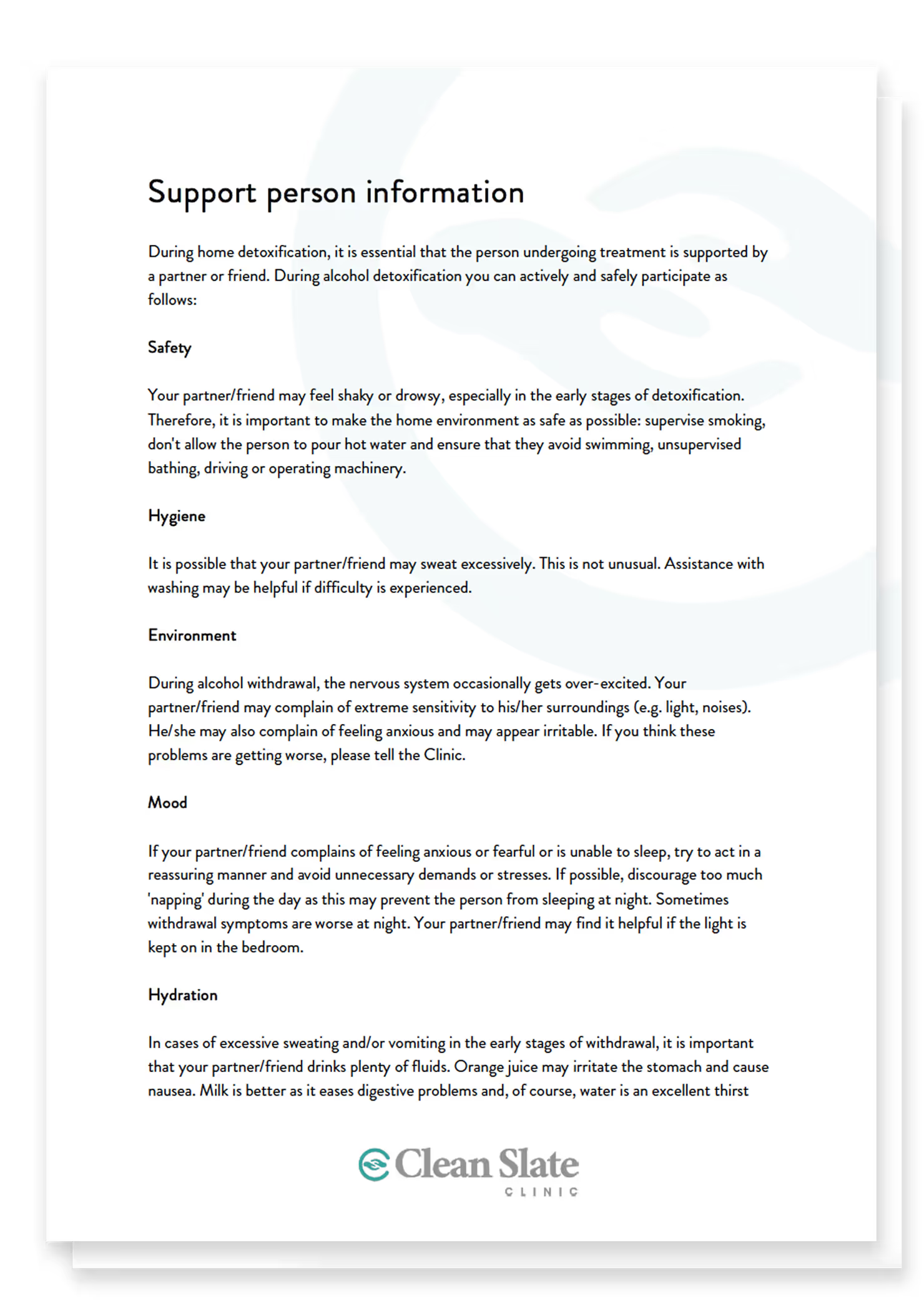
During home detoxification, it is essential that the person undergoing treatment is supported by a partner or friend. Provide the following document to your chosen support person so they can actively and safely participate
For more advice or information please contact us
Download the PDF:
Clean Slate Clinic - Support person information.pdf
Download the Word doc:
Clean Slate Clinic - Support person information.docx
Preview:

Maintaining Motivation
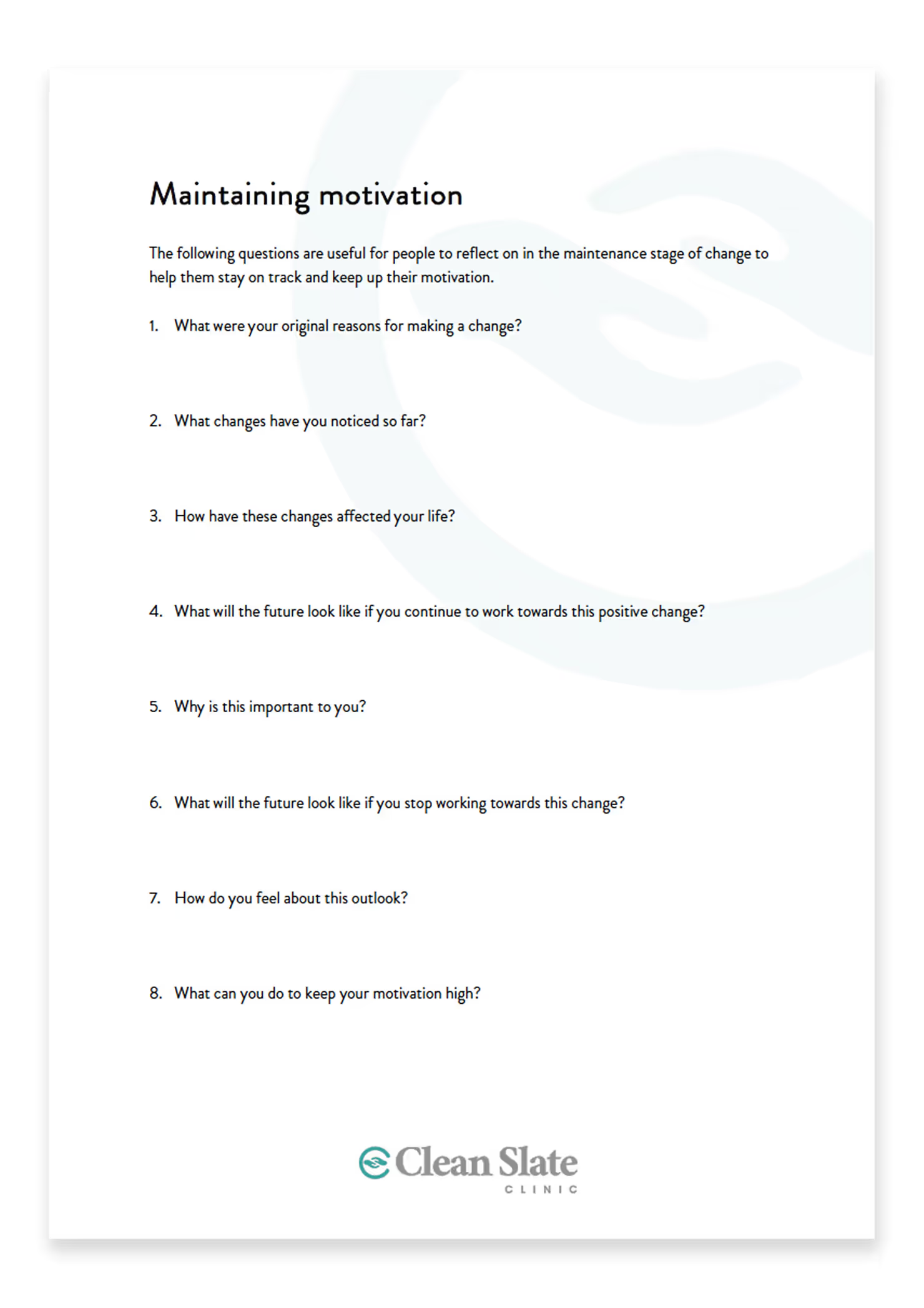
The following questions are useful for people to reflect on in the maintenance stage of change to help them stay on track and keep up their motivation.
Download the PDF:
Clean Slate Clinic - Maintaining motivation.pdf
Download the Word document:
Clean Slate Clinic - Maintaining motivation.docx
Preview:

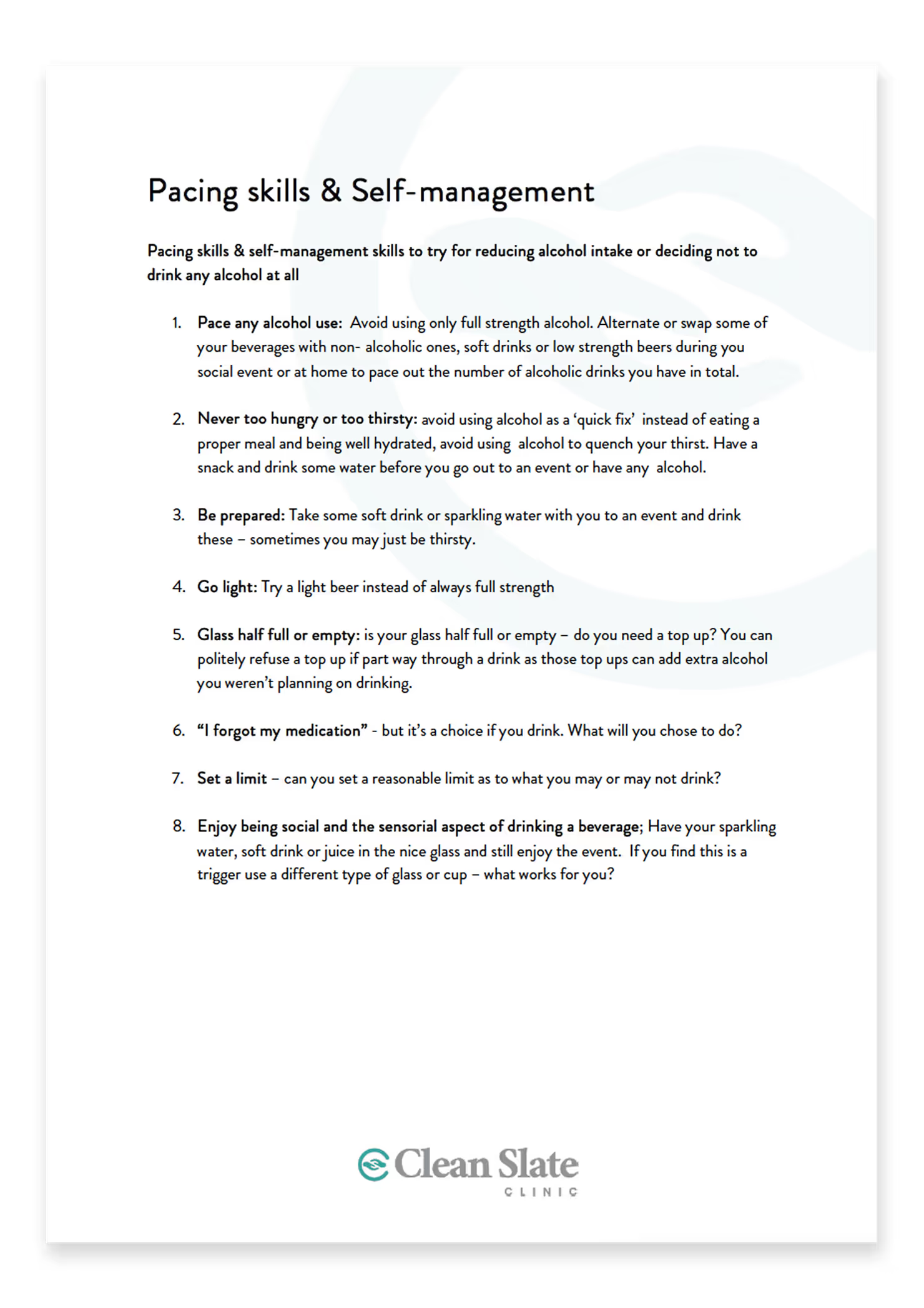
Pacing Skills & Self-Management
This document gives you some useful tips on how to practice mindful drinking and ideas on how to reduce or slow down your drinking, therefore helping prevent some of the associated harms.
Download the PDF:
Clean Slate Clinic - Pacing skills and self-management.pdf
Download the Word doc:
Clean Slate Clinic - Pacing skills and self-management.docx
Preview:

Pia's Story
Pia grew up in Guernsey and, like many of us, was introduced to alcohol at a young age. By the time she entered the corporate world, drinking wasn’t just normal - it was expected.
“Corporate culture celebrated burning the candle at both ends - work hard, play hard - but no one talked about the personal cost. The access to free alcohol was out-of-control. I could attend a booze-laden client or internal event every night - and was often expected to. Add to this the frequent travel, with airport lounges opening their bars up at lunchtime - next time you’re in an airport lounge mid-afternoon, look around - you’ll see dozens of men and women in corporate wear making repeated trips to the bar.”
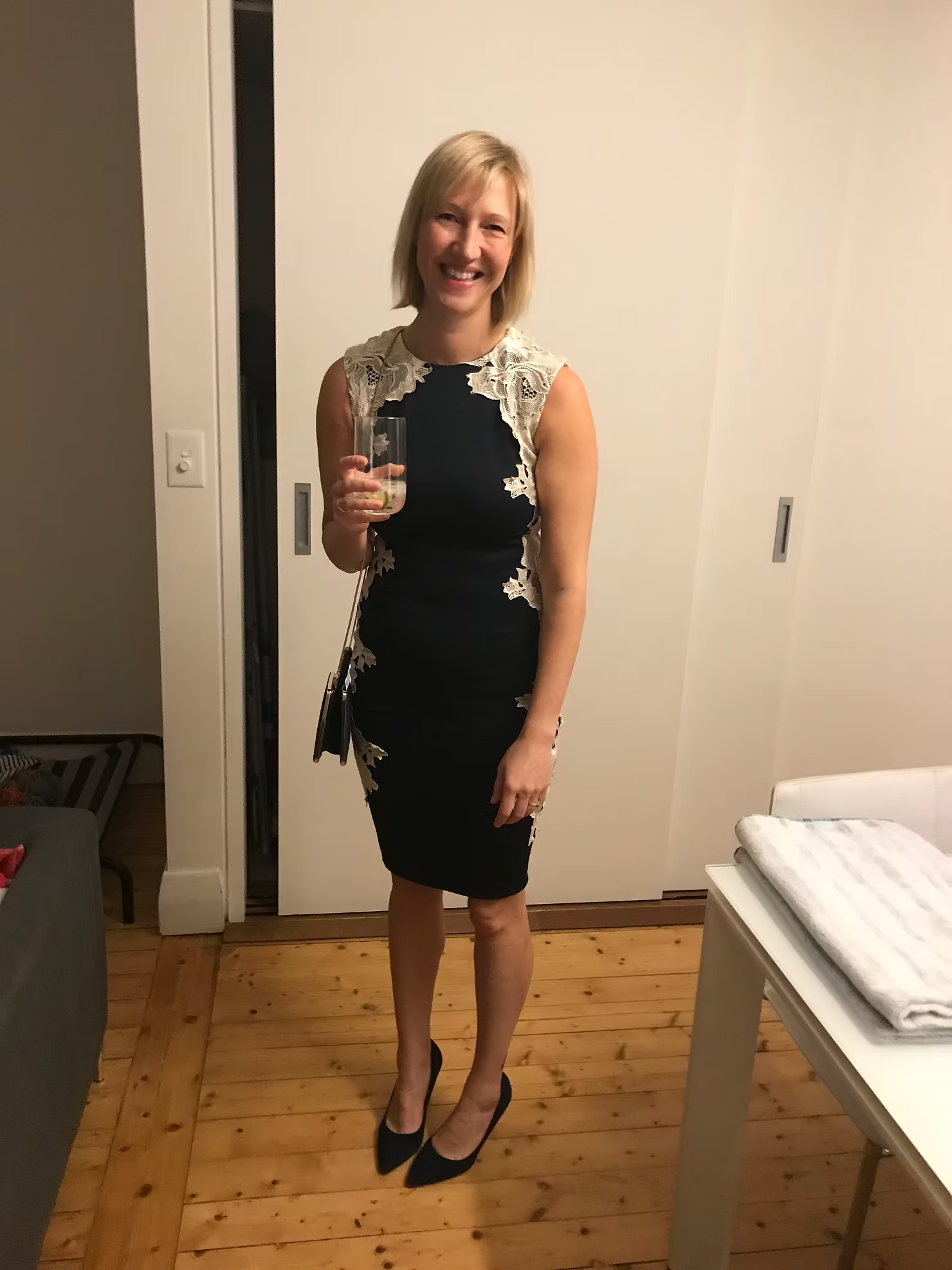
On paper, Pia’s life looked perfect. A thriving career in healthcare consulting. Leadership roles. The kind of CV that sparkles. But inside, it was a different story.
“I was excelling professionally, ticking all the boxes, but internally I was struggling. Despite working in the healthcare industry for 20 years, I had no clue how or where to look for help.”
By late 2019, she was drinking 1-2 bottles of wine a night. Sometimes she hid it by pre-loading before events. Other times she poured white wine into a mug during Zoom calls so it looked like tea.
“I distinctly remember sitting in an afternoon Zoom meeting, drinking white wine from a mug and realising that this really wasn’t normal.” The shame was crushing. “There’s still so much stigma for professionals struggling with alcohol. It’s terrifying to think that being honest about it could cost you your career.”
For Pia, there was no dramatic rock bottom. No single incident that forced her hand. Instead, it was a series of quiet realisations - small moments that added up to a truth she couldn't ignore for any longer.
In 2020, after years of pushing herself to breaking point, Pia walked away from her corporate career. She and her fiancé packed up their lives, grabbed their dog, and set off in a caravan to explore Australia. At the same time, a piece of fate landed in her lap. Her best friend, Dr Chris Davis, asked if she’d help him get his virtual dependence treatment model off the ground. He had no idea that she was struggling with the exact same issue herself.
Testing the program was a wake-up call, particularly when Pia discovered that she met the criteria for a medicated detox. “That shocked even me,” she admits, now understanding the extent of her alcohol dependence. She then became “patient zero” in what would later become Clean Slate Clinic.
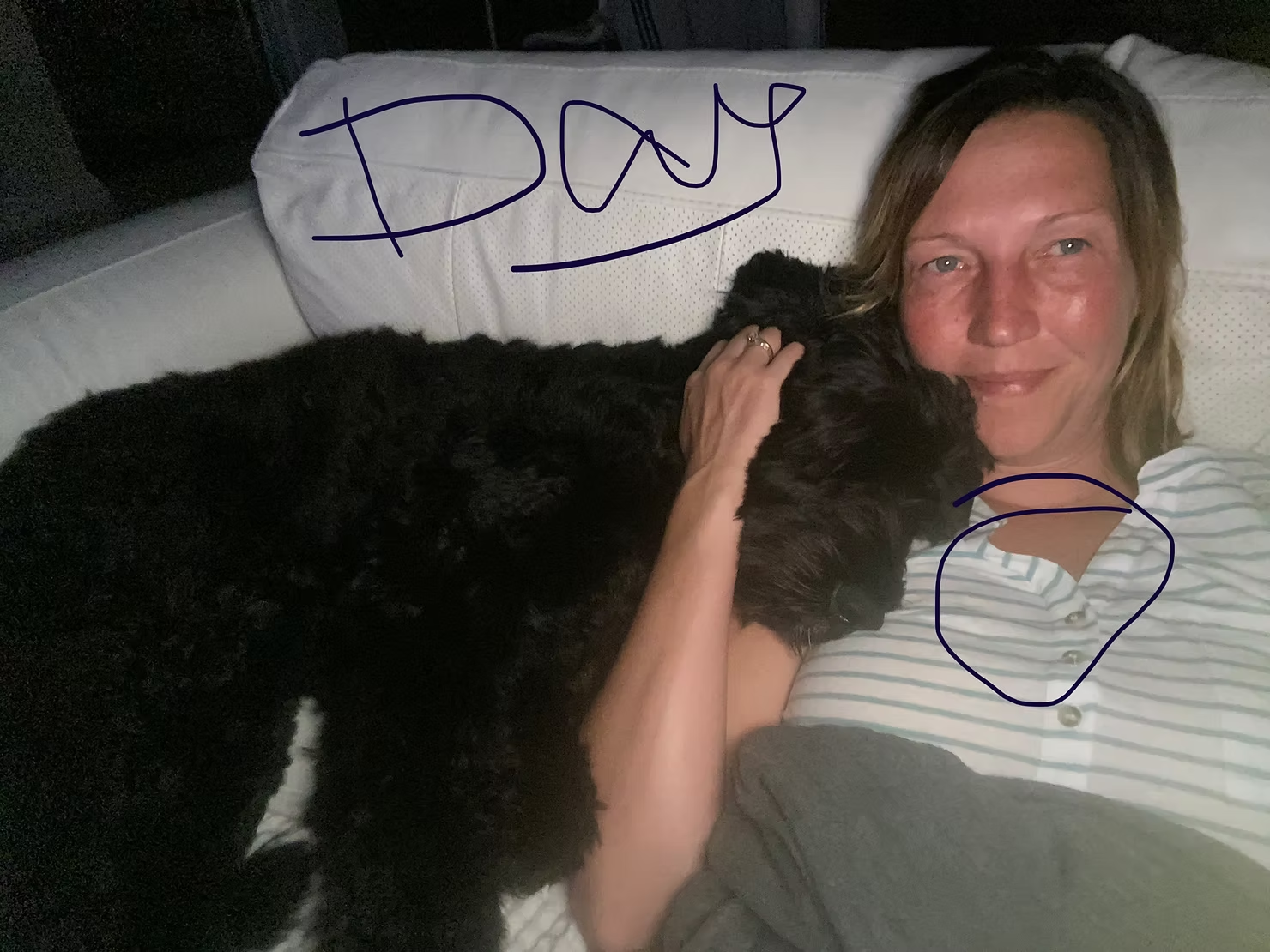
Pia went through detox and a full 12 months of aftercare. It wasn’t easy - recovery rarely is - but what surprised her most was how quickly the benefits began to appear.
“I knew I needed to stop, but I had this deficit mindset, which was ‘I need to stop because I’m tired of being tired, I’m scared of my increased cancer risk, I’m scared of my increased dementia risk, I’m getting older.’ I really hadn’t thought about the good stuff that would come. And there’s just so much good stuff, quite quickly as well. My anxiety, which was one of my main causes for picking up the bottle of wine every night, just disappeared. You feel this sense of control over your life. Life isn’t rainbows and unicorns all the time, but you can cope with everything so much better when you have clarity and good quality sleep.”
One of her favourite quotes sums it up with humour and truth: “I’ve never met a person who says they wish they’d stayed up later and drank more the night before.”
Today, Pia’s life feels grounded in purpose. She’s grateful for the unexpected chain of events that gave her the support she needed - support she didn’t know how to find, even after two decades in healthcare.
“I’m incredibly grateful for the serendipitous events that led to me getting the support I needed - I really don’t know where I’d be today had I not had that opportunity. I’m happy in the purpose I’ve found at Clean Slate Clinic - helping others in a similar situation brings me a lot of joy. Addressing my alcohol use has taken me on a journey of self-discovery that has brought me clarity, purpose and peace.”

She’s honest that life isn’t perfect. She still struggles with overcommitting and setting high expectations for herself - but now she has healthier ways to cope. Recovery didn’t erase life’s pressures, but it gave her the tools to face them head-on.
If you see yourself in Pia’s story, know this: recovery isn’t about what you lose - it’s about what you gain. Better sleep. Less anxiety. More peace. A sense of control you might not even remember having.
“There’s so much good stuff on the other side. I never expected that. And I wouldn’t trade it for anything.”

The Truth About Alcohol and Anxiety: What You Need to Know
“Why does that glass of wine feel like it helps... but then makes things worse?”
Picture this: It’s the end of a long day and you just want to relax - quiet the nerves, calm the mind, and slow the racing thoughts - so you have a drink (or a few). And in that moment, it works. Alcohol can bring a temporary sense of ease as the tension softens, the body relaxes, and everything feels a little more manageable.
But then comes the flip side. That wired-but-tired feeling in the middle of the night. The vague sense of dread in the morning. The sharp rise in anxiety a day or two later, often without a clear cause. Over time, many people start to notice that the thing they’re using to manage their anxiety might actually be making it worse.
If that sounds familiar, this post is for you.

Why alcohol feels like a friend (briefly)
Alcohol has a sedating effect on the brain. It increases the activity of a neurotransmitter called GABA - your brain’s natural “calming” chemical - this dampens the activity of excitatory chemicals like adrenaline, cortisol and glutamate. That’s why a drink can make you feel relaxed, sleepy, or even euphoric in the moment. It’s your nervous system temporarily slowing down.
But here’s the catch: your brain is always trying to maintain balance. When alcohol is regularly introduced, your brain starts to adapt by turning down GABA’s calming effect and ramping up excitatory activity to compensate. So while alcohol might feel like it’s “helping” in the short term, it’s actually setting the stage for more stress, more reactivity, and more anxiety once it wears off.
One way to think of it is this: alcohol lets you borrow calm from your future self - but with interest. And that interest gets steeper the more frequently you borrow.
When the hangover is more than physical: the anxiety rebound
This is where things start to feel more confusing for people. Because the anxiety doesn’t always show up right away.
In the hours and days after drinking - especially after heavier use - your brain chemistry swings back in the other direction. GABA activity drops further. Glutamate spikes. Your nervous system enters a state of high alert, often without warning. This can look like:
- Restlessness or agitation
- Feeling like you can’t catch your breath
- Trouble sleeping (especially waking in the early hours of the morning)
- Racing thoughts, irritability, or panic for no clear reason
A 2020 study found that people often experience peak anxiety symptoms 12-48 hours after drinking - even in the absence of a hangover. This is sometimes referred to as “hangxiety,” and it’s more than just a catchy term. It’s a sign that your brain is in recovery mode, trying to reset its balance after being artificially altered by alcohol.
If this sounds like a loop you’re stuck in - relief, rebound, repeat - you’re not broken. You’re human. And your brain is doing exactly what it was designed to do.
So, how can you manage anxiety without alcohol?
There’s no one-size-fits-all approach, but here’s the good news: it’s absolutely possible to feel calm, grounded, and in control without using alcohol to get there. Here are a few strategies we’ve seen make a real difference for our clients:
- Support your nervous system: Simple practices like deep belly, or ‘diaphragmatic’ breathing, gentle movement, warm showers, or grounding techniques (like holding ice or standing barefoot outside) can help calm your system when anxiety flares.
- Sleep, food and hydration matter more than you think: Disrupted sleep, low blood sugar and dehydration can all mimic or worsen anxiety. Try to stabilise your sleep routine, eat regularly, and keep your water intake up - especially if you’re cutting back on alcohol.
- Reduce other stimulants: Caffeine, high-sugar snacks, and even scrolling TikTok before bed can overstimulate your system. Pulling back a little can give your nervous system a break.
- Talk to someone: Whether it’s your GP, a therapist, or a service like ours - having someone who can help you build a personalised plan is incredibly valuable.
- Give your brain time: Research shows that even after just 2-4 weeks without alcohol, many people report reduced anxiety and improved emotional regulation. The longer the break, the more time your brain has to re-balance itself.
You don’t have to do all of this at once. Start where you are, with what you have. Small steps matter.

Final thoughts: The loop can be broken
Alcohol might feel like the quickest fix for anxiety, but over time, it often creates the very thing it promises to relieve. The good news? You can absolutely interrupt that pattern. And you don’t have to do it alone.
At Clean Slate, we can help you understand what’s going on in your body and brain - and build a plan that feels realistic, safe, and supported. If you’re feeling caught in the cycle, you’re not failing - you’re just ready for a new way through.
Check your suitability today.
Sources
Brousse, G., Arnaud, B., Vorspan, F., Richard, D., Dissard, A., Dubois, M., Pic, D., Geneste, J., Xavier, L., Authier, N., Sapin, V., Llorca, P-M., De Chazeron, I., Minet-Quinard, R. & Schmidt, J., 2012. Alteration of glutamate/GABA balance during acute alcohol withdrawal in emergency department: a prospective analysis. Alcohol and Alcoholism, 47(5), pp.501–508. [online] Available at: https://academic.oup.com/alcalc/article-abstract/47/5/501/99762?redirectedFrom=fulltext
Nutt, D.J. & Nestor, L.J., 2018. The GABA system and addiction. Addiction. 2nd ed. Oxford Psychiatry Library Series. Oxford: Oxford University Press. [online] Available at: https://doi.org/10.1093/med/9780198797746.003.0008
Kushner, M.G., Abrams, K. & Borchardt, C., 2000. The relationship between anxiety disorders and alcohol use disorders: a review of major perspectives and findings. Clinical Psychology Review, 20(2), pp.149–171. [online] Available at: https://www.sciencedirect.com/science/article/pii/S0272735899000276

Clean Slate Partners with Medibank

Medibank has launched a new Alcohol and Drug Detox at Home program to help customers to safely withdraw from alcohol, cannabis and stimulants.
The program, provided by Clean Slate Clinic, is a virtual service offering an alternative to hospital-based treatment, with support from qualified specialists and clinical practitioners across the country.
The program runs for approximately 12 months as a phased “detox to aftercare” model, with structured support at every stage from qualified specialists, nurses and other clinical practitioners.
Medibank’s Chief Customer Officer, Milosh Milisavljevic said the program demonstrates Medibank’s commitment to improve health access and affordability for customers.
“Recovering from alcohol and drug addiction can be a challenging process and we want to make it easier and more accessible for our customers,” said Mr Milisavljevic.
“This program allows customers to withdraw in the comfort of their own home, with familiar surroundings, while also having regular access to a multidisciplinary team of qualified health professionals.
“Importantly, it’s delivered virtually, which means eligible customers who are living in remote and rural areas can access it.”
Clean Slate’s Chief Medical Officer, Dr Chris Davis said: “Our partnership with Medibank means more Australians can now access safe, evidence-based withdrawal care from home."
“As one of the country’s leading insurers, Medibank’s support allows us to reach more people who might otherwise miss out on help. It’s a vital step toward removing the barriers that have long limited access to alcohol and other drug care in many communities.”
You can check your suitability for a funded place in the program here.

Clean Slate Partners with South Western Sydney PHN
Clean Slate Clinic is proud to partner with South Western Sydney PHN (SWSPHN) to make safe, home-based alcohol and other drug (AOD) support more accessible across the region.

Through this initiative, eligible South Western Sydney residents will receive fully funded access to Clean Slate’s recovery program - helping extend support to those who may otherwise struggle to access care due to financial, language or stigma-related barriers.
“Stigma has been highlighted as a significant barrier to seeking assistance by GPs, consumers and service providers,” said Amy Prince, Acting CEO at SWSPHN. “Difficulties in understanding and accessing mainstream services, and a lack of access to services which are culturally and linguistically safe, have also been identified as obstacles to seeking support.
"This program will not only help clients be better prepared for the withdrawal process, which is both physically and psychologically challenging, but counsel them through the detox itself and provide ongoing support to help clients.”
Clean Slate Clinic CEO and Co-founder Pia Clinton-Tarestad added: “Our partnership with SWSPHN reflects a shared commitment to closing long-standing gaps in access to AOD care - and ensuring support is delivered in ways that are safe, timely and culturally responsive.”
She continued, “With SWSPHN’s backing, we can extend Clean Slate’s impact and connect more people with the care they need, when they need it most.”
Check your suitability for a funded place in the program via: https://cleanslateclinic.typeform.com/determine
Clean Slate Clinic is funded by South Western Sydney PHN through the Australian Government’s PHN Program.
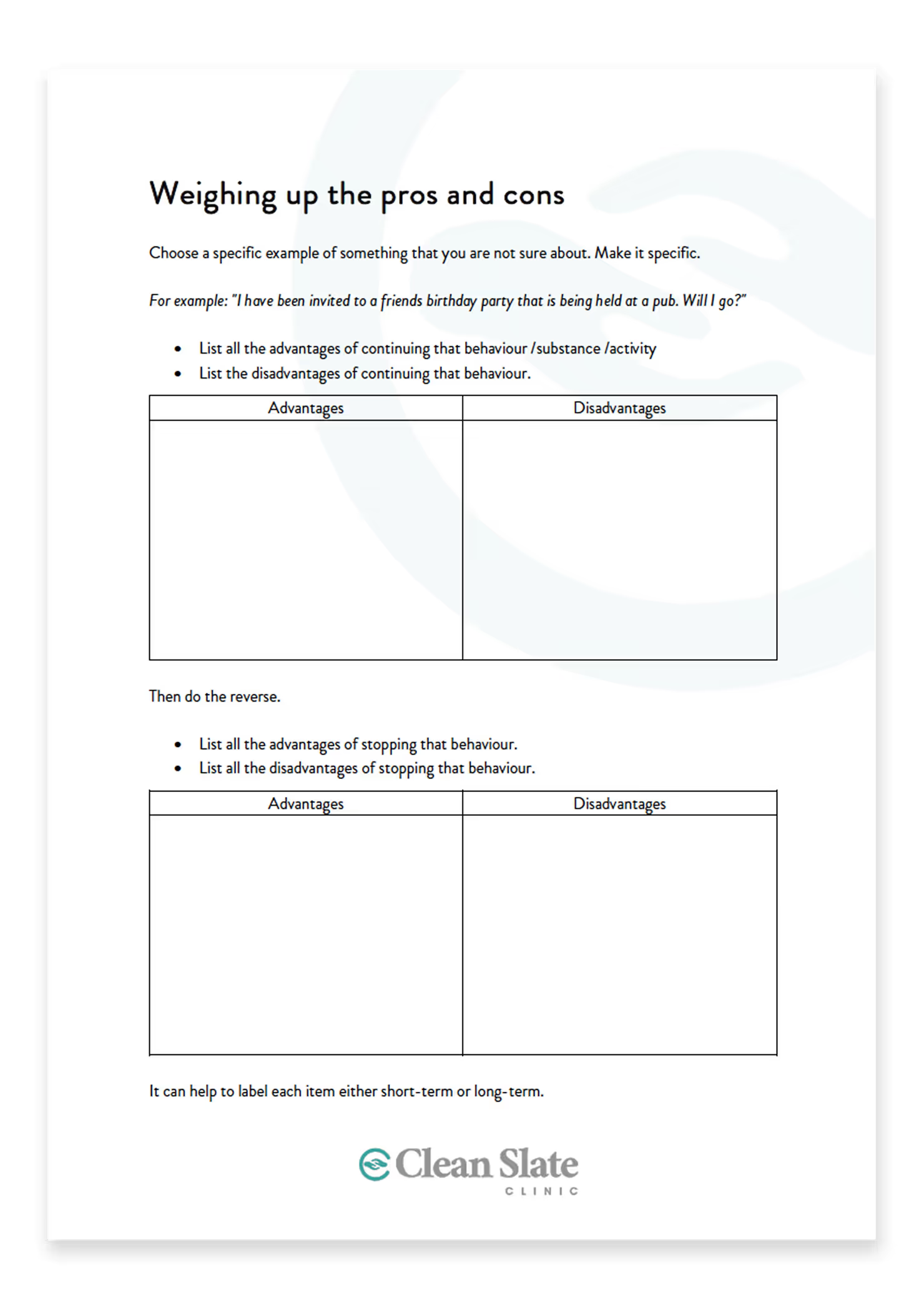
Weighing up the pros and cons
Use this important mindfulness tool to help aid your decision making.
Download the PDF:
Clean Slate Clinic - Weighing up the pros and cons.pdf
Download the Word doc:
Clean Slate Clinic - Weighing up the pros and cons.docx
Preview:

What Does Diazepam do During Alcohol Withdrawal?
If you’ve been thinking about cutting back on alcohol - or stopping altogether - the idea of taking medication might come as a surprise. You’re not alone in that. We speak to so many people who say: “I thought I’d just push through it”, or “I didn’t realise withdrawal could be dangerous”.
And here’s the truth: for some people, stopping alcohol after a period of regular or heavy use can come with risks. It’s not about willpower. It’s about biology. And this is where medication, like diazepam, can play a really important role - not just in keeping you safe, but in making those early days feel a little less overwhelming.
Let’s walk through it together.

What’s actually happening in your brain when you stop drinking?
Alcohol might feel like it slows you down - helps you switch off, sleep, take the edge off. That’s because it increases the activity of a calming brain chemical called GABA (short for gamma-aminobutyric acid). Think of GABA as your brain’s natural brake pedal. It slows things down, takes the tension out of your system.
But when you drink regularly, your brain starts to adjust. It pushes back by turning the volume down on GABA and turning the volume up on excitatory chemicals like adrenaline, cortisol and glutamate. It’s trying to stay balanced. This is how you build a tolerance to alcohol - meaning you need more alcohol to have the same effect.
Now here’s the kicker: when you suddenly remove the alcohol, that calming effect disappears - but your brain’s still stuck in high gear. This is what causes withdrawal symptoms. Your body becomes overstimulated. You might feel shaky, sweaty, anxious, restless. You might struggle to sleep, or feel like your heart’s racing. In more severe cases, there’s a risk of seizures or hallucinations.
It’s not just unpleasant - it can be dangerous. And that’s why, for some people, we use diazepam.
So, what exactly does diazepam do?
Diazepam is a medication in the benzodiazepine family. It essentially steps in and acts like a temporary GABA booster. It calms the nervous system, reduces overactivity, and helps the body settle.
If alcohol has been pressing your brain’s brake pedal for months or years - diazepam gently applies the brakes for you while your brain relearns how to do it on its own. It doesn’t replace alcohol, and it doesn’t “numb you out.” It simply helps your system stabilise as it adjusts to functioning without alcohol.
Depending on your needs, diazepam might be used for a few days to a week. It’s always prescribed with a tapering plan - meaning the dose gets gradually reduced as your body settles. We don’t want you to be on it for long. We just want to help you cross the bridge safely - and we’ll walk you across it.
What withdrawal actually feels like - and where diazepam helps
Here’s how it often goes: the first 6 to 24 hours after your last drink, your body starts to notice the change. You might feel a little restless, your sleep might be patchy, and you might feel like your thoughts are racing, or like you’ve got a low-level buzz of anxiety running under everything.
By the 48-hour mark, these symptoms can peak - especially if you’ve been drinking heavily. Tremors, nausea, sweating, mood swings, even hallucinations in some cases. This is the window where things can tip from uncomfortable to unsafe.
Diazepam helps take the edge off those symptoms - not in a numbing way, but in a supportive way. It allows your body to rest, your heart rate to slow, your sleep to return in short bursts. It gives your brain a softer landing. And in doing so, it gives you more clarity and control to focus on the bigger picture: why you’re doing this, and what life could look like on the other side.
“Do I have to take it? What if I don’t want to?”
Great question. The short answer? No, not everyone needs medication. And if you don’t want it, we’ll talk through the alternatives.
But if you’re drinking heavily or regularly - especially daily - there’s a good chance your body has developed some physical dependence. In those cases, going it alone isn’t just hard. It can be risky.
At Clean Slate, we assess every person individually. We take into account your drinking patterns, your medical history, and your goals. If diazepam is appropriate, we’ll explain exactly why, how it works, and what to expect. No jargon. No pressure. Just options, clearly laid out. And you’ll never be left to figure it out on your own.

You don’t have to white-knuckle it
There’s a common myth - especially among high-achievers, carers, perfectionists - that we have to do everything the hard way to prove we’re “really” ready to change.
But recovery doesn’t have to be brutal. It can be supported, informed, and kind. Taking a break from alcohol is a big deal. Giving your body time to recalibrate safely is a big deal. And asking for help - including medication support when needed - is not a weakness. It’s wisdom.
If you’re not sure whether you’ll need medication, or you just want to talk things through, we’re here. We offer a safe, evidence-based, fully remote medical detox from home - and a team of people who’ll treat you like a whole human, not a “case.”
We’re here to help you take that next step whenever you’re ready. Check your suitability today.
Sources
Amato, L., Minozzi, S., Vecchi, S. and Davoli, M., 2022. Benzodiazepines for alcohol withdrawal. Cochrane Database of Systematic Reviews, 2022(3), Art. No.: CD005063. [online] Available at: https://www.cochrane.org/evidence/CD005063_benzodiazepines-alcohol-withdrawal.
Haber, P.S. and Riordan, B.C., 2021. Guidelines for the treatment of alcohol problems. 4th ed. Sydney: Specialty of Addiction Medicine, Faculty of Medicine and Health, The University of Sydney. [online] Available at: https://alcoholtreatmentguidelines.com.au/medications-for-managing-alcohol-withdrawal/benzodiazepines].
Weintraub, S.J., 2017. Diazepam in the treatment of moderate to severe alcohol withdrawal. CNS Drugs, 31, pp.87–95. [online] Available at: https://link.springer.com/article/10.1007/s40263-016-0403-y.
Al-Maqbali, J.S., Al Alawi, A.M., Al-Mamari, Q., Al-Huraizi, A. and Al-Maqrashi, N., 2023. Symptoms-triggered approach versus fixed-scheduled approach of benzodiazepines for management of alcohol withdrawal syndrome: Non-randomized controlled trial. Alcohol, 106, pp.10–14. [online] Available at: https://www.sciencedirect.com/science/article/pii/S0741832922000982/.








Ready to get started?





Subscribe