.png)




Blog Posts

Websites and Social Media Profiles

Hello Sunday Morning
Hello Sunday Morning's aim is to change the world’s relationship with alcohol, one Sunday at a time.
Whether that means abstaining, taking a break, or simply understanding how to have a healthy relationship with alcohol, they support you and your choice. The site includes resources and tips for cutting back on drinking, as well as information on Daybreak, their powerful support app to help you reset your drinking habits with a supportive online community and free health coaching.

Sober in the Country
Sober in the Country is a grassroots, rural not-for-profit creating conversations across rural Australia to ensure our mates know that it's always #OK2SAYNO to booze.

This Naked Mind
Bestselling Author of 'This Naked Mind' and 'The Alcohol Experiment', Annie Grace, provides great resources alongside her books on this site, including an excellent range of podcasts and youtube videos.

Samsn
Australia’s leading organisation for male survivors of child sexual abuse and their supporters.
HumanKind Meditation
These guided meditations are designed to support wise and loving care (for self, others and the world).
Sober Girl Society
The sisterly safe space for sober and sober curious women who are changing their relationship with alcohol.
→ Sober Girl Society on Instagram
Wada Wanti
A web-app designed to help Aboriginal and Torres Strait Islander people who use ice to use less or stop using.
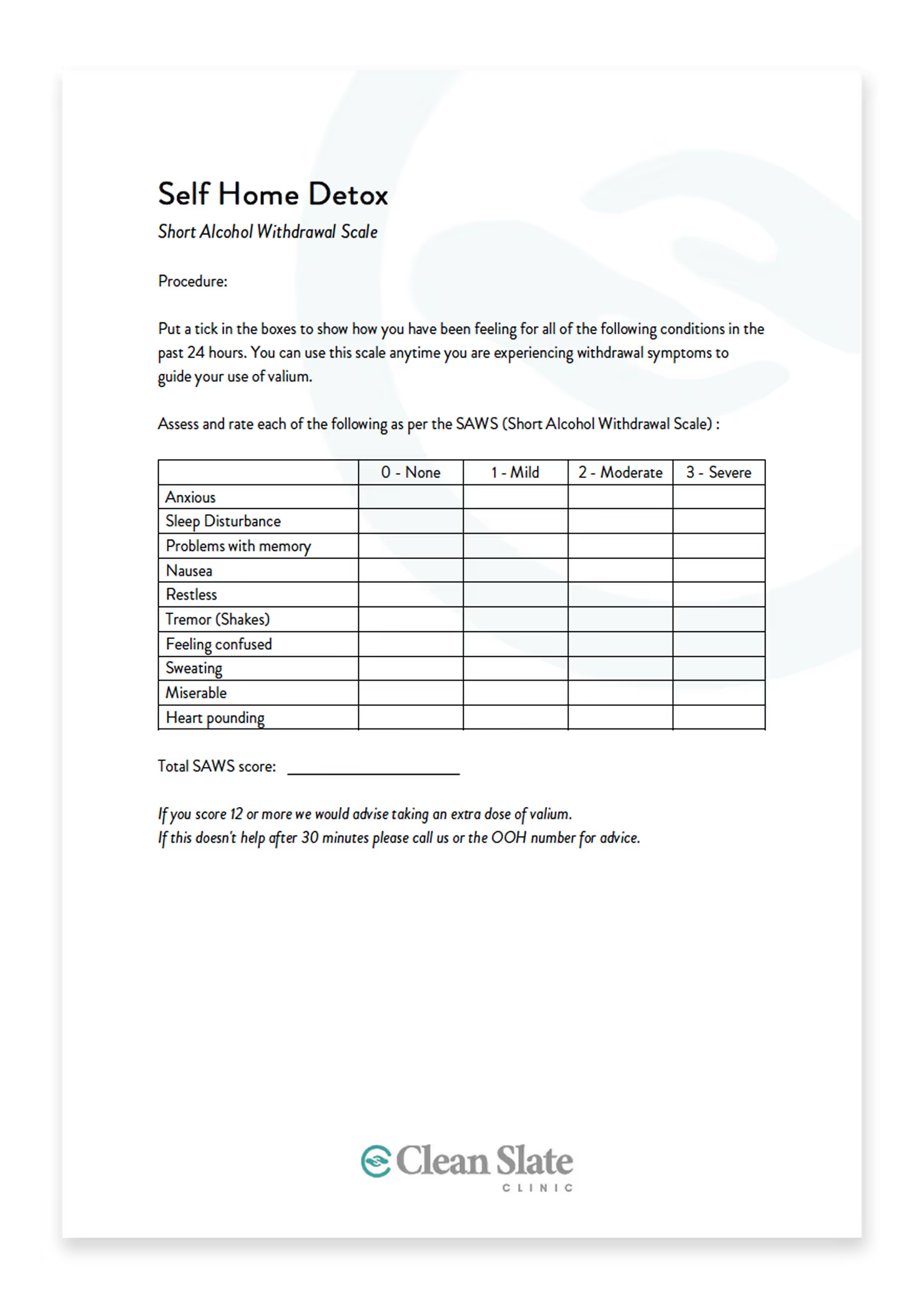
Self Home Detox - Short Alcohol Withdrawal Scale
This is a withdrawal scale to be used during a medicated detox. It assesses your withdrawal symptoms which will be reported back to the Clean Slate team as part of your detox diary. It can guide whether or not you need to take your valium dose, or indeed whether you need an extra one.
Download the PDF:
Clean Slate Clinic - Self Home Detox - SAWS.pdf
Download the Word document:
Clean Slate Clinic - Self Home Detox - SAWS.docx
Preview:

Reading list
These books are a great way to relax, find inspiration and learn from others who have been down the path of changing their relationship with alcohol.

This Naked Mind
- Annie Grace
Many people question whether drinking has become too big a part of their lives, and worry that it may even be affecting their health. But, they resist change because they fear losing the pleasure and stress-relief associated with alcohol, and assume giving it up will involve deprivation and misery. This Naked Mind offers a new, positive solution...
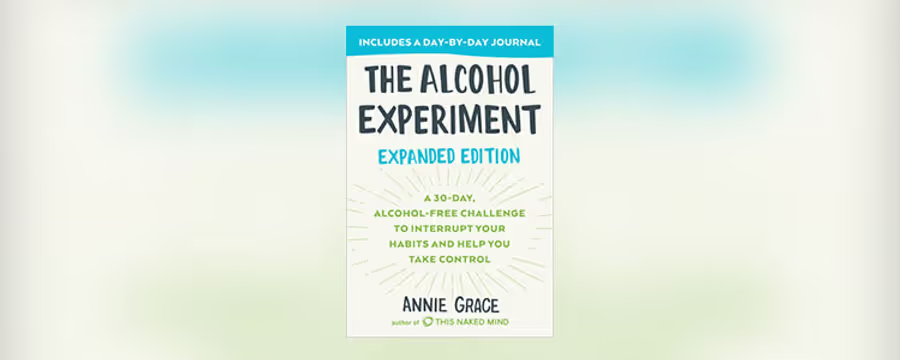
The Alcohol Experiment
- Annie Grace
Changing your habits can be hard without the right tools. Through her own journey, methodical research, and neuroscience, Annie Grace has cracked the code on habit change by addressing the specific ways habits form. Annie offers a judgment-free action plan for anyone who’s ever wondered what life without alcohol is like.

High Sobriety
- JiI’ll Stark
Jill’s first book, High Sobriety: My Year Without Booze, is a best-selling memoir exploring Australia and Scotland’s binge drinking culture, set against the backdrop of her own tumultuous relationship with alcohol. High Sobriety is a funny, moving, and insightful exploration of why we drink, how we got here, and what happens when we turn off the tap.

The Sober Diaries
- Clare Pooley
This book is the story of a year in Clare's life. A year that started with her quitting booze having been drinking more than a bottle of wine every day. It sees her starting a hugely successful blog, then getting and beating breast cancer. By the end of the year she is booze free and cancer free. Sober Diaries is an upbeat, funny and positive look at how to live life to the full.

The Unexpected Joy of Being Sober
- Catherine Gray
Catherine Gray was stuck in a hellish whirligig of Drink, Make horrible decisions, Hangover, Repeat. She had her fair share of 'drunk tank' jail cells and topless-in-a-hot-tub misadventures.
But this book goes beyond the binges and blackouts to deep-dive into uncharted territory: What happens after you quit drinking? This gripping, heart-breaking and witty book takes us down the rabbit-hole of an alternative reality. A life with zero hangovers, through sober weddings, sex, Christmases and breakups. In The Unexpected Joy of Being Sober, Catherine Gray shines a light on society's drink-pushing and talks to top neuroscientists and psychologists about why we drink, delving into the science behind what it does to our brains and bodies.

Alcohol Lied to Me... AGAIN!
- Craig Beck
The book ‘Alcohol Lied to Me’ has helped tens of thousands of people get back in control of their drinking thanks to its unique and simple to follow message. But alcohol is the most devious and deceptive drug on planet earth and occasionally people fall back under its spell. This journey backwards virtually always starts with the same sentence being uttered: ‘Surely just one drink won’t hurt’.
Just one drink… it seems such an innocuous action that it couldn’t possibly cause any substantial drama. In reality it is the same as hoping to take just one little step off a cliff. It’s only one seemingly insignificant step but the consequences are rapid, irreversible and severe. Both events start off an unstoppable series of events.
In Alcohol Lied to Me… Again, Craig gives you the tools to once again break the cycle of alcohol addiction. You will discover why this relapse can be a good thing and how you use it to ensure you stay sober for the rest of your life.

Phone apps
Daybreak
By Hello Sunday Morning
Daybreak helps you change your relationship with alcohol. Whether your goal is to reduce your drinking, or complete abstinence, Daybreak is here to support you and your choice.What this Alcohol Support App Offers:
- Peer community: a non-judgemental community of people just like you, where you can exchange information and support to help yourself and others with their alcohol behaviour change goals.
- Personal Improvement: over 100 suggested activities for you to try, to help with your alcohol behaviour change goal.
- Anonymous, safe, secure environment: get the support you need anonymously, in a safe and secure environment.
Changing behaviour around alcohol use can be challenging, but you don't have to do it alone. Daybreak is a supportive and non-judgemental space where you can get the information and support you need to help achieve your goal.
People who use Daybreak say they love waking up without hangovers, feel healthier & have more time to do the things they love.
→ www.hellosundaymorning.org/daybreak
Drinks Meter
By Global Drug Survey
Drinks Meter offers anonymous, objective feedback on your alcohol use and comparison to thousands of people’s drinking habits worldwide alongside goal tracking through our Drinks Diary. It’s not just about the drinks — it’s about who you are, how you drink and the impact it has on your life.
So, if you want to see what your drinking equates to in cheeseburgers, your score on a medical alcohol screener or just how it all adds up, Drinks Meter shows how you compare.
Sobriety Tracker/Counter
By Recovery Elevator
Track your progress one day at a time with this sobriety counter from Recovery Elevator. Time is always moving forward, even though early sobriety feels like an eternity, you can watch the seconds tick as progress accumulates. Track money saved and calories not consumed with the sobriety tracker.
Nomo - Sobriety clocks
By Parker Stech
If you're looking for a simple clock that can track the number of days you've been sober/clean/etc, then Nomo is perfect for you. You can create as many clocks as you need for any hurts, habits, or hang ups. Your clocks are completely private by default and will count those days for you.
If you're looking for something more, just check under the hood. Nomo has tons of optional features like an encouragement wall from the community, accountability partner searching, clock sharing, private messaging with partners, milestone awards, journaling, little games/exercises to help you refocus when you're tempted, and tons more!
I Am Sober
By I Am Sober LLC
I Am Sober is more than just a free sobriety counter app. Along with tracking your sober days, it helps you build new habits and provides ongoing motivation by connecting you to a wide network of people all striving for the same goal: staying sober one day at a time.
Through our growing sober community you can learn from others and contribute by sharing insights and tactics that have worked for you.

Online counselling

Counselling Online
Counselling Online is a free and confidential service that provides 24/7 support to people across Australia affected by alcohol or drug use.
→ www.counsellingonline.org.au

Mantle
Mantle is a specialist-one-on-one Telehealth Psychology Service, primarily for Men. Our Goal is to support Men to be better partners, fathers, sons, brothers, colleagues, and friends, and to improve Mental Health outcomes for Men. We do this by reducing the barriers to receiving professional and effective one-on-one Psychological support. Our team are experienced Psychologists only, and can help Men build and maintain positive Mental Health and performance, as well as supporting recovery from Mental ill-health/Illness.

DirectLine
Confidential alcohol & drug counselling and referral in Victoria.
Acon's Substance Support Counselling Service
ACON provides free telehealth (video or phone) counselling for any LGBTQ+ people living throughout NSW - including rural and regional areas - who want to reduce or stop their use of alcohol and other drugs. The service is also available for friends, family, partners who are concerned about their LGBTQ+ loved one’s alcohol and/or drug use. To access the service complete ACON's Intake Form. No mental health plans or GP referrals required.

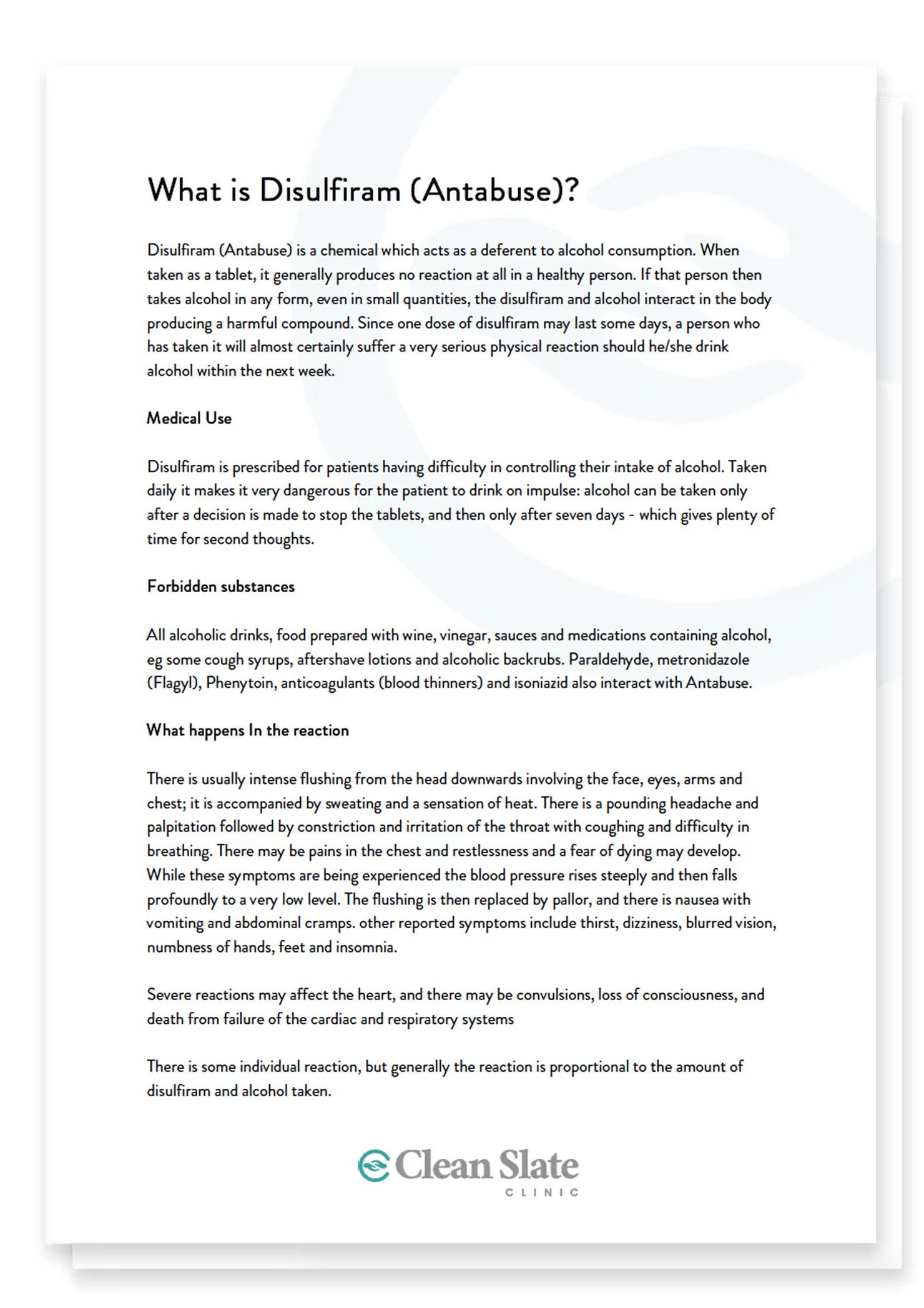
I've been recommended Disulfiram - what is it?
Disulfiram is prescribed for patients having difficulty in controlling their intake of alcohol. Taken daily it makes it very dangerous for the patient to drink on impulse: alcohol can be taken only after a decision is made to stop the tablets, and then only after seven days - which gives plenty of time for second thoughts.
Learn more about Disulfiram by downloading the document below.
The information has been prepared to answer some of the common questions you may have about Disulfiram. If you have a concern about any medicine you are taking, you should always consult your doctor or pharmacist.
Download the PDF:
Clean Slate Clinic - What is Disulfiram_.pdf
Download the Word doc:
Clean Slate Clinic - What is Disulfiram_.docx
Preview:

Reducing Alcohol: The Number One New Year's Resolution and 5 Tips on How to Stick to it
For many of us, the journey to reducing alcohol consumption can feel overwhelming. As we approach the New Year and focus on recalibrating healthy habits, we chatted to Andrew Addie, our Intake and Client Support Coordinator. Andrew brings not just professional expertise but valuable lived experience to his role.
Over five years ago, he was drinking heavily, and like many Australians, what had begun as social drinking had escalated into something more serious. Andrew had known for nearly a decade that he wanted to slow down, and serendipitously found his way to Clean Slate when it was operating out of a GP practice under Dr Chris Davis.
Now, drawing from his experience and expertise, Andrew shares valuable insights on making and maintaining this significant life change at the start of a new year.
1. Strategic Planning
What is planning? How can people plan and why is it important?
When it comes to making significant lifestyle changes, especially with something as complex as alcohol consumption, setting yourself up for success demands thoughtful preparation and a holistic approach. Making the decision to reduce or eliminate alcohol from your life is a journey that touches multiple aspects of your daily routine, social interactions, and personal wellbeing.
That's why it's important to approach this resolution with careful consideration and a well thought-out strategy that addresses both the practical and emotional challenges you might face along the way.
You might want to start by seeing a GP and working out a plan with them first, particularly if you feel you are drinking moderately to severely (high risk) and need to gradually reduce your drinking rather than going ‘cold turkey’, due to the risk of seizures or other serious side effects.
Andrew recommends to leave no stone unturned in the planning phase. Practical steps might include things like:
- Removing all alcohol from your home;
- Stocking up on non-alcoholic alternatives (or having some stubbie holders handy to cover a non-alc bev that you can ‘pretend’ is alcoholic to avoid questions at events if you don’t want confrontation);
- Writing goals down or even journalling can be helpful as a daily practice;
- Plan to do things during the times when you usually drink alcohol. Try things like going on a tech and wallet free walk. You will more than likely find 20 other sober people at a 6pm yoga class on a Friday;
- Practice saying ‘no’ through mock scenarios. Even if you can have a few excuses like you’re on a ‘health kick’, you’re driving, or you’re on antibiotics. Andrew said it’s ok to just tell a fib or two if you just want to be a chameleon and fit in without having to draw attention to yourself if you are feeling vulnerable. You will find your voice and eventually feel confident and comfortable saying ‘no’, but in those early days when you're still building that confidence, it's perfectly fine to have some responses ready for those potentially awkward social situations.
2. Be Kind to Yourself
Being kind to yourself during this journey is something to remember. Change doesn't happen overnight, and it's normal to face challenges along the way.
As Andrew explains,"There's no need to be hard on yourself. If you slip up, it's ok - the time you spent not drinking still counts and is worth celebrating.
"Remember that this is a process - 'Rome wasn't built in a day.' You will find yourself experimenting during the journey and it can be trial and error and that is ok."
3. Build Your Support Network
January can be particularly conducive to connecting with like-minded people, as many might be feeling the same way after December and dropping unhealthy habits in the New Year.
Andrew says; "January is interesting because there's this general vibe where everyone's trying to tone things down after the festive season. Society is much more forgiving of people not drinking, so you can really harness that energy to your advantage. While December brings a lot of challenges with all the celebrations, January offers this natural window where many people are focusing on health and fresh starts. It's the perfect time to connect with others who are on the same journey."
Find allies who can support your journey, whether they're other non-drinkers, even pregnant women, or just people who also want to improve their own health. You might also want to distance yourself from relationships that might undermine your goals, at least during the initial transition period.
4. Focus on New Activities
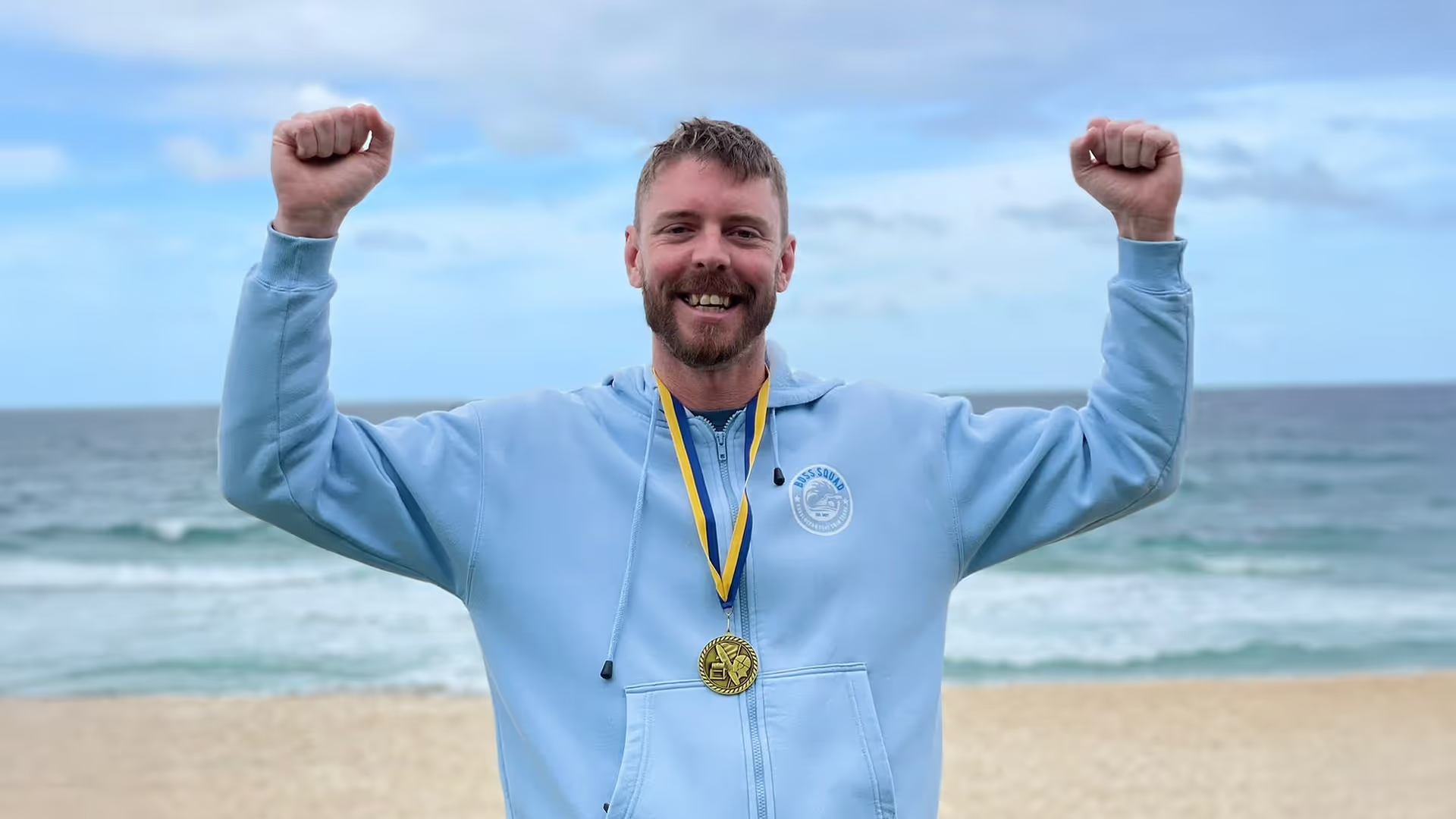
Consider connecting with other things you love doing or finding new hobbies. Andrew shares his personal journey of rediscovery through swimming. "I used to be a decent swimmer back in high school, and I really enjoyed it," he recalls. Initially, he both figuratively and literally just "dipped his toe in the water," starting with returning to casual laps.
Andrew then found an organisation that offered events to focus on where you could sign up for 1km, 2km, and 5km swims. The group provided both the physical activity, but also social connections with new people, and the satisfaction of achieving concrete goals. For Andrew, swimming became more than just a hobby - it was a positive replacement for drinking that brought back joy and purpose to his life.
He also says that it doesn’t necessarily have to be a sport that you find joy in. Some people do turn to running and wellness through physical activities which is great, but if you are a painter, or a writer, or even love woodwork or fishing. Just think about what will fuel you to enact positive change in your life and bring joy without a drink in your hand.."

5. Understand the Process and Seek Support
Be prepared for withdrawal symptoms beyond the physical, particularly in the first week, which might include things like loneliness or anxiety. Remember that these are normal parts of the process and it helps to sit with that discomfort - it’s ok to indulge in a bit of self-pity.
But also remember to amplify the wins rather than dwelling on these negative feelings. Things like waking up fresh on a Sunday morning, or even just being able to attend a party and not have a drink. Celebrate those day by day milestones. Andrew says to treat yourself with the wins. A spa day, or a meal at your favourite restaurant as a reward.
Most importantly, remember that support is readily available. You can start by having a confidential chat with your GP or take our online suitability test at Clean Slate to connect with our team. Private consultations are conducted in a completely judgment-free environment. Our team, including many with lived experience of alcohol and other drug dependence, are all about helping you move forward without shame or stigma.
Andrew says:
"The days of stoicism and suffering in silence are over. Anyone working in the alcohol and drug space genuinely wants to help you open up and heal. Don't let perceived barriers hold you back - reaching out for support might be one of the most liberating things you'll ever do."
Spotlight On | Fiona Faulkner
As clinicians, three key qualities are essential. First, a deep understanding of the neuroscience behind behaviours that can become problematic. Secondly, knowledge of appropriate treatment methods. And thirdly (possibly the most important), the ability to truly hear an individual's story. A skill that looks beyond the spoken word to see the essence of someone, to notice what is not spoken and to understand the significance of both.
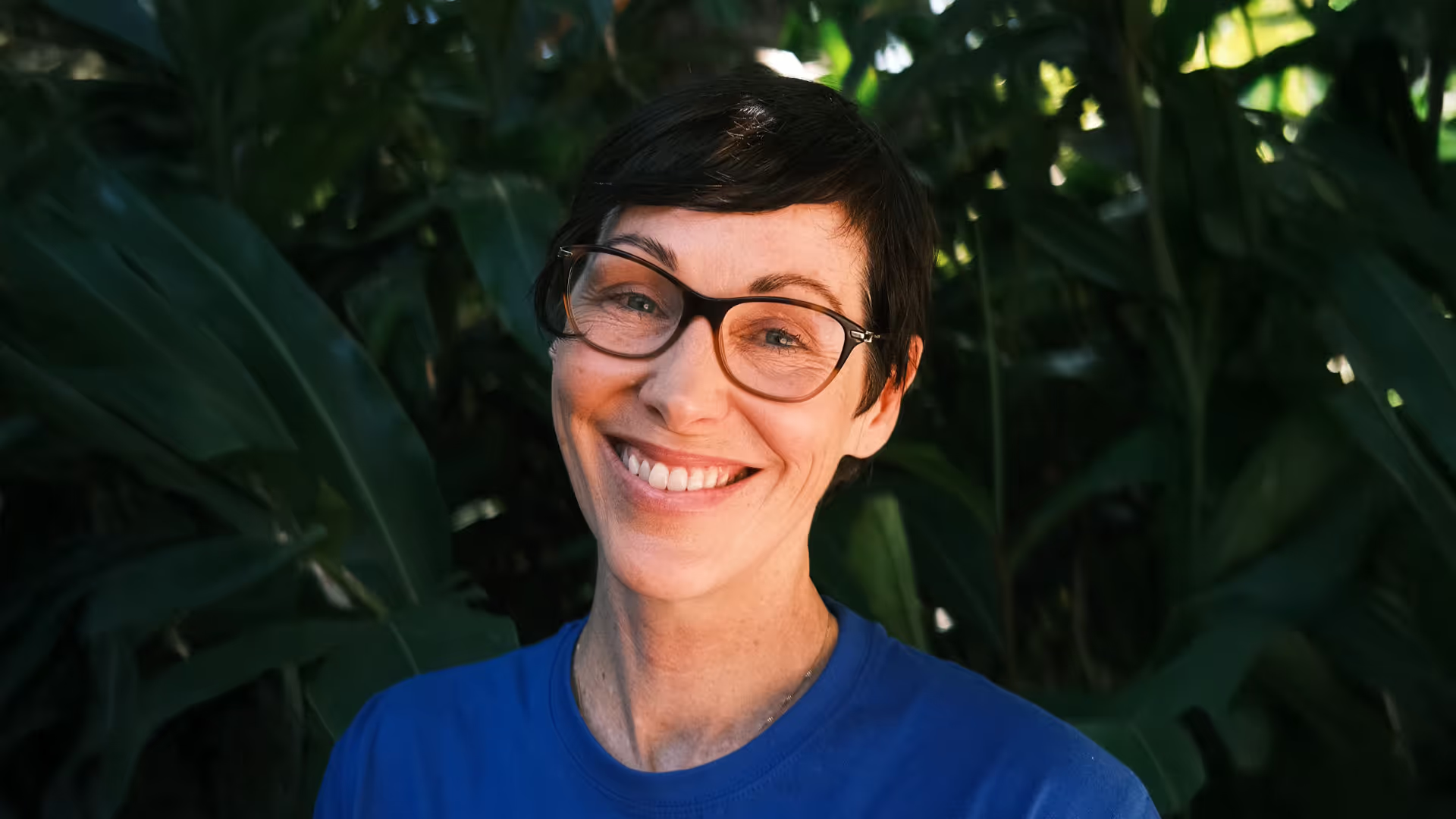
Speaking to Fiona Faulkner, our Partnerships and Community Lead and one of our Clean Slate nurses, you immediately get a sense that she embodies all of these qualities.
On paper, Fiona has all the attributes of a well-studied professional, who has made learning her mission, formally studying nursing, mental health nursing and a Masters in Social Work, informally studying various interests from sign language, pottery to yoga teacher training.
Speaking with Fiona, she reflects on her journey into healthcare;“I have always had a sense of social justice, I was always drawn to people who needed help or support. As a teenager I wanted to study social work and that was realised when as a mature age student I chose nursing which was the prerequisite into the Master program, hence taking that route. I feel so lucky to work in a way that combines both my passion, my skill set and in a role that I am able to give back"
Fiona's nursing career commenced in a forensic mental health unit in Tasmania, and it was here that she witnessed first-hand the ability of the mind to adapt and make change.
"I remember thinking, if people can make sense of these situations, when it would seem all is lost, then why do we who seemingly have everything feel we can not cope with our struggles. Working in that unit gave me the gift of perspective and cemented the notion of enduring hope."
It was while working in this unit that Fiona completed her postgraduate nursing qualifications in Mental Health and Master of Social Work. Fiona recalls a lecturer who worked for the Alcohol and Drug (AOD) unit who invited her to apply for a position within the AOD team. She was successful and recounts: "As soon as I switched to AOD, I knew I was home. I owe my career in this field to that lecturer, who then became my boss. I love working with people to see that change is possible. One of the most rewarding aspects of this work is when clients share that they feel like themselves again, that they're finally able to remember themselves and start moving towards their goals. It's incredibly motivating to witness these transformations and I feel so lucky that I get to hear these stories from Clean Slate Clients on a daily basis".
Fiona was one of the first nurses to join Clean Slate. What she immediately loved about the approach was the long term support she could provide to clients throughout their recovery journey.
"I love that clients get continuity of care with Clean Slate. In traditional alcohol and drug services, clients are often handed from one team to another for assessment, detox, and rehab. This system can be difficult to navigate, a barrier to accessing treatment, especially when people are at their most vulnerable.
"With Clean Slate, I can see a client from the very beginning, hear their story, connect with them and assure them that I’m going to be working with them for the next twelve months, and I'll be there to remind them of how far they've come and will celebrate the changes they've made, the insights they have gained. This makes a real difference in their recovery journey."
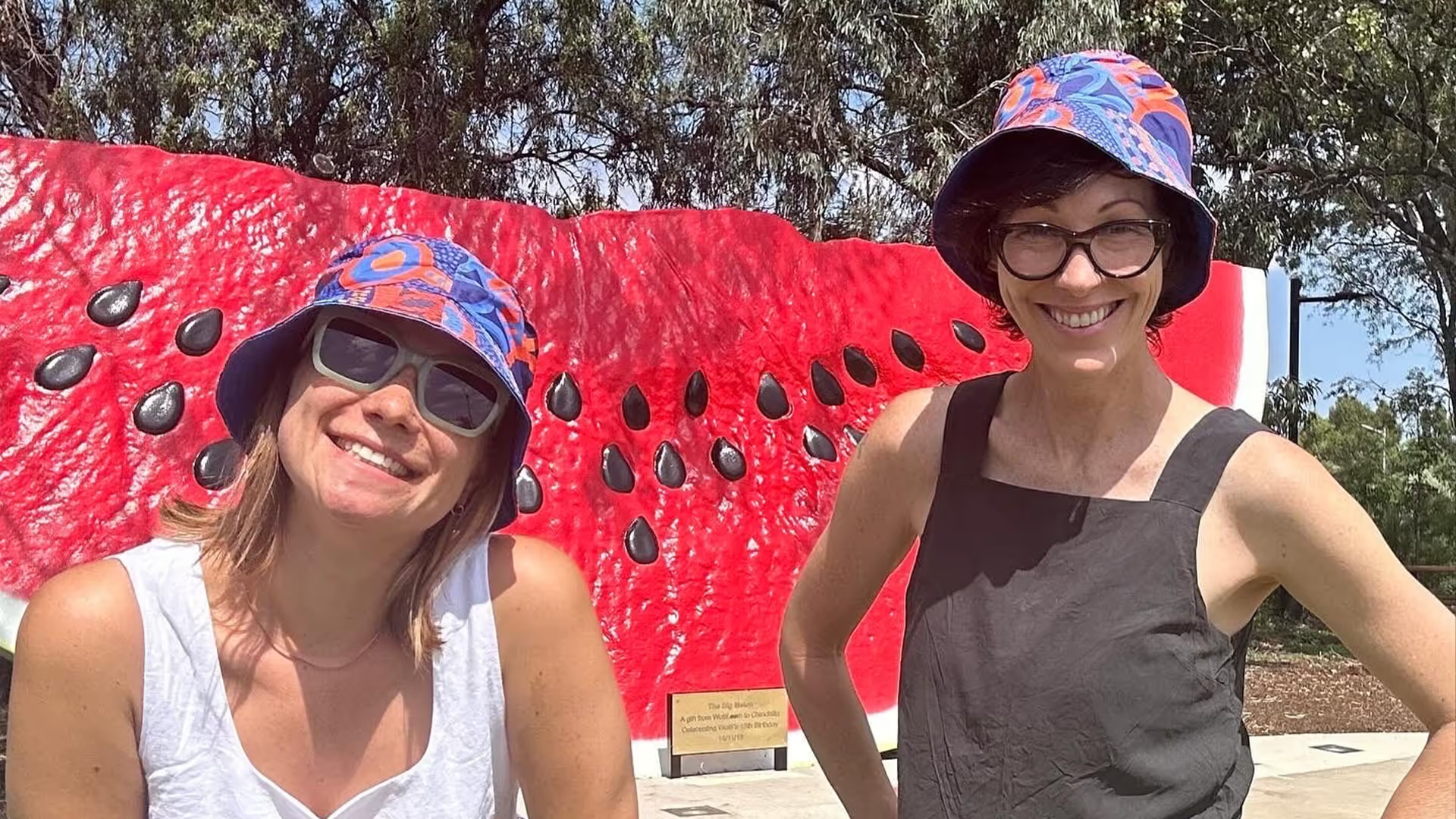
Fiona's genuine warmth and empathy shines through the screen via telehealth or zoomlines. It's not all virtual though - Fiona takes regular trips out to Western QLD to work alongside the wonderful Armajun Aboriginal Health Team and recently took a trip out to Mt Isa with the Western Queensland Primary Health network team to identify additional ways Clean Slate Clinic can make their services accessible for all Australians regardless of geographical constraints.
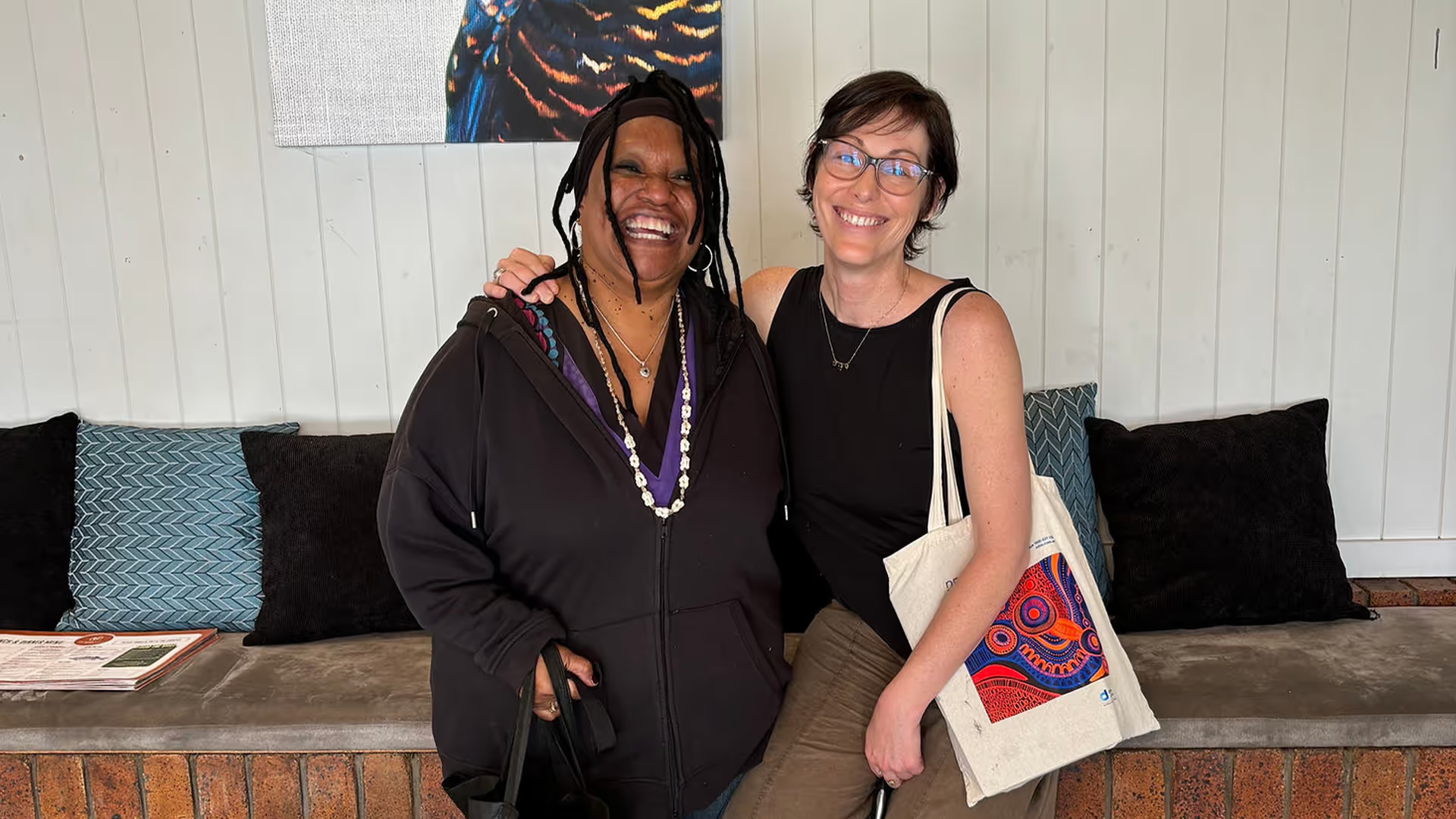
Whilst out West Fiona was able to catch up with some of her patients face-to-face.
"When you are working with people for twelve months, you become part of the furniture, these people I work with are an inspiration to me and it is lovely to meet them face to face when I can."
Fiona is a big fan of the telehealth approach. She says that some Clean Slate clients would struggle to get treatment otherwise because of where they live or what's going on in their lives. Many people can not leave pets, family, jobs or property to travel to a detox facility, so being able to do this work with people, in their homes, makes all the difference.
"When you're talking to new clients, it's often a relief for them. They'll say, 'Oh, I didn't even know this was an option.' For people in regional areas, the receptionist at the local medical centre might be a mum from the tuck-shop roster, or the doctor might play soccer in your team. People don’t want to have these conversations in spaces they feel they may be judged. Clean Slate Clinic provides a safe option for these people.
"Being able to form an alliance with somebody online who can offer support while keeping things confidential is really great. I've got clients who don't get mail regularly, might not have reliable internet, or don't get to town often. For these people, or for those who can't leave home for whatever reason, this service is invaluable."
Fiona's long career working in various health environments means she is no stranger to unhelpful emotions and problematic behaviour or substance dependence. She believes for some people it is helpful to experiment with different strategies to cope with these issues and client feedback indicates she excels at providing a judgment-free environment for people to share their stories and do the work.
"I always ask clients what benefits they've experienced from abstinence," Fiona shares.
"The responses never get old. Clients report increased mental clarity, waking up energised, reduced anxiety, better sleep, and even significant weight loss. One client told me they feel like a kid on Christmas morning when they wake up now. Another said they can finally take road trips again, they are no longer anxious about being on a highway. Alcohol and other substance use can keep you from enjoying certain aspects of life and it’s incredibly rewarding to hear these milestones along people’s journey."
While all stories are different, the common thread is the resilience that clients develop.
"Developing the ability to cope with cravings has a broader impact. If you can sit through that discomfort, it strengthens your ability to cope in other situations. Change doesn't happen in isolation. One change creates a ripple effect, impacting various areas of life. I really enjoy exploring this process with clients, unpacking how their growth in one area positively influences others."
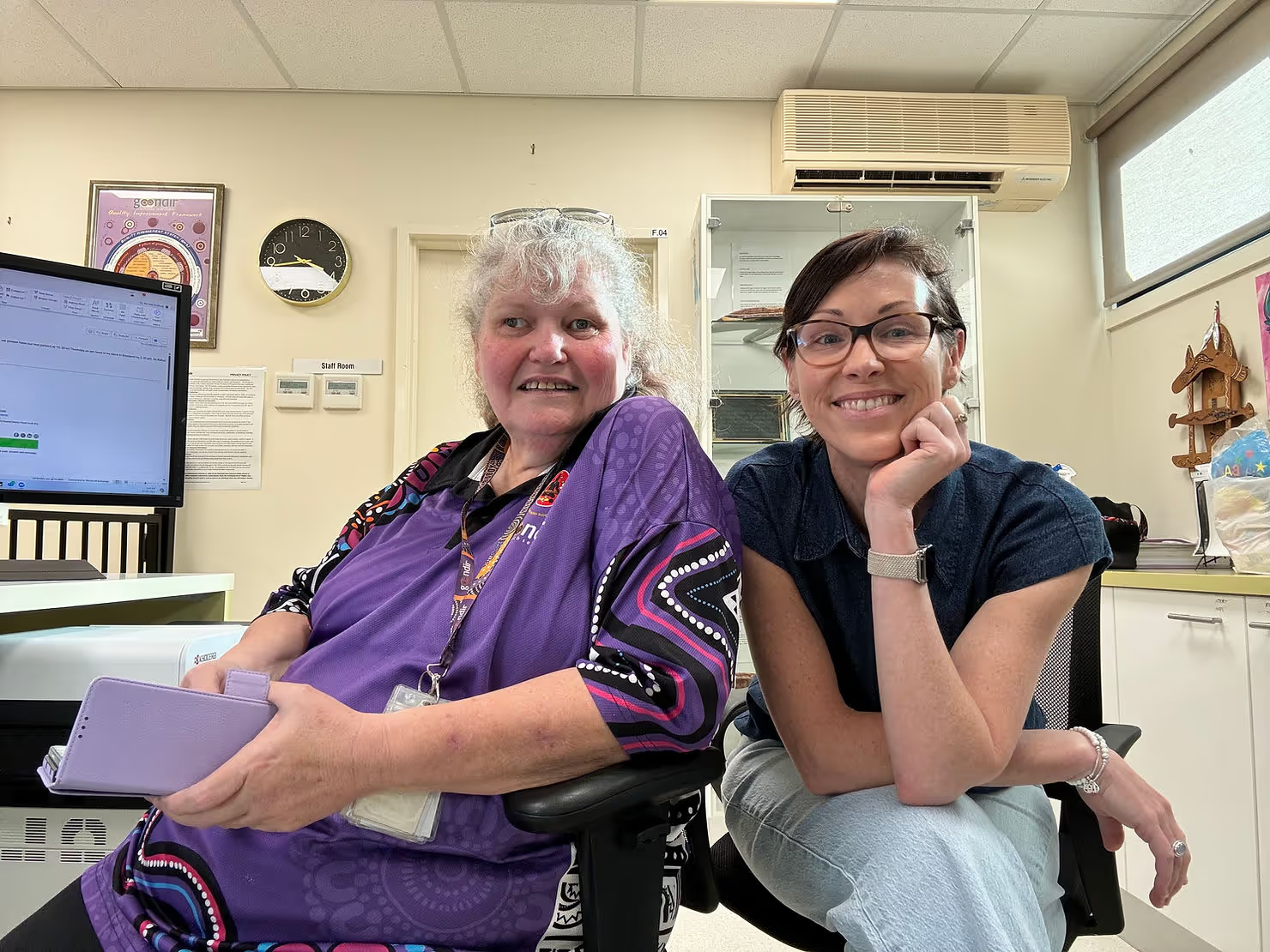
When asked about the potential for cultural change in Australia regarding alcohol consumption, Fiona is optimistic. Despite the deeply ingrained drinking culture, she sees positive signs through her interactions with patients and the growing awareness of programs like Clean Slate. The rise in popularity of zero-alcohol drinks also indicates a shift in societal attitudes towards alcohol consumption.
Fiona's career path, starting later in life after raising a family, has given her a wealth of life experience that complements her extensive studies. Her knowledge of AOD is impressive, but it's her ability to connect with individuals and offer hope that truly sets her apart.
Fiona's words of wisdom resonate deeply: "Trust the process, take it one moment at a time, and believe that change is possible."
This simple yet profound advice encapsulates her approach to recovery, offering hope and encouragement to those on their journey to sobriety. It's a testament to Fiona's compassionate nature and her unwavering belief in the potential for transformation that lies within each of her clients.
What Fiona is Reading:
Fiona's Favourite Guided Meditation:
Fiona's Suggested Bedtime Routine:
Where's Home?
"Mostly Hobart, but I am always getting on a plane, I love to travel and visit family."
Fiona's Pets?
Sadie and Hazel… poodle cross queens.
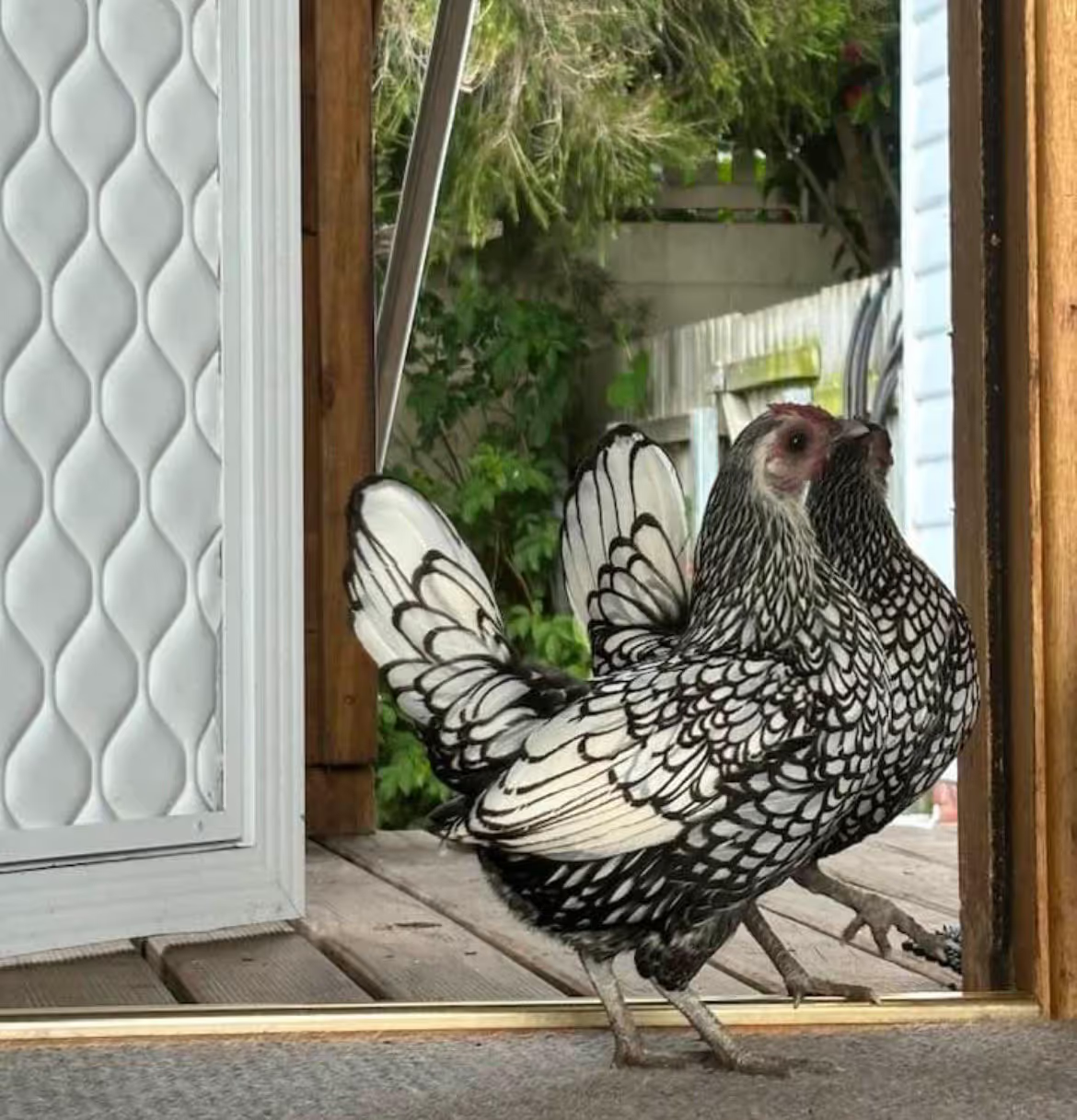
But her favourites really are the chickens… Bonnie, Clyde, Melissa, Simone and Lucky.
Answer me this
Mountains or Sea?
"I need to be able to get in the ocean, but I am planning to hike Lake Rhona this summer… so maybe both."
Best thing today?
"My chickens, hands down the best thing every day! But today the neighbour's sheep came up onto my veranda to say hello, that was pretty cool."
Your Superpower?
"My imagination and once I decide to do something, I do it… I might be slow, it might take a long time but if I say I will, I will."
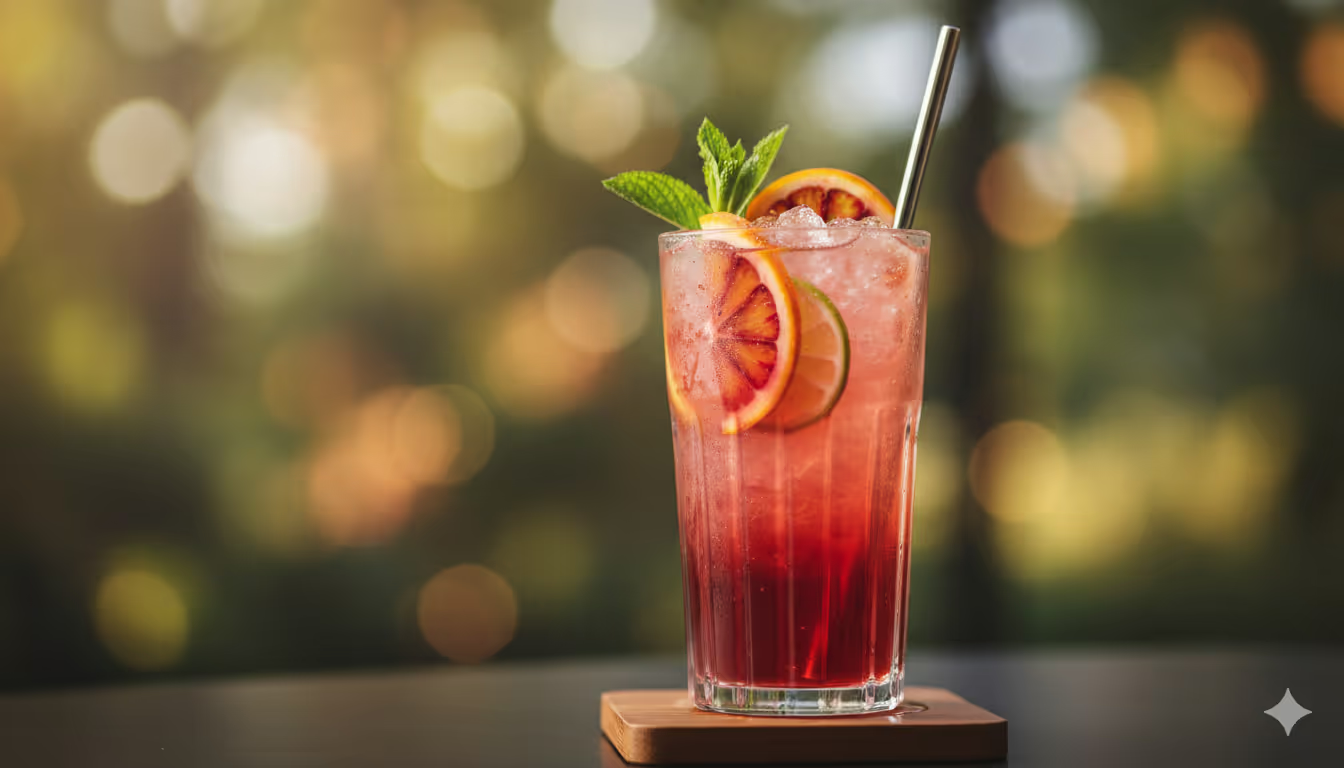
Festive Mocktails from Maz
Happy festive season from Clean Slate Clinic!
Clean Slate Nurse Maz (Marion Jarvis) is serving up quite a treat of recipes for all our lovely clients who want to raise their spirits without raising a glass. They look great and taste even better. Thanks Maz!
And see below for a list of her tasty non-alcoholic bevs you can start to test out.
Non Alcoholic Christmas Punch
Ingredients:
- 2 cups low sugar Cranberry juice
- 1 cup Orange juice
- 1 cup Pineapple juice
- 2 cups Sparkling Apple juice or cider *see notes for low sugar option
- 1 cup Ginger Ale
- Orange slices, cranberries, pomegranate seeds and/or cherries for garnish
Instructions:
- Mix cranberry, orange and pineapple juice in a punch bowl or large jug.
- Add sparkling apple juice/cider and ginger ale and mix gently.
- When you're ready to serve, add ice and fruit of your choice to garnish.

Other Popular Mocktails from ‘The Mindful Mocktail’
- Sunrise Mocktail
- Piña Colada Mocktail Recipe With Only 3 Ingredients
- Virgin Cosmopolitan Mocktail
- The Best Virgin Strawberry Daiquiri
- Ginger Mojito Mocktail Nonalcoholic
- Watermelon Agua Fresca
Maz has also suggested experimenting with some of the ingredients below:
- Cranberry juice - I like using low sugar juice but this really is personal preference.
- Orange juice - Freshly squeezed juice works well and adds to the nutritional content of the punch. If you're making a larger batch, bottled juice will be more economical.
- Pineapple juice - choose any brand you wish! Golden Circle is always a nostalgic Australian hit.
- Sparkling Apple cider or juice - Again this is a personal preference. I use a sparkling Apple juice called Appletiser and it's divine.
- Ginger Ale - The ginger adds a lovely kick and some extra bubbles to the punch. I'm a huge fan of bubbles! I always use low or reduced sugar. Club soda is a great replacement if you don't have Ginger Ale or are looking for a low-sugar alternative.
- Fresh fruit - The sky is the limit! I personally love cherries, pomegranate seeds and orange slices. Cranberries also work well and add a little festivity. I found some frozen cherries which worked two-fold - they looked delicious and acted as little ice blocks to keep the drink cool.
- Ice - I find larger ice cubes work really well and keep the punch nice and cold. If you don't have a large ice cube tray, regular-size ice is fine too.
- Club soda - Traditional club soda gives the punch recipe a lovely fizz without the additional calories. It's a win-win!
- Pomegranate juice - I do a non-alcoholic mulled wine and am a huge fan of organic pomegranate juice. The deep red colour also adds gorgeous festivity to this holiday drink.
- Lemonade - A super obvious way to sweeten the punch. I try to avoid lots of sugar, but there are some fantastic sugar free lemonades out there now.
- Apple juice - If you're not a fan of the sparkling version, regular apple juice works well too. I always suggest organic where possible.
- Alcohol-free sparkling wine - Another perfect way to add bubbles to your punch! The wine also adds a lovely 'adult' feel to this recipe.
- Alcohol-free red wine - A sparkling or still non-alcoholic red can add a beautiful flavour and colour to your punch. Get creative!
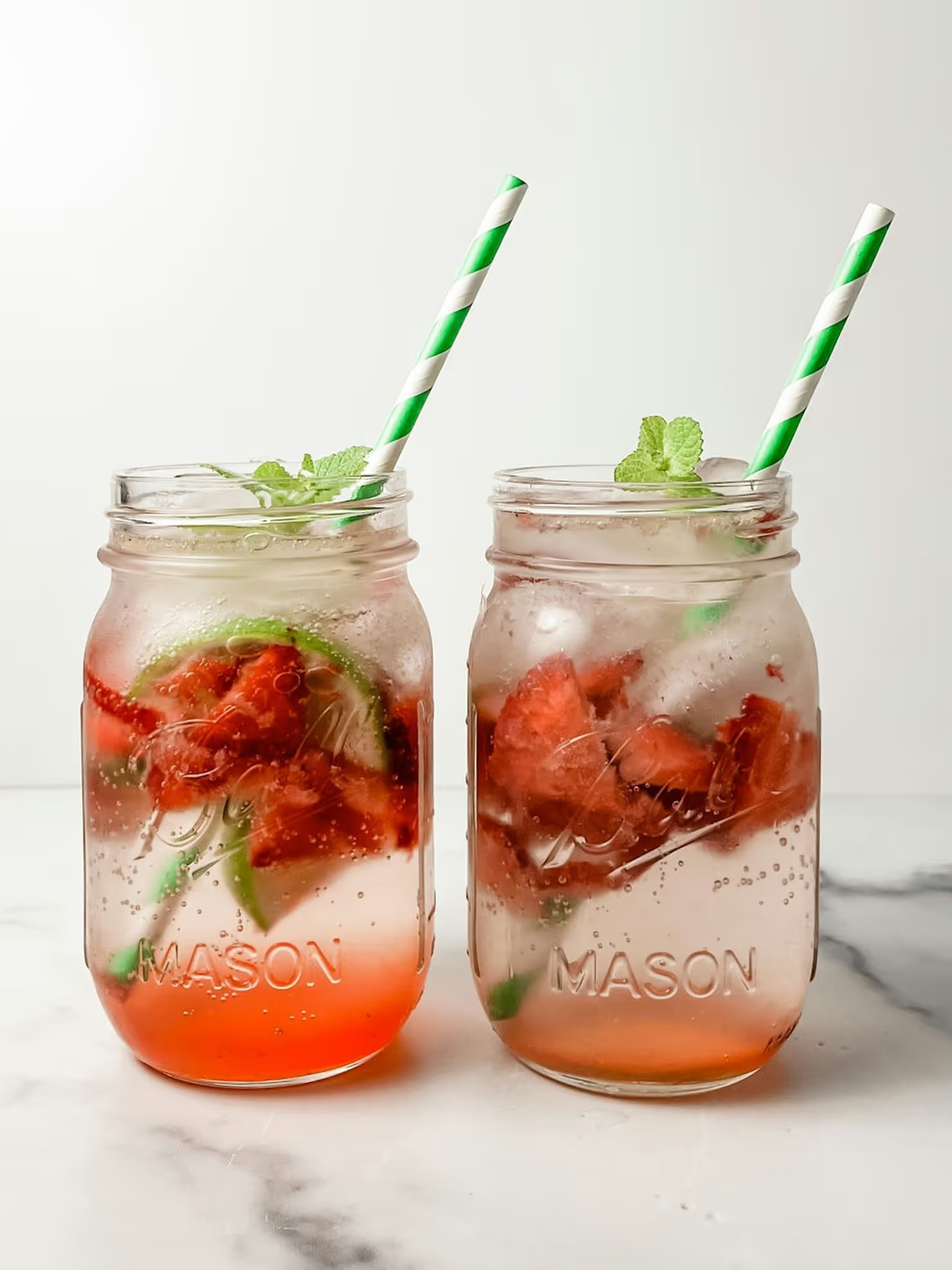
Tips:
If you make this in advance leave the sparkling ingredients out and add at the last minute so you don't lose any of that lovely fizz. Leave the ice out until you are almost ready to serve so it doesn't melt and dilute your delicious punch.
Merry Christmas, Happy Holidays, and enjoy!
Nurse Maz
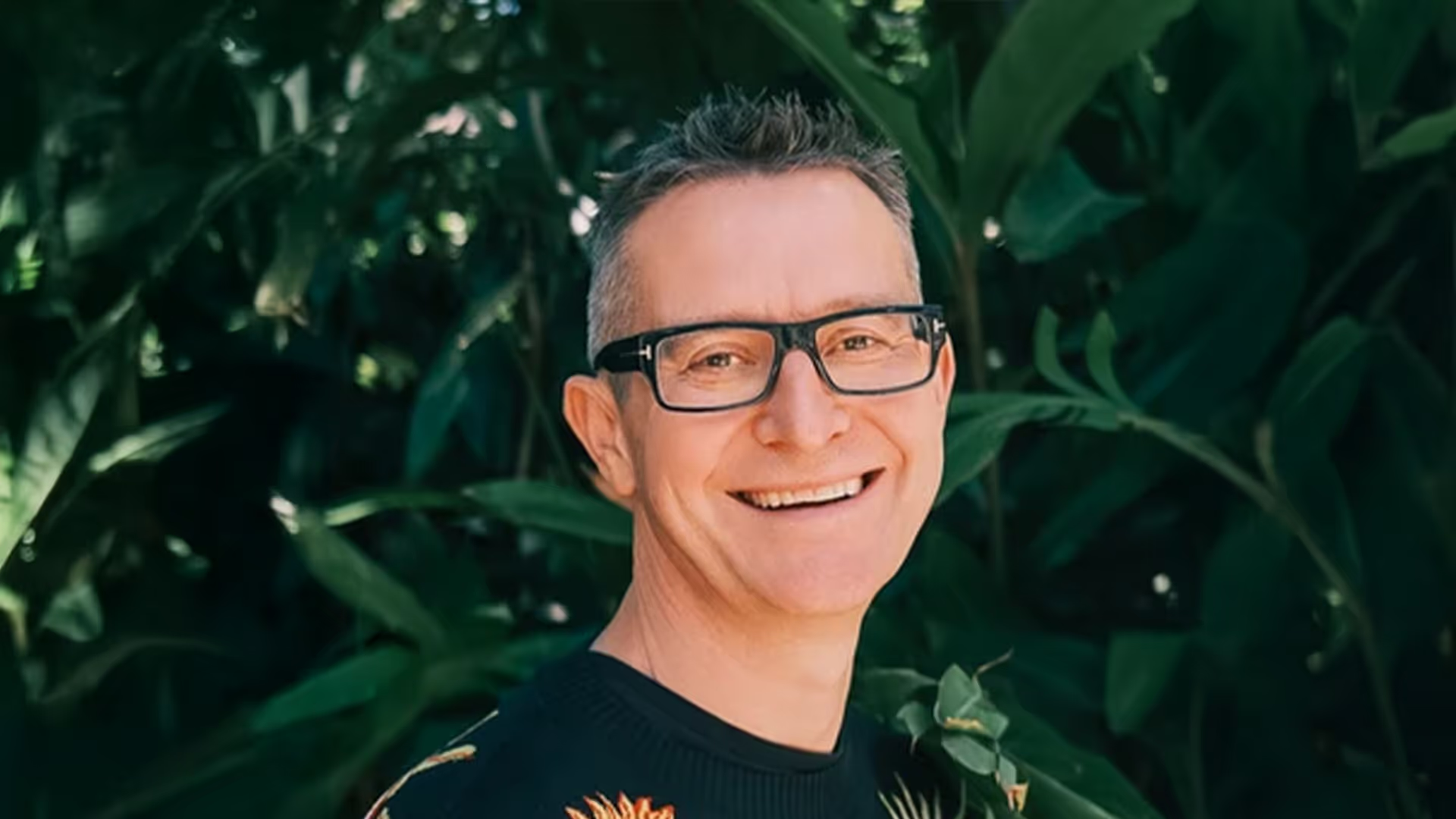
3 Lessons from Jackie O's Journey: A Doctor's Perspective on Substance Dependence and Recovery
Dr Chris Davis - GP, AOD Specialist, and Co-Founder of Clean Slate Clinic – reflects on the power of celebrities sharing their experiences with substance use to educate others about the pervasive ubiquity of dependence in our society.
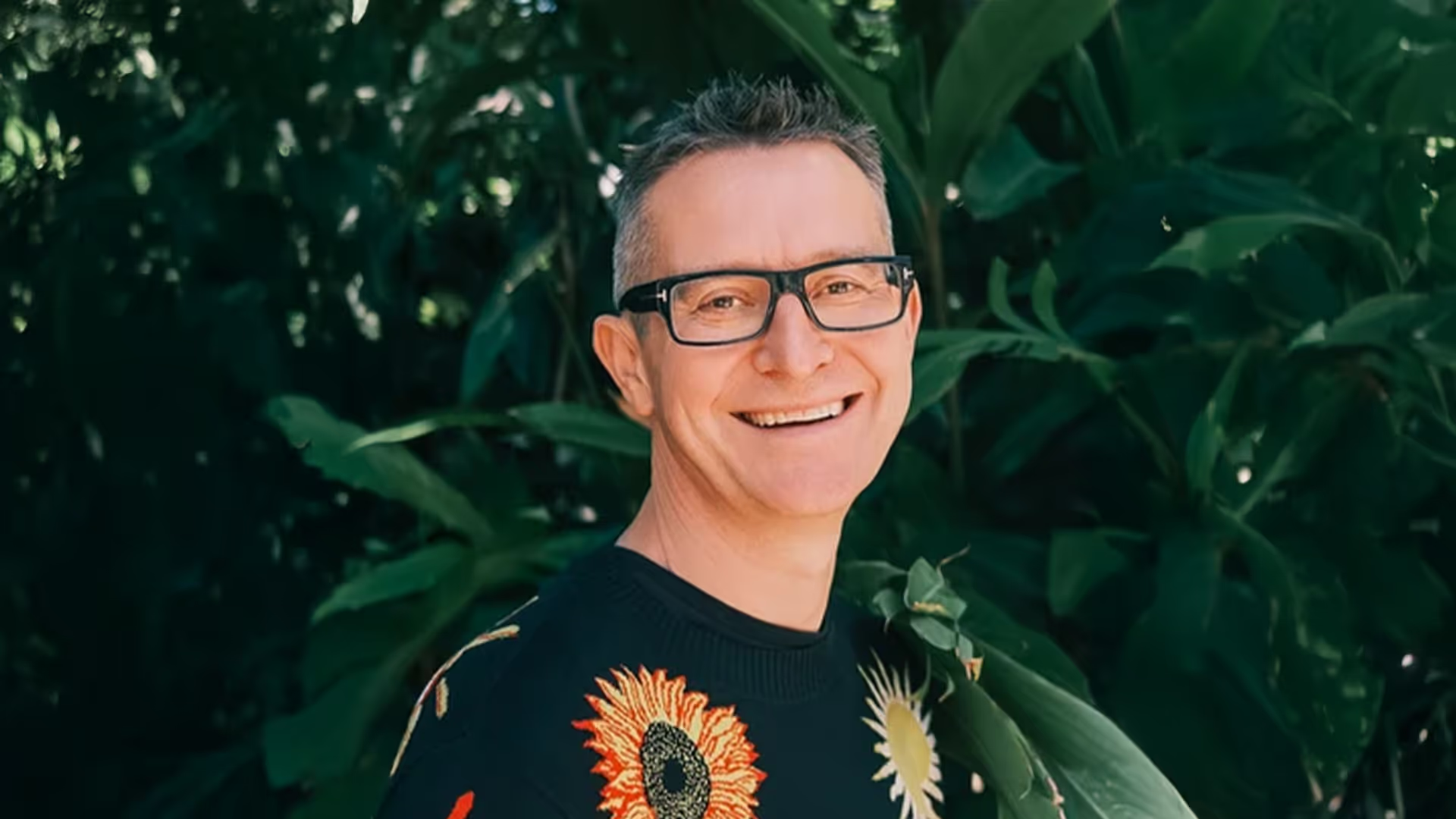
As a doctor specialising in addiction treatment, I've witnessed countless cases of people seeking support for alcohol and substance use across the UK and Australia. But Jackie O Henderson’s recent journey caught my attention because of the important lessons we can learn about recovery from those in influential positions.
I started work as a GP in London and emigrated to Sydney in 2014. When the covid pandemic hit, I realised two things. One – that there was a dramatic increase in the use of alcohol over lockdowns. Loneliness and boredom played out, there were increased environmental pressures, and it was generally just a dizzying time when it was difficult for people to find balance. For many, their relationship with alcohol or other substances became challenging - and those were the people coming to me to seek treatment at that time.
Two - just as the need increased, inpatient treatment facilities and face-to-face GP services were dramatically scaled back because of covid, creating huge gaps in access. I recognised that these two issues needed addressing and initiated a telehealth program to assist patients with at-home treatment, including medical withdrawal. The approach combined online support from clinicians with personalised treatment programs, including medication for withdrawal, and online group support, tailored to each patient's specific needs.
The program proved remarkably effective, with significantly lower relapse rates from patients who might have tried other treatment methods, and patients feeling safe from stigma by having the confidentiality of a home-based program. When covid restrictions eased and most things went back to normal, I really saw the power in what had happened over this time - we had opened up another option for treatment, accessible no matter where you lived in Australia. We wanted to continue on this trajectory in a focused and deliberate way - because I could see first-hand the positive results at-home treatment was having on patients.
Reflecting on Jackie O’s Story
Seeing Jackie's story recently - along with other media personalities like Ash Grunwald, Tom Holland and Elle McPherson sharing similar experiences - has resonated with me more than just 'celebrity news'. It's highlighted that unhealthy relationships with substances affect many people across society, and these experiences are far from uncommon.
In light of Jackie’s story, I wanted to share some important aspects of addiction and recovery that I've observed:
Stigma:
Celebrities do have a certain power to remove the stigma and shame associated with alcohol or other drug dependence. High-profile people in the media are regular human beings, but to many, they are icons and role models, and they can impact the general public in meaningful ways. They have the platform to tell a vulnerable and transparent story that can have a greater impact on broader audiences.
Jackie's openness about her journey is invaluable and has the power to break down the stigma of substance dependence and encourage others to seek help.
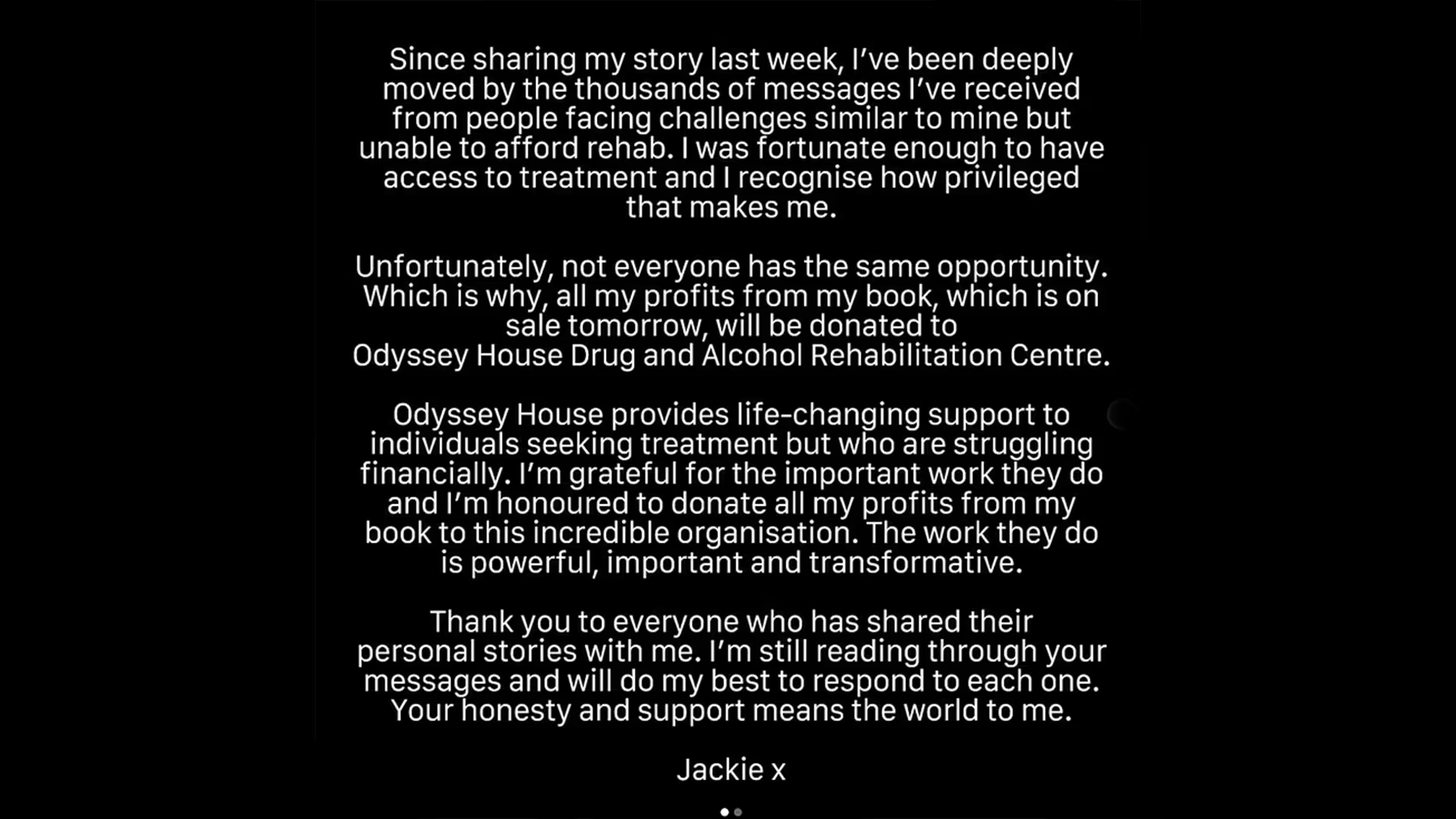
Jackie O Henderson's Instagram post acknowleding that the profits of her book will be donated to Odyssey House Drug and Alcohol Rehabilitation Centre.
As a doctor, and as an individual, I've seen how shame and stigma can affect people. I myself grew up as a gay man in Northern England, and there was a lot of shame attached to that. This personal experience has made me acutely aware of how stigma can create barriers to seeking help. In the context of addiction treatment, I've observed how stigma often prevents patients from reaching out, especially when they believe they will have to leave their community or family network to attend treatment, and be surrounded by others who are struggling, which can also feel exposing for some people - particularly in regional or rural areas.
Addressing stigma is a major step towards changing societal views on alcohol and other drug dependence. As healthcare professionals, I believe we need to normalise conversations about substance use, addressing these issues early and creating an environment where patients feel encouraged to ask questions and seek support.
Early Intervention:
Early intervention is something that we try to encourage as GPs when addressing substance dependence. In Jackie's case, a friend had intervened and suggested she seek support. Close friends and family often recognise the impact of stress and alcohol consumption on their loved one’s well-being and it’s great to be able to have candid discussions like this. Recognising that there is a problem early on, can significantly improve outcomes.
Alarmingly, we know it takes on average 18 years for individuals to seek help for alcohol issues, which is a pretty hefty statistic. In my practice, I try to create an environment where people feel comfortable seeking help at the earliest signs of concern. I encourage patients to be aware of changes in their drinking patterns, especially in response to stress or life changes.
Many people use alcohol or other drugs as a means to stave off feelings of pain. They can serve as coping mechanisms to bury trauma, or in the case of Jackie O - high stress and possibly burnout from a demanding public career. Whatever these original pain points are - in the moment we rarely stop to look at what the cause might be. What I tell my patients is that if you have repetitive behaviours in your life that aren’t healthy - you might think it’s just ‘you’. You may have accepted it as a part of your identity. But an unhealthy relationship with alcohol or other substances can be addressed with the right support, including safe withdrawal if you have become physically dependent, and finding better coping mechanisms that enable you to live a life where you are thriving, not just surviving.
Financial Barriers:
Jackie was in a more privileged position, where going to an inpatient facility overseas was an option for her. It gave her the comfort to withdraw, but also the ability to remain discreet during the process.
Unfortunately, this isn’t an option for so many other Australians. CEO of the Victorian Alcohol and Drug Association, Chris Christoforou was recently sharing a study that showed a 93% increase in wait times for clients seeking treatment since the first survey was undertaken in 2020. And this is just in Victoria.
The Clean Slate home-based model we’ve created, is another way to offer greater anonymity and confidentiality, which also allows people to stay in the context of their existing lives and withdraw around comfortable surroundings – whether that be staying with their pets, support people, or just being able to continue with their other daily routines.
According to KPMG’s independent report for Rethink Addiction, there is a shortfall in treatment placements in Australia of about 500,000. We’ve been working with private health insurers to enable access to free placements in the Clean Slate program, as well as created a model that is about 25% of the cost of traditional private programs. We also have government-funded placements in Western QLD, Western NSW and Central & Eastern Sydney, for individuals who are struggling with affordability.
We really need to shift the needle and address how we can help more financially vulnerable people - this is something we are actively campaigning for the Government to address.
Key Takeaways:
Jackie’s journey reminds us that behind every case of substance dependence is a human deserving of compassion and support. To me, her tender honesty, as well as other celebrities who have come forward, will likely allow people who are similarly struggling to reach out - even if they have been living in a state of heightened anxiety.
We’re doing what we can to make effective services available to more people. Further government support would be a great start, and whilst there is still much to do in this area, we are making progress and moving towards growth and cultural change, and I’m optimistic about the future.
I’m also thankful to all those in the public sphere who come forward bravely and acknowledge their own stories. Their courage not only helps destigmatise substance dependence but it can set others on a path of positive change too.

Clean Slate Partners with nib
Clean Slate is pleased to announce its new partnership with leading insurance provider, nib.
This partnership represents a significant step towards ensuring quality addiction recovery services are accessible to Australians, regardless of their location or circumstances by being delivered entirely via Telehealth.
Under this partnership, eligible nib members can be granted funded placements in Clean Slate’s 12 month at-home alcohol detox and recovery program. This initiative aims to bridge the gap in access to quality care, particularly for those in regional communities who often face barriers to essential support services.
Pia Clinton-Tarestad, CEO of Clean Slate, says more than a million Australians suffer from alcohol dependence and partnering with nib will significantly enhance access to recovery services for people struggling with alcohol dependence.
"We are incredibly excited to join forces with nib to benefit their members. Through nib’s extensive reach, and with Clean Slate's expertise and leading outcomes in alcohol management, we're making an important step towards addressing a critical health issue that affects millions of Australians.
“We're grateful for nib’s vision and passion for improving health outcomes for its members, and look forward to delivering high-quality, accessible and judgement-free care to people who need our support, as we continue to strengthen and expand our services across the nation."
Nib has grown to become a trusted name in health and medical insurance, providing cover to more than 1.5 million Australian and New Zealand residents, as well as more than 180,000 international students and workers in Australia.
Ed Close, Chief Executive of Australian Residents Health Insurance at nib, says the partnership with Clean Slate will deliver more support to eligible nib members.
“Through our Healthcare At Home program we’re able to provide a suite of options for Australians to receive care from the comfort of their homes. With such a large number of Australians managing alcohol dependence, we’re pleased to partner with Clean Slate to deliver quality addiction recovery services”.
To find out more about the program, visit https://www.nib.com.au/health-management-programs/health-care-at-home
Tom's Story
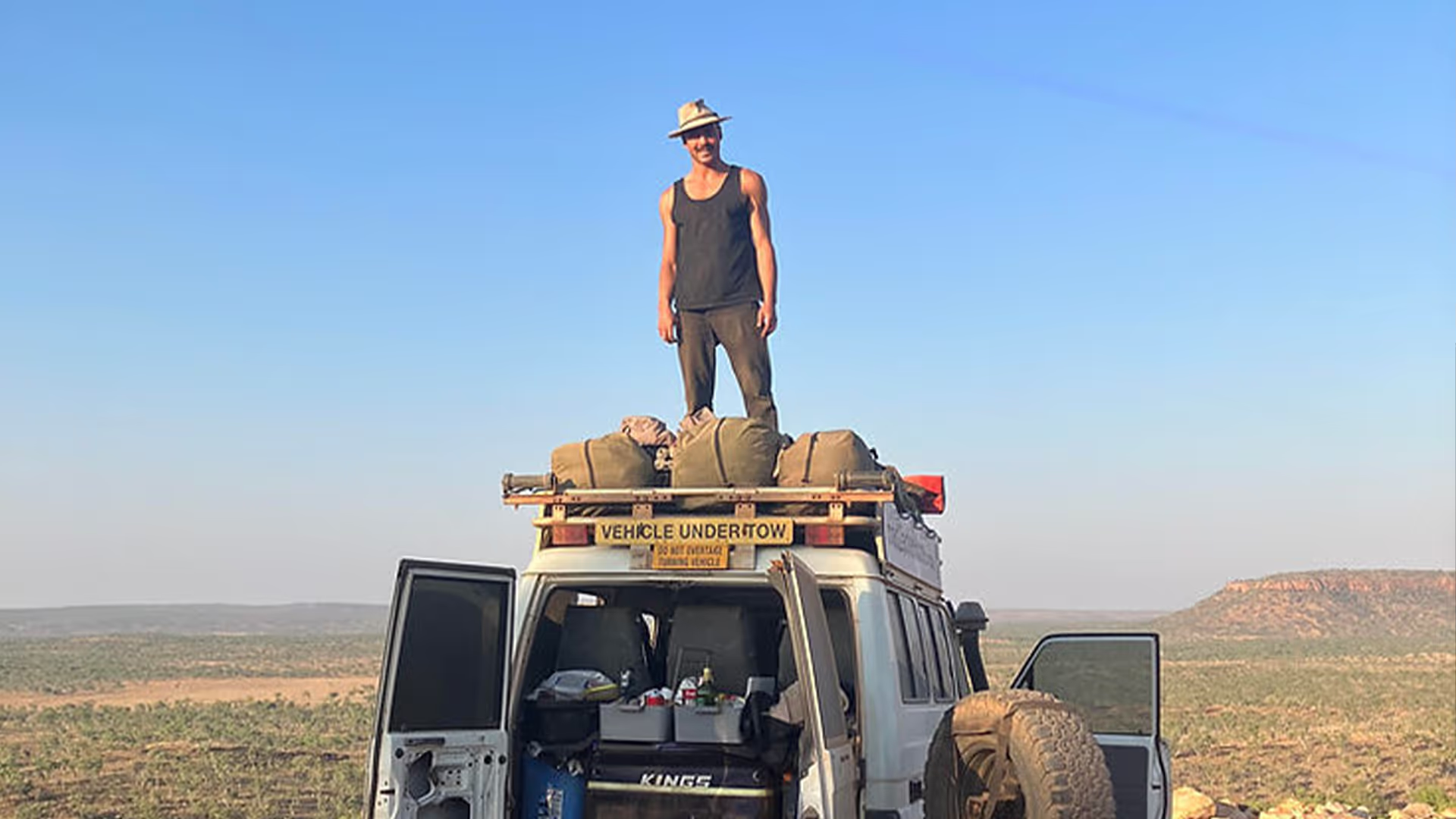
Journalist, photographer and filmmaker, Tom de Souza (@storiesfromthescenicroute) reflects on his recovery from ice and gives an honest voice for Men's Health Month.
*Please note that this content discusses substances other than alcohol and comes with a trigger warning.

I injected ice for the first time at age fourteen. I came from a good home and a good family. The eldest of four kids, we spent the first eight years of my life in an affluent area of London, where I also attended a private school.
Our family began to fall apart when my dad lost his high-paying finance job in late 2002. It set in motion the great catastrophe of migration. My Australian parents decided now was time to return home, and back in Perth, Western Australia, Dad struggled to find work and Mum became the breadwinner. Money problems mounted, eroding the harmony and stability of our family unit.
Meanwhile, I struggled to find my feet in a new school, a new culture, a new world. I moved schools three times, eventually winning an academic scholarship to an elite private boy’s senior school. The scholarship helped to solve some of our parent’s financial problems, but I crumbled under the pressure of expectation and the school’s ruthless culture of conformity.
Uncomfortable in my own skin, I was determined to destroy myself.

You may be reading this and thinking, yeah, right. Spoiled, rich white kid rebels because he lost all the privilege he had grown entitled to. But the issues that afflicted me were the same that afflict all of us across Australia. Most men end up in prison or addicted to drugs because they are ill-equipped to deal with those issues.
I, like all young men, had to struggle to learn to love and accept who I was. To find a place in the world and discover joy and purpose and meaning in my life. To deal with pain and hardship in an insightful and constructive way. And as my family fell apart, I lacked the guidance and insight to find my way through these things, and slipped through the cracks.
Ironically, it was when I first became involved with the youth justice system that I discovered drugs. In 2008, I was busted by the police with a huge stash of white powder. It was only caffeine pills that my mum had found hidden in my bedroom, but when she asked me what they were I said nothing. I was angry and did not have the self-awareness to communicate how I felt. I punished the people around me to try to show them those feelings.
In reality, punished myself.
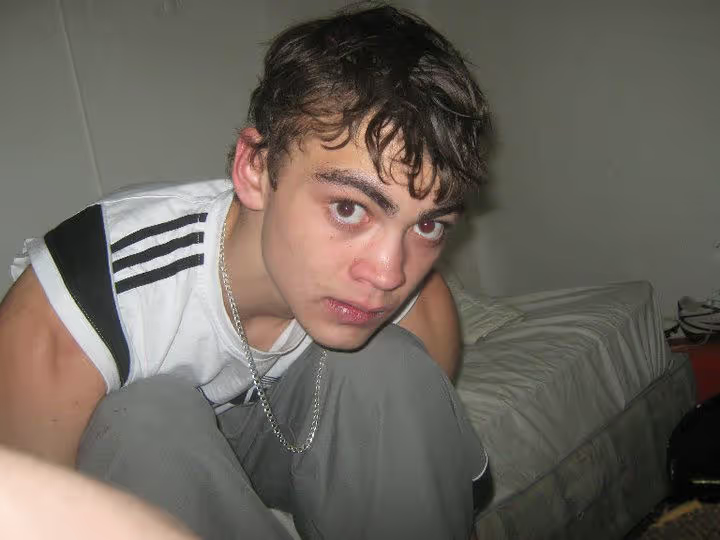
The police convinced my parents that a night in the cells of a juvenile remand centre would shock me into change. Despairing of options, they broken-heartedly agreed. In fact, juvenile detention had the complete opposite effect. It instilled in me a hatred of authority, told me that society rejected me, and forced me to adapt to a criminal world.
I found myself in the revolving door of the criminal justice system. I returned to juvie three times in the next three months, before I was bailed into a youth drug rehab. Here, I lived with a group of older boys and girls, most of them experienced drug users. They taught me more about ice and criminal behaviour than I ever could have learned otherwise. Drugs and crime were glamorised and I became enamoured with them. I went looking for them soon after getting out of drug rehab.
Not long after, my parents divorced.
My behaviour was both a symptom and a cause of the family breakdown but in my adolescence, I was at the centre of my own universe and I assumed responsibility. All at once I felt the guilt and anger and pain of my entire world being ripped apart, the sadistic pleasure of greater freedoms, and a longing for respite from the chaos the divorce might bring.
I understood none of these feelings at the time, and I sought to block out all of the feelings the only way I knew how.
Ice.
I found it through a veteran junkie named Mado. At 35-years-old, he was over 20 years my senior. Mado groomed me to inject drugs and schooled in me in ways to fund a prescient habit: drug dealing, stealing.
I looked up to Mado. He was the only kind of male role model I was permeable to. I was riddled with anger towards my father, and Mado curated a false sense of belonging and guidance. I was vulnerable to his influence. Especially while high on ice.
My descent into total addiction was rapid and all consuming. A few months after my first shot, I had a $400 per day habit. Ice vanished any sense of empathy and compassion in me, and I did anything I could to fund my habit. I stole from people I loved, I hurt people who tried to help me. I didn’t care for their pain or their hurt. All I cared about was that moment, that second, and what I could get into my lungs or up my arm.
All drug users arrive at a point where their drug use is no longer fun; it is a matter of compulsion and habit. Mine came as a rapid succession of catastrophic events, which also helped me to realise the need for change. The first was a psychotic episode: after ten days awake on ice, I flipped out and went chasing a non-existent figure about the streets with a meat cleaver. Fortunately, I was arrested before I could realise any harm. The second was a failed suicide attempt. The last, a murder committed by two of my closest friends.
Shortly after they were arrested and charged with murder, I was in the courtyard at school, awaiting an upcoming careers counselling session. It was a literal fork-in-the-road moment. The outcomes of each lay clearly ahead of me. Down one road was a life-sentence in prison. Down the other, the possibility of a future: an apprenticeship in cooking, or a career as a teacher, journalist, or writer. A multitude of choices and freedom.
Perhaps the most difficult part of giving up drugs is relearning how to live. Remaining sober is a question of willpower but starting all over again is a lonely and disconcerting business. You need new everything: new friends, new habits, new hobbies. For years, I found negotiating an overgrown, winding path between the two worlds: unwilling to turn back to the world of drugs but institutionalised and isolated from regular society.
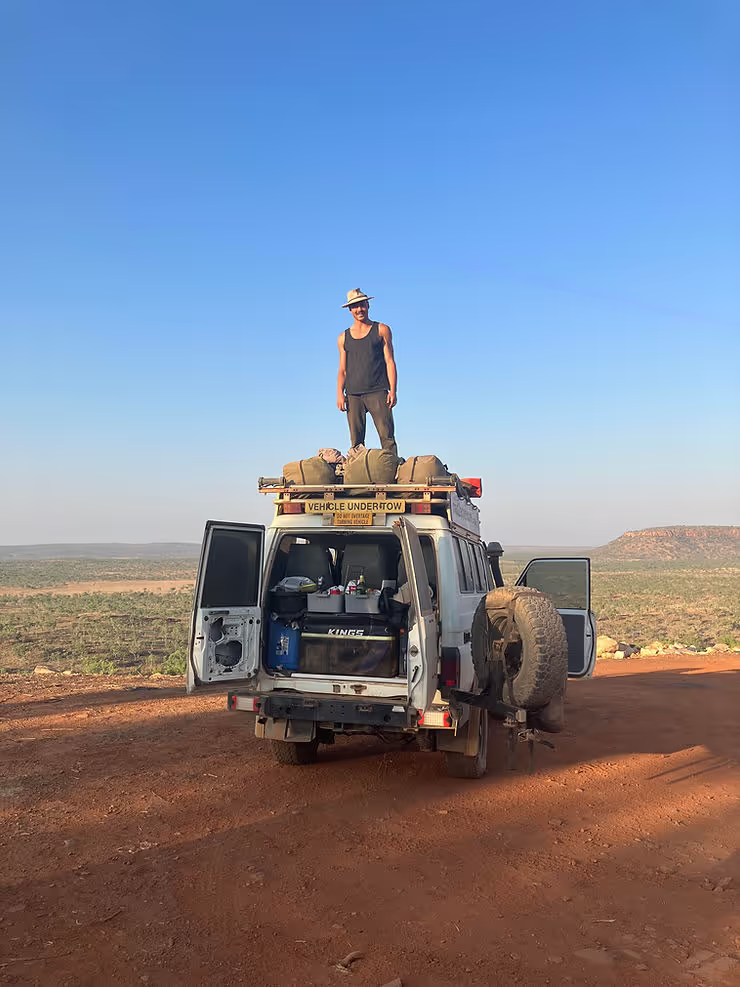
After such an intoxicating emotional rollercoaster, it is also difficult to find joy in the simple pleasures of life. Studies show it can take the brain almost two years to recover and begin producing normal levels of dopamine after prolonged methamphetamine use. Surfing helped me immensely with this. It made me feel good and clean, and gave me a natural healthy substitute to ice.
I discovered a sense of purpose with some help from my grandfather, Ian, a renowned artist. I sought his counsel as I struggled to find my way. We cooked and played music together, and I saw the passion he derived from his art. For him, art was a way of life. He applied a creative way of thinking in everything in his life, from how he designed his house to how he cooked and worked and went about his daily schedule. He motivated in me a desire to discover my own sense of passion through work. I began to travel overseas on surf trips and discovered writing, photography, storytelling.
It has been almost nine years since I’ve touched ice now. I work as an independent journalist and writer, travelling and telling stories for various publications: The Australian, The Age, The Sydney Morning Herald. It has taken an enormous amount of work, failed relationships, tears, isolation, and hard-earned wisdom to arrive at this point today.
Drugs compound a problem but they are not the problem itself. Drugs are a response to a problem we do not know how to resolve. And to truly resolve a drug addiction, we must address it at its deepest and most painful roots. Many go through life and never do. Anyone who has the strength a willpower to walk away from drugs does so only some kind of higher purpose: be it God, work, a family, a passion. Or just life itself.
Words: Tom de Souza
.svg)





Ready to get started?



Subscribe


.avif)