.png)


Blog Posts

The Truth About Alcohol and Anxiety: What You Need to Know
“Why does that glass of wine feel like it helps... but then makes things worse?”
Picture this: It’s the end of a long day and you just want to relax - quiet the nerves, calm the mind, and slow the racing thoughts - so you have a drink (or a few). And in that moment, it works. Alcohol can bring a temporary sense of ease as the tension softens, the body relaxes, and everything feels a little more manageable.
But then comes the flip side. That wired-but-tired feeling in the middle of the night. The vague sense of dread in the morning. The sharp rise in anxiety a day or two later, often without a clear cause. Over time, many people start to notice that the thing they’re using to manage their anxiety might actually be making it worse.
If that sounds familiar, this post is for you.

Why alcohol feels like a friend (briefly)
Alcohol has a sedating effect on the brain. It increases the activity of a neurotransmitter called GABA - your brain’s natural “calming” chemical - this dampens the activity of excitatory chemicals like adrenaline, cortisol and glutamate. That’s why a drink can make you feel relaxed, sleepy, or even euphoric in the moment. It’s your nervous system temporarily slowing down.
But here’s the catch: your brain is always trying to maintain balance. When alcohol is regularly introduced, your brain starts to adapt by turning down GABA’s calming effect and ramping up excitatory activity to compensate. So while alcohol might feel like it’s “helping” in the short term, it’s actually setting the stage for more stress, more reactivity, and more anxiety once it wears off.
One way to think of it is this: alcohol lets you borrow calm from your future self - but with interest. And that interest gets steeper the more frequently you borrow.
When the hangover is more than physical: the anxiety rebound
This is where things start to feel more confusing for people. Because the anxiety doesn’t always show up right away.
In the hours and days after drinking - especially after heavier use - your brain chemistry swings back in the other direction. GABA activity drops further. Glutamate spikes. Your nervous system enters a state of high alert, often without warning. This can look like:
- Restlessness or agitation
- Feeling like you can’t catch your breath
- Trouble sleeping (especially waking in the early hours of the morning)
- Racing thoughts, irritability, or panic for no clear reason
A 2020 study found that people often experience peak anxiety symptoms 12-48 hours after drinking - even in the absence of a hangover. This is sometimes referred to as “hangxiety,” and it’s more than just a catchy term. It’s a sign that your brain is in recovery mode, trying to reset its balance after being artificially altered by alcohol.
If this sounds like a loop you’re stuck in - relief, rebound, repeat - you’re not broken. You’re human. And your brain is doing exactly what it was designed to do.
So, how can you manage anxiety without alcohol?
There’s no one-size-fits-all approach, but here’s the good news: it’s absolutely possible to feel calm, grounded, and in control without using alcohol to get there. Here are a few strategies we’ve seen make a real difference for our clients:
- Support your nervous system: Simple practices like deep belly, or ‘diaphragmatic’ breathing, gentle movement, warm showers, or grounding techniques (like holding ice or standing barefoot outside) can help calm your system when anxiety flares.
- Sleep, food and hydration matter more than you think: Disrupted sleep, low blood sugar and dehydration can all mimic or worsen anxiety. Try to stabilise your sleep routine, eat regularly, and keep your water intake up - especially if you’re cutting back on alcohol.
- Reduce other stimulants: Caffeine, high-sugar snacks, and even scrolling TikTok before bed can overstimulate your system. Pulling back a little can give your nervous system a break.
- Talk to someone: Whether it’s your GP, a therapist, or a service like ours - having someone who can help you build a personalised plan is incredibly valuable.
- Give your brain time: Research shows that even after just 2-4 weeks without alcohol, many people report reduced anxiety and improved emotional regulation. The longer the break, the more time your brain has to re-balance itself.
You don’t have to do all of this at once. Start where you are, with what you have. Small steps matter.

Final thoughts: The loop can be broken
Alcohol might feel like the quickest fix for anxiety, but over time, it often creates the very thing it promises to relieve. The good news? You can absolutely interrupt that pattern. And you don’t have to do it alone.
At Clean Slate, we can help you understand what’s going on in your body and brain - and build a plan that feels realistic, safe, and supported. If you’re feeling caught in the cycle, you’re not failing - you’re just ready for a new way through.
Check your suitability today.
Sources
Brousse, G., Arnaud, B., Vorspan, F., Richard, D., Dissard, A., Dubois, M., Pic, D., Geneste, J., Xavier, L., Authier, N., Sapin, V., Llorca, P-M., De Chazeron, I., Minet-Quinard, R. & Schmidt, J., 2012. Alteration of glutamate/GABA balance during acute alcohol withdrawal in emergency department: a prospective analysis. Alcohol and Alcoholism, 47(5), pp.501–508. [online] Available at: https://academic.oup.com/alcalc/article-abstract/47/5/501/99762?redirectedFrom=fulltext
Nutt, D.J. & Nestor, L.J., 2018. The GABA system and addiction. Addiction. 2nd ed. Oxford Psychiatry Library Series. Oxford: Oxford University Press. [online] Available at: https://doi.org/10.1093/med/9780198797746.003.0008
Kushner, M.G., Abrams, K. & Borchardt, C., 2000. The relationship between anxiety disorders and alcohol use disorders: a review of major perspectives and findings. Clinical Psychology Review, 20(2), pp.149–171. [online] Available at: https://www.sciencedirect.com/science/article/pii/S0272735899000276

Clean Slate Partners with Medibank

Medibank has launched a new Alcohol and Drug Detox at Home program to help customers to safely withdraw from alcohol, cannabis and stimulants.
The program, provided by Clean Slate Clinic, is a virtual service offering an alternative to hospital-based treatment, with support from qualified specialists and clinical practitioners across the country.
The program runs for approximately 12 months as a phased “detox to aftercare” model, with structured support at every stage from qualified specialists, nurses and other clinical practitioners.
Medibank’s Chief Customer Officer, Milosh Milisavljevic said the program demonstrates Medibank’s commitment to improve health access and affordability for customers.
“Recovering from alcohol and drug addiction can be a challenging process and we want to make it easier and more accessible for our customers,” said Mr Milisavljevic.
“This program allows customers to withdraw in the comfort of their own home, with familiar surroundings, while also having regular access to a multidisciplinary team of qualified health professionals.
“Importantly, it’s delivered virtually, which means eligible customers who are living in remote and rural areas can access it.”
Clean Slate’s Chief Medical Officer, Dr Chris Davis said: “Our partnership with Medibank means more Australians can now access safe, evidence-based withdrawal care from home."
“As one of the country’s leading insurers, Medibank’s support allows us to reach more people who might otherwise miss out on help. It’s a vital step toward removing the barriers that have long limited access to alcohol and other drug care in many communities.”
You can check your suitability for a funded place in the program here.

Clean Slate Partners with South Western Sydney PHN
Clean Slate Clinic is proud to partner with South Western Sydney PHN (SWSPHN) to make safe, home-based alcohol and other drug (AOD) support more accessible across the region.

Through this initiative, eligible South Western Sydney residents will receive fully funded access to Clean Slate’s recovery program - helping extend support to those who may otherwise struggle to access care due to financial, language or stigma-related barriers.
“Stigma has been highlighted as a significant barrier to seeking assistance by GPs, consumers and service providers,” said Amy Prince, Acting CEO at SWSPHN. “Difficulties in understanding and accessing mainstream services, and a lack of access to services which are culturally and linguistically safe, have also been identified as obstacles to seeking support.
"This program will not only help clients be better prepared for the withdrawal process, which is both physically and psychologically challenging, but counsel them through the detox itself and provide ongoing support to help clients.”
Clean Slate Clinic CEO and Co-founder Pia Clinton-Tarestad added: “Our partnership with SWSPHN reflects a shared commitment to closing long-standing gaps in access to AOD care - and ensuring support is delivered in ways that are safe, timely and culturally responsive.”
She continued, “With SWSPHN’s backing, we can extend Clean Slate’s impact and connect more people with the care they need, when they need it most.”
Check your suitability for a funded place in the program via: https://cleanslateclinic.typeform.com/determine
Clean Slate Clinic is funded by South Western Sydney PHN through the Australian Government’s PHN Program.
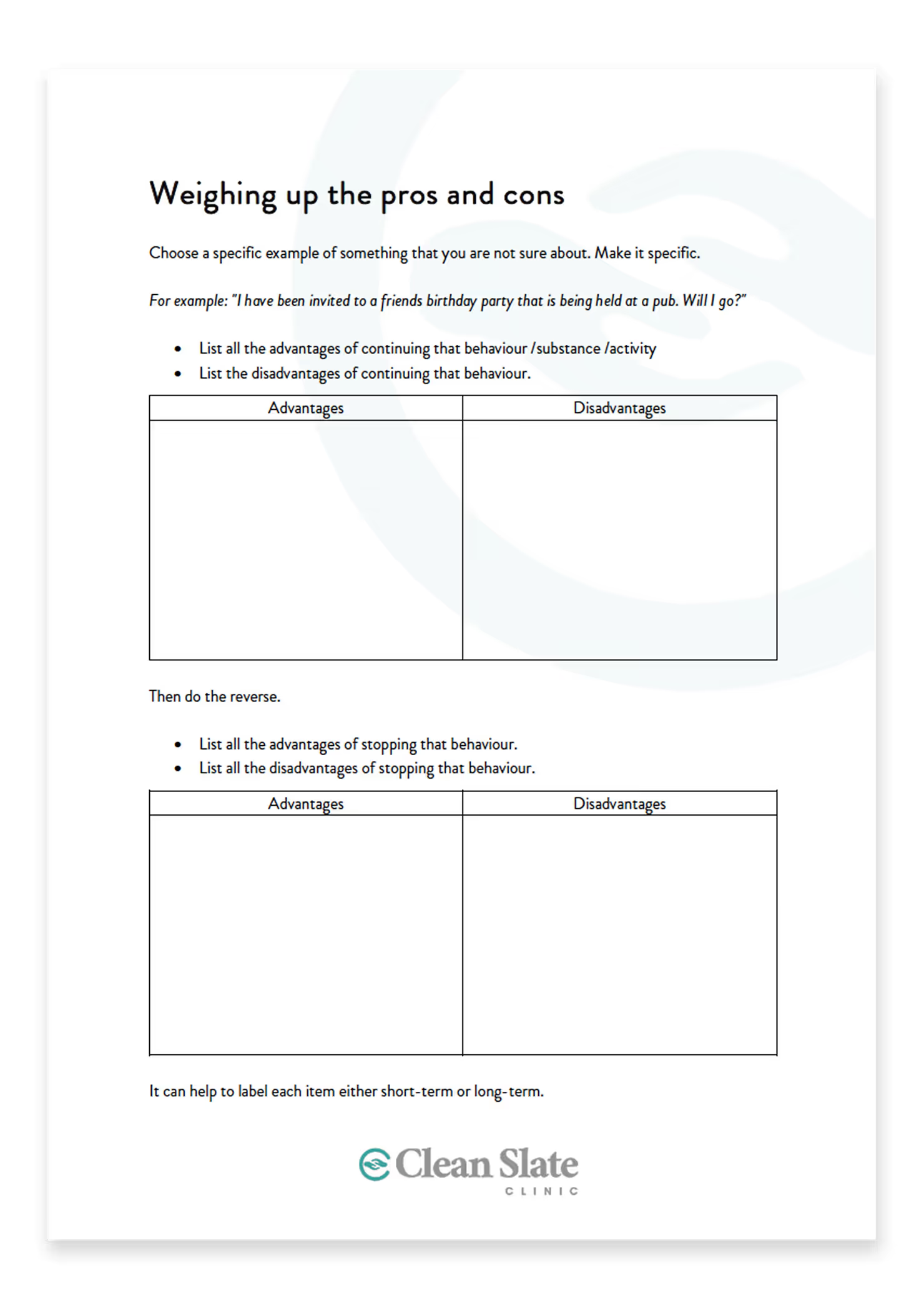
Weighing up the pros and cons
Use this important mindfulness tool to help aid your decision making.
Download the PDF:
Clean Slate Clinic - Weighing up the pros and cons.pdf
Download the Word doc:
Clean Slate Clinic - Weighing up the pros and cons.docx
Preview:

What Does Diazepam do During Alcohol Withdrawal?
If you’ve been thinking about cutting back on alcohol - or stopping altogether - the idea of taking medication might come as a surprise. You’re not alone in that. We speak to so many people who say: “I thought I’d just push through it”, or “I didn’t realise withdrawal could be dangerous”.
And here’s the truth: for some people, stopping alcohol after a period of regular or heavy use can come with risks. It’s not about willpower. It’s about biology. And this is where medication, like diazepam, can play a really important role - not just in keeping you safe, but in making those early days feel a little less overwhelming.
Let’s walk through it together.

What’s actually happening in your brain when you stop drinking?
Alcohol might feel like it slows you down - helps you switch off, sleep, take the edge off. That’s because it increases the activity of a calming brain chemical called GABA (short for gamma-aminobutyric acid). Think of GABA as your brain’s natural brake pedal. It slows things down, takes the tension out of your system.
But when you drink regularly, your brain starts to adjust. It pushes back by turning the volume down on GABA and turning the volume up on excitatory chemicals like adrenaline, cortisol and glutamate. It’s trying to stay balanced. This is how you build a tolerance to alcohol - meaning you need more alcohol to have the same effect.
Now here’s the kicker: when you suddenly remove the alcohol, that calming effect disappears - but your brain’s still stuck in high gear. This is what causes withdrawal symptoms. Your body becomes overstimulated. You might feel shaky, sweaty, anxious, restless. You might struggle to sleep, or feel like your heart’s racing. In more severe cases, there’s a risk of seizures or hallucinations.
It’s not just unpleasant - it can be dangerous. And that’s why, for some people, we use diazepam.
So, what exactly does diazepam do?
Diazepam is a medication in the benzodiazepine family. It essentially steps in and acts like a temporary GABA booster. It calms the nervous system, reduces overactivity, and helps the body settle.
If alcohol has been pressing your brain’s brake pedal for months or years - diazepam gently applies the brakes for you while your brain relearns how to do it on its own. It doesn’t replace alcohol, and it doesn’t “numb you out.” It simply helps your system stabilise as it adjusts to functioning without alcohol.
Depending on your needs, diazepam might be used for a few days to a week. It’s always prescribed with a tapering plan - meaning the dose gets gradually reduced as your body settles. We don’t want you to be on it for long. We just want to help you cross the bridge safely - and we’ll walk you across it.
What withdrawal actually feels like - and where diazepam helps
Here’s how it often goes: the first 6 to 24 hours after your last drink, your body starts to notice the change. You might feel a little restless, your sleep might be patchy, and you might feel like your thoughts are racing, or like you’ve got a low-level buzz of anxiety running under everything.
By the 48-hour mark, these symptoms can peak - especially if you’ve been drinking heavily. Tremors, nausea, sweating, mood swings, even hallucinations in some cases. This is the window where things can tip from uncomfortable to unsafe.
Diazepam helps take the edge off those symptoms - not in a numbing way, but in a supportive way. It allows your body to rest, your heart rate to slow, your sleep to return in short bursts. It gives your brain a softer landing. And in doing so, it gives you more clarity and control to focus on the bigger picture: why you’re doing this, and what life could look like on the other side.
“Do I have to take it? What if I don’t want to?”
Great question. The short answer? No, not everyone needs medication. And if you don’t want it, we’ll talk through the alternatives.
But if you’re drinking heavily or regularly - especially daily - there’s a good chance your body has developed some physical dependence. In those cases, going it alone isn’t just hard. It can be risky.
At Clean Slate, we assess every person individually. We take into account your drinking patterns, your medical history, and your goals. If diazepam is appropriate, we’ll explain exactly why, how it works, and what to expect. No jargon. No pressure. Just options, clearly laid out. And you’ll never be left to figure it out on your own.

You don’t have to white-knuckle it
There’s a common myth - especially among high-achievers, carers, perfectionists - that we have to do everything the hard way to prove we’re “really” ready to change.
But recovery doesn’t have to be brutal. It can be supported, informed, and kind. Taking a break from alcohol is a big deal. Giving your body time to recalibrate safely is a big deal. And asking for help - including medication support when needed - is not a weakness. It’s wisdom.
If you’re not sure whether you’ll need medication, or you just want to talk things through, we’re here. We offer a safe, evidence-based, fully remote medical detox from home - and a team of people who’ll treat you like a whole human, not a “case.”
We’re here to help you take that next step whenever you’re ready. Check your suitability today.
Sources
Amato, L., Minozzi, S., Vecchi, S. and Davoli, M., 2022. Benzodiazepines for alcohol withdrawal. Cochrane Database of Systematic Reviews, 2022(3), Art. No.: CD005063. [online] Available at: https://www.cochrane.org/evidence/CD005063_benzodiazepines-alcohol-withdrawal.
Haber, P.S. and Riordan, B.C., 2021. Guidelines for the treatment of alcohol problems. 4th ed. Sydney: Specialty of Addiction Medicine, Faculty of Medicine and Health, The University of Sydney. [online] Available at: https://alcoholtreatmentguidelines.com.au/medications-for-managing-alcohol-withdrawal/benzodiazepines].
Weintraub, S.J., 2017. Diazepam in the treatment of moderate to severe alcohol withdrawal. CNS Drugs, 31, pp.87–95. [online] Available at: https://link.springer.com/article/10.1007/s40263-016-0403-y.
Al-Maqbali, J.S., Al Alawi, A.M., Al-Mamari, Q., Al-Huraizi, A. and Al-Maqrashi, N., 2023. Symptoms-triggered approach versus fixed-scheduled approach of benzodiazepines for management of alcohol withdrawal syndrome: Non-randomized controlled trial. Alcohol, 106, pp.10–14. [online] Available at: https://www.sciencedirect.com/science/article/pii/S0741832922000982/.

Andrew's Story
Andrew grew up in Far North Queensland, where being young, gay, and a little different often meant learning to mask or minimise parts of himself. In his community, drinking wasn’t just normal - it was expected. And like many teens, he started early.
He had his first drink around 13 or 14. What began as casual, socially accepted mischief slowly turned into something more persistent - and more complicated.
“I grew up in a regional area where it felt like there's nothing to do, so you're just drinking all the time and getting up to lots of mischief. But it was very socially acceptable at the time - everyone was kind of doing it.”

By his twenties and thirties, Andrew was living in Brisbane, then Melbourne, and finally Sydney. On paper, everything looked fine. He was holding down demanding jobs, had an active social life, and moved with confidence through the world. But behind the scenes, alcohol had become a daily presence - and a private battle.
He remembers trying to quit countless times. Taking breaks during ‘Dry July’. Bargaining. Promising himself, “just a few this time.” But he always came back.
“Realistically, I was trying to stop drinking very young - in my twenties. But it was always half-hearted. If I did take a break, I was just counting down the days until I could drink again. And that’s so normalised - you stop for 30 days and people say, ‘Great, now let’s get hammered.’”
He laughs now about some of the Facebook memories that pop up - pictures of him proudly holding a beer after a self-imposed dry spell, captioned ‘I missed you’ with a beer in hand.
Eventually, it all caught up with him. His drinking wasn’t just affecting his body - it was affecting his mind. His mental health was suffering, and he was tired of pretending he could keep all the plates spinning.
“There wasn’t one big rock bottom. It was more like… a thousand ignored warnings. I had psychologists, friends, family, doctors telling me I needed to stop. I brushed them all off. But slowly, the cumulative effect of it all got through. And one day, I just couldn’t do it anymore.”
It was around that time, five and a half years ago, that Andrew came across Clean Slate Clinic - almost by accident. He was seeing a queer-friendly GP in Sydney when he heard about the pilot program being run by Dr Chris Davis, co-founder of Clean Slate Clinic. He describes it now as a lifeline.
“As a gay, queer person, there's beauty in accessing healthcare where you don't have to think about being gay. It takes a whole level of complexity away. I had a mental health condition. I had a drinking problem. But I didn’t have to worry about hiding any of that - I could just focus on getting better.”
With Chris, he finally felt safe. Together, they made a plan. They talked through medications and timelines. Andrew picked a date. It still felt daunting - but it also felt different. This time, he wasn’t doing it alone.
The detox process wasn’t easy. But seven days in, Andrew walked into Chris’ office and saw something in himself he hadn’t seen in years.
“Chris looked me in the eyes and said, ‘Look in the mirror - look at how clear your eyes are.’ And I did. And it still makes me a little emotional thinking about it, because he was just beaming with joy. It made me realise - wow, something has already changed. That moment sticks with me. Even now, no matter what’s going on, I look in the mirror and remember: I’ve conquered something huge.”

And that moment was only the beginning.
Quitting alcohol gave Andrew the clarity to finally engage with his mental health properly. About two years into sobriety, he was diagnosed with bipolar disorder - a condition that had long been masked by alcohol use.
“Now I’m on proper medication and I understand myself so much more. It’s not all rainbows - life is still hard sometimes - but I’m stable. And if I hadn’t quit drinking, I probably never would’ve found that out.”
He also found himself rediscovering parts of life he’d lost. He moved to the beach. Started swimming in the ocean every day. Became a lifesaver. Trained others. Felt pride.
“I completely picked up my life and moved to the beach. I swim in the ocean every day. It’s my meditation. It empties my mind. And honestly, it feels like everything I touch now turns to gold. Not in a flashy way - just in a steady, clear, calm way.”

But he’s also honest about the challenges - particularly the social side. Navigating friendships, rebuilding routines, saying goodbye to people he cared about, and learning how to show up differently.
“I wasn’t really prepared for how much the social element would change. Some friends clearly had to go. Others, I had to work really hard to keep. I had to rebrand how we related - it couldn’t be nights out getting wasted anymore. So I suggested brunch, walks, things that didn’t revolve around alcohol. People were actually really open to it - more than I expected.”
When asked what advice he’d give to someone thinking about quitting drinking - Andrew doesn’t hesitate:
“The only thing I regret is not stopping sooner. Sobering up has made life a joy. I used to feel like I was swinging from vine to vine, just trying to survive. Now, I feel like I’m in charge. I lead in most areas of my life. And if you’re even thinking about making a change - just give it a red-hot go. You’ve got nothing to lose. And so much to gain.”
To hear more on Andrew's story, tune into his episode on the Clean Slate podcast.

Clean Slate Partners with COORDINARE - South Eastern NSW PHN
By removing one of the most significant barriers to care - affordability, the collaboration enables eligible individuals across South Eastern NSW to access fully funded placements in Clean Slate’s at-home detox and recovery program.
Delivered entirely via telehealth, Clean Slate’s evidence-based program is designed to support people with alcohol and other drug dependence to safely withdraw, recover and thrive - all from the privacy and comfort of their home.
This partnership reflects both organisations' commitment to improving access to care for vulnerable and underserved Australians, particularly in regional and rural areas where alcohol and other drug dependence remains a growing health concern.
“This partnership represents a major step forward in making recovery possible for everyone, everywhere,” said Pia Clinton-Tarestad, CEO and Co-founder of Clean Slate Clinic.
“Far too often, individuals who are ready to get help are held back by financial barriers or a lack of local services. Thanks to COORDINARE’s support, more people can now get the care they need - when they need it.”
Prudence Buist, CEO of COORDINARE said, “We are delighted to be providing funding for this program to Clean Slate, particularly as South Eastern NSW has a high percentage of adults who consume alcohol at levels posing a long-term risk to health. Reducing harm and better supporting people with alcohol and other drug-related issues is a priority for us.
“Due to the vastness of our region, delivery of healthcare services can be challenging, especially when assisting with delicate issues like addiction. Clean Slate's program harnesses the flexibility of telehealth making alcohol withdrawal and recovery services accessible to every Australian who needs them, irrespective of postcode or socio-economic status.”
“Alcohol and other drug use can significantly impact a person's behaviour and harm their physical and mental health, self-esteem, relationships, home and work life. Participation in this program could be life changing,” said Ms Buist.
Check your suitability for a funded place in the program via: https://cleanslateclinic.typeform.com/determine
Clean Slate Clinic is funded by COORDINARE – South Eastern NSW PHN through the Australian Government’s PHN program.

What to Expect When You Take a Break from Alcohol
If you’ve found yourself questioning your relationship with alcohol lately, you’re not alone. More and more Australians are choosing to take breaks from drinking - whether for health, clarity, or simply to see how life feels without it.
In fact, recent research shows that 36% of Australians are drinking less than they were two years ago, and nearly half say they’re choosing to abstain from alcohol at times throughout the year. In younger generations, the shift is even more pronounced with Gen Z and Millennials embracing ‘sober-curious’ living in growing numbers, often driven by a desire for better sleep, mental clarity, and connection.
Whatever your reasons - a gut feeling, a health scare, or just a quiet curiosity - you’re certainly not alone.

A word of caution if you're drinking heavily
If you’re drinking daily, or find it difficult to go even a day or two without alcohol, it’s important to know that stopping suddenly can carry risks.
Alcohol withdrawal symptoms can range from mild (like anxiety and trouble sleeping) to more serious effects such as seizures or delirium tremens (DTs), particularly for people with moderate to severe dependence [1].
If you’re unsure about whether you’re physically dependent, please don’t try this alone. Speak with your GP or reach out to us - we can help you assess your risk and create a safe plan forward.
In the short term: what you might feel in the first few weeks
The early days of taking a break can feel different for everyone. Some people notice positive changes almost immediately - for others, the benefits come more gradually.
Here’s what our clinical and lived experience team tells us you can expect:
- Your sleep might improve (or feel a bit disrupted at first). Alcohol is a sedative, but it interferes with deep, restorative sleep. Within a week or two, many people report sleeping more soundly and waking up feeling clearer [2].
- Mood and energy can start to stabilise. A 2020 study found that people who abstained from alcohol for four weeks reported improvements in concentration, reduced anxiety, and a greater sense of calm [3]. That said, it’s normal to feel flat or irritable in the beginning - these changes in brain chemistry can take time to settle.
- Physical improvements are common. You might notice brighter skin, better digestion, and even some weight changes. In a recent study, participants who took a month off alcohol saw improvements in liver function, insulin resistance, and blood pressure [4].
- Your social habits may shift. You might feel unsure at first - about what to order at the pub, how to navigate parties, or what to say to friends. But many people find that ‘sober-socialising’ becomes easier and more rewarding with time, as you become more present and establish more meaningful connections.
In the long term: what starts to change over the next few months
As weeks turn into months, the most rewarding changes begin to unfold - not just physically, but mentally, emotionally and socially.
- Your brain gets a chance to heal. Long-term alcohol use can affect areas of the brain responsible for memory, decision-making and emotional regulation. Research shows that after three months of abstinence, brain volume begins to recover and cognitive performance can improve [5].
- Mental health tends to strengthen. While everyone’s experience is unique, studies consistently show that reducing alcohol leads to lower rates of depression and anxiety [6]. Many people also notice improved self-esteem and a greater sense of stability.
- Your body benefits from lowered risk. Long-term abstinence reduces your risk of high blood pressure [7], liver disease [8], and certain types of cancer [9]. The body is incredibly resilient, and healing is possible at every stage.
- Relationships may deepen. When you’re more emotionally available and mentally clear, it can ripple outward - to your family, your friendships, your sense of self. Many people say that the greatest benefit of going alcohol-free isn’t what they’ve given up, but what they’ve made space for.
Chris G’s experience
Chris G is Clean Slate’s Head of Client Engagement - but before that, he was a client in our program. His lived experience gives him a powerful understanding of what real, sustainable change feels like from the inside out, sharing that:
“Taking a break from alcohol had a bigger impact than I expected. In the short term, I noticed some immediate benefits - my sleep improved, I had more energy in the mornings, and the mental fog that had become normal started to lift. It wasn’t all smooth sailing at the start, there were some uncomfortable moments as I adjusted to new routines without the usual crutch.”
“But over time, the changes became even more noticeable. I found I could manage stress more effectively, stay focused at work, and show up more consistently for the people around me. The constant background noise in my mind - overthinking, self-doubt, anxiety - settled right down. I started making clearer decisions and actually enjoyed having a bit more mental space.”
“Looking back now, life without alcohol feels more steady and intentional. I’m not just getting through the week anymore, I’m genuinely participating in it.”
Chris’ story mirrors what many others tell us: that even though the early stages can feel uncertain, the longer-term benefits far outweigh the initial discomfort.
You don't have to do this alone
Taking a break from alcohol can be empowering, insightful, and even life-changing - but it doesn’t always feel easy. Some days might feel light and energising, while others might be more challenging than you expected.
Whether you’re just testing the waters or ready for a more structured change, we’re here to help. We offer evidence-based care that meets you where you are - with flexibility, compassion and zero judgement.
If you’d like help figuring out your next step, please reach out.
Sources
- [1] Newman, R.K., Stobart, M.A. and Gomez, A.E. (2024). Alcohol Withdrawal Syndrome. [online] Nih.gov. Available at: https://www.ncbi.nlm.nih.gov/books/NBK441882/.
- [2] de Visser, R.O. and Piper, R. (2020). Short- and Longer-Term Benefits of Temporary Alcohol Abstinence During ‘Dry January’ Are Not Also Observed Among Adult Drinkers in the General Population: Prospective Cohort Study. Alcohol and Alcoholism, 55(4), pp.433–438. doi:https://doi.org/10.1093/alcalc/agaa025.
- [3] Kast, K.A., S Alex Sidelnik, Nejad, S.H. and Suzuki, J. (2025). Management of alcohol withdrawal syndromes in general hospital settings. BMJ, pp.e080461–e080461. doi:https://doi.org/10.1136/bmj-2024-080461.
- [4] Mehta, G., Macdonald, S., Cronberg, A., Rosselli, M., Khera-Butler, T., Sumpter, C., Al-Khatib, S., Jain, A., Maurice, J., Charalambous, C., Gander, A., Ju, C., Hakan, T., Sherwood, R., Nair, D., Jalan, R. and Moore, K.P. (2018). Short-term abstinence from alcohol and changes in cardiovascular risk factors, liver function tests and cancer-related growth factors: a prospective observational study. BMJ Open, [online] 8(5). doi:https://doi.org/10.1136/bmjopen-2017-020673.
- [5] Durazzo, T.C., Stephens, L.H. and Meyerhoff, D.J. (2023). Regional cortical thickness recovery with extended abstinence after treatment in those with alcohol use disorder. Alcohol. [online] doi: https://doi.org/10.1016/j.alcohol.2023.08.011.
- [6] Voltaire-Carlsson, A., Hiltunen, A.J., Koechling, U.M. and Borg, S. (1996). Effects of long-term abstinence on psychological functioning: A prospective longitudinal analysis comparing alcohol-dependent patients and healthy volunteers. Alcohol, 13(5), pp.415–421. doi: https://doi.org/10.1016/0741-8329(96)81678-8.
- [7] Millwood, I.Y., Walters, R.G., Mei, X.W., Guo, Y., Yang, L., Bian, Z., Bennett, D.A., Chen, Y., Dong, C., Hu, R., Zhou, G., Yu, B., Jia, W., Parish, S., Clarke, R., Smith, G.D., Collins, R., Holmes, M.V., Li, L. and Peto, R. (2019). Conventional and genetic evidence on alcohol and vascular disease aetiology: a prospective study of 500 000 men and women in China. The Lancet, [online] 393(10183), pp.1831–1842. doi: https://doi.org/10.1016/S0140-6736(18)31772-0.
- [8] Duggan, A. and Duggan, J. (2011). Current issues in alcohol Alcoholic liver disease Assessment and management. Australian Family Physician, [online] 40(8). Available at: https://www.racgp.org.au/getattachment/7f94df44-4a7f-4934-b85a-74cd41425f5b/Alcoholic-liver-disease.aspx.
- [9] Bagnardi, V., Rota, M., Botteri, E., Tramacere, I., Islami, F., Fedirko, V., Scotti, L., Jenab, M., Turati, F., Pasquali, E., Pelucchi, C., Galeone, C., Bellocco, R., Negri, E., Corrao, G., Boffetta, P. and La Vecchia, C. (2015). Alcohol consumption and site-specific cancer risk: a comprehensive dose–response meta-analysis. British Journal of Cancer, [online] 112(3), pp.580–593. doi: https://doi.org/10.1038/bjc.2014.579.

The Neuroscience Behind Alcohol Dependence | A Discussion with Dr David McLaughlan

Here's a stat that might make you pause before reaching for that next glass of wine: Research shows that drinking one bottle of wine carries the same carcinogenic risk for breast cancer as smoking 10 cigarettes.
Let that sink in for a moment. One bottle of wine. 10 cigarettes.
It's the kind of sobering information that doesn’t make it onto wine labels and rarely into the public discourse. But as Dr David McLaughlan will tell you, "The alcohol companies are just not going to share that information with you, so somebody has to".
Dr David McLaughlan is a consultant psychiatrist based in London who specialises in supporting people with addictive behaviours and harmful habits, particularly alcohol use. Beyond his private clinical practice at a prestigious London hospital, he's channelled his expertise into creating Curb, a mobile application designed to help people self-manage their relationship with alcohol and prevent relapse.
His interest in addiction medicine developed during his time as a research fellow at the Institute of Psychiatry, where he studied a Bachelor of Biomedical Science (BMSc) in neuroscience. “That was where I fell in love with addiction,” he says. “Honestly, I thought the way that the brain worked in addiction, it was just fascinating.”
Speaking with Dr David - the fascination he has for the brain and how it works is infectious. His knowledge about the workings of the human brain and the differences in each individual is profound. The beginnings of ‘alcohol dependence’ start in a region of the brain called the nucleus accumbens, where alcohol starts rewriting your brain's operating system. It’s a part of the brain that can make alcohol both seductive and dangerous.
"With alcohol addiction, we see a desensitisation of GABA (gamma-aminobutyric acid) receptors because alcohol mimics this neurotransmitter GABA," David explains. "When your brain is exposed to alcohol over a long period of time, it just becomes a bit numb". This numbness creates a dangerous feedback loop - you need more alcohol to achieve the same effect, pushing you further down the path of dependency.
“And then the other thing is when that alcohol's not there, mimicking GABA, you get this rebound excitation. So that's why - although alcohol makes you feel sedated, the morning after drinking you can sometimes feel more anxious and you get that ‘hangxiety’ feeling because that's the rebound effect.”
The long-term effects are even more concerning. Heavy drinking raises cortisol levels in your brain, and “cortisol is neurotoxic,” David says. "It kills brain cells essentially. And that's why you get that shrinking, that atrophy of the brain. It's pretty horrifying when you think about it - alcohol is essentially poisoning your brain.”
Understanding the mechanics of the brain led Dr David to develop Curb, a mobile application that takes an innovative approach to addressing alcohol dependency. Instead of waiting for problems to surface, Curb uses predictive biomarkers on your phone - changes in step count, heart rate variability, and sleep patterns - to identify when someone might be vulnerable to relapse.
Not everyone drinks for the same reason, and understanding your own patterns is fundamental for recovery. Through his research and clinical experience, Dr David has identified distinct types of drinkers that the Curb app helps users identify.
There are ‘Self-Medicating’ drinkers who use alcohol to cope with anxiety or stress, ‘Social Cohesion’ drinkers who associate drinking with bonding and connection, ‘Social Conformity’ drinkers who drink to fit in with their social circles, and ‘Enhancing Drinkers’ who use alcohol to amplify positive experiences.
The app helps users identify their specific drinking pattern and understand their own unique triggers. This self-awareness is particularly powerful when combined with the app's community features and predictive biomarkers. By understanding whether you're drinking to manage stress, maintain social connections, or conform to peer pressure, you can develop more effective strategies to establish healthier patterns and identify potentially triggering situations before they lead to relapse.
The app's effectiveness is remarkable - early pilot studies showed that 92% of users successfully achieved their goals of quitting or reducing alcohol use. One user reported it was the first time they'd managed to stop drinking for more than two weeks since being pregnant. Another said it felt like ‘somebody was holding their hand day by day’ while maintaining their autonomy in recovery.

What makes Curb particularly powerful is its community feature. You can upload an image of yourself, have a vent if you’re having a hard day, or celebrate the wins. Others in the group will respond and keep you motivated. As Dr David explains, there's something called ‘social comparison theory’ where we tend to mimic the behaviour of people around us. The app creates a new normal, a community where ‘not drinking’ is the default. This is crucial because changing behaviour in isolation is incredibly challenging, especially when your social circle might be heavy drinkers.
The urgency for this kind of intervention and education cannot be overstated. While the Gen Z demographic might be drinking less, it's not due to education - we're still not teaching the incredible harms alcohol has on the brain in schools or putting these effects onto alcoholic drink labels.
While Dr David is determined to shift the needle in sharing the harms alcohol has on the brain, his approach isn't about forcing abstinence. In fact, David admits to using the app himself and recognises as a ‘self-medicating’ drinker. Rather than forcing people to quit altogether, the app is about empowering people with knowledge and letting them set their own goals.
"I actually don't tell people to quit drinking, but I feel like my job is to share all the information with people and let them make their own choices".
In a world where alcohol companies spend millions on marketing while downplaying health risks, tools like Curb and the knowledge they're built on represent a counterbalance. They remind us that understanding our brain's relationship with alcohol isn't just academic - it's the key to making informed choices about our health and wellbeing.
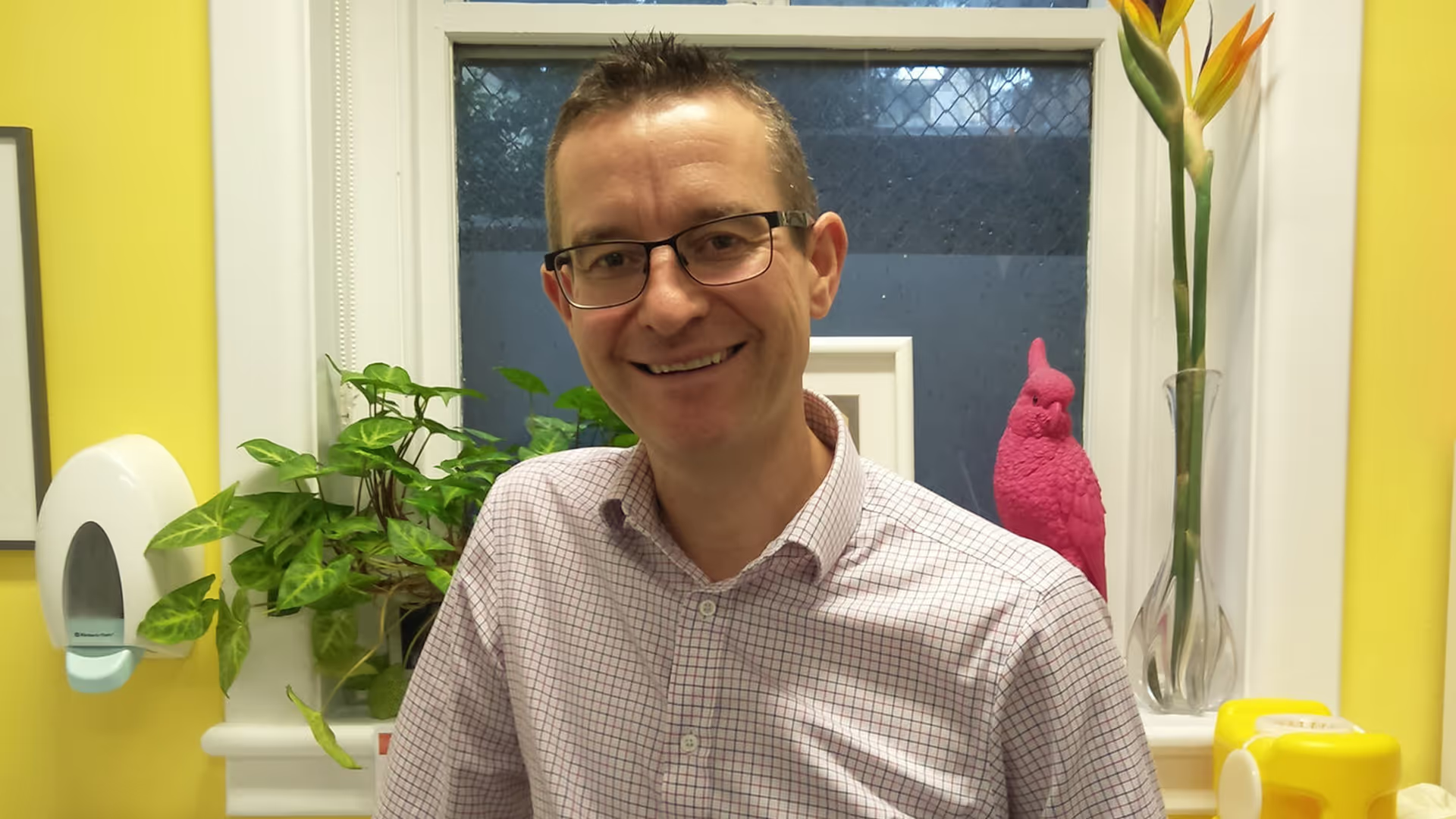
Spotlight On | Dr Chris Davis
The Beating Heart of the Business
Spotlight On | Dr Chris Davis - GP, Drug & Alcohol Specialist, and Co-Founder of Clean Slate Clinic.
Understanding substance dependence is complex. And telling someone who wants to quit, to 'just do it' - like the Nike catch phrase - well, it's not all that easy.
This is what you’ll hear from Dr Chris Davis - GP, Addiction Specialist, and Co-Founder of Clean Slate Clinic.
Chris is happy to talk about topics that are right under our noses, that we may deeply misunderstand. Things like drug and alcohol dependence, treatment options, the case for pill-testing, and adding labels to indicate that alcohol causes cancer and can lead to death.
They are discussions that many shy away from - possibly due to shame and stigma, but Chris believes these conversations are essential for creating meaningful change.
Growing up in a family of seven nurses in Liverpool, England, it might have seemed inevitable that Chris would end up in healthcare. But the path that led him to co-found Clean Slate Clinic was anything but predetermined.
As a young lad, Chris grew up surrounded by a big family with lots of aunties and uncles, and a big clan of cousins. As he grew older, and came to terms with his identity in a town that held traditional values, Chris often felt the fear of judgment and experienced firsthand what it felt like to live under the weight of societal stigma.
"My experience growing up gay in a fairly religious, homophobic town, shaped me. It helped me not to judge anybody, because I was always very fearful of being judged myself."

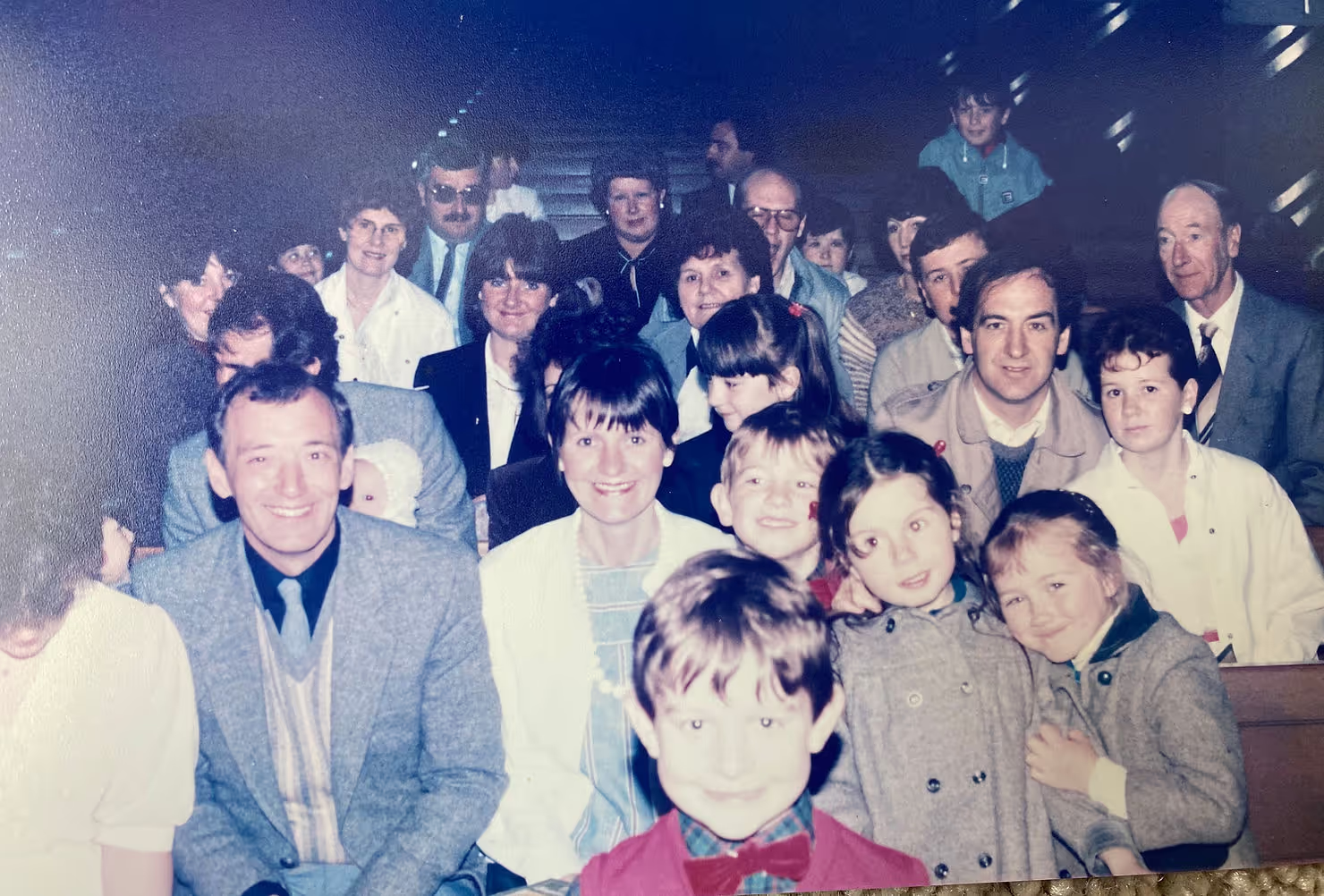
This 'no-judgement' philosophy would become the cornerstone of Chris' future as a GP and addiction specialist, where his skills of empathy and understanding would prove to be just as important as his clinical expertise.
It was during the isolation of the COVID-19 pandemic that Chris noticed a growing pattern emerging in his GP practice - a sharp increase in alcohol dependence, coupled with a lack of accessible support services. Rather than simply observing this crisis, Chris became curious about how to respond to both the barriers that were in place to seek treatment, as well as the stigma preventing people from reaching out for help.
He responded by beginning to offer a telehealth detox service to support people in the comfort of their homes."What I found was that people didn't have to repeat their story to different doctors and nurses. I would help them in their recovery journey from an environment where they felt safe and comfortable. They would engage. And the outcomes were fantastic."
Seeing the positive impact on his patients, Chris collaborated with Chris Raine - founder and CEO of Hello Sunday Morning, and Pia Clinton-Tarestad, who had just left her role as a partner at Deloitte, to forge a new option for clients seeking to curb their substance dependence.
Dr Chris and his team developed evidence-based protocols that have now helped over 1000 Australians successfully complete their detox journey from home.

Clean Slate isn't built on rigid abstinence principles and Chris himself enjoys the occasional drink, but he's deeply aware of alcohol's complex role in Australian society. "I just got offered a beer at 9am in the morning getting a haircut" he told his team one morning - "I promise I said no." But jokes aside, he realises that the extent to which alcohol is embedded in Australian culture is something that needs to be addressed at a government level.
Approximately 2 million Australians suffer from alcohol dependency, which is staggering. Alcohol is present at almost every milestone and occasion - whether celebrating sports victories or mourning losses. And the pervasiveness of alcohol in our culture extends to everyday activities too, from camping and fishing to simple dinner gatherings.
Clean Slate Clinic has grown steadily since its inception just four years ago, with Chris as the beating heart of the business. As CEO Pia will attest "Chris is just the pinnacle of what it is to be a good human. He doesn't have a mean bone in his body. He doesn't have anything other than pure intent. And he's just so wonderful as a friend, as a business partner, as a leader. And he inspires every single person in the organisation to be a better human and to focus on the good in people and to stay focused on what matters."
No judgement seems to be the recurring thread when speaking to his staff, and it appears that Chris is the glue that binds the company together. There is a deep, deep admiration for Chris from his business partners, patients, and colleagues.
"He is someone who can see potential in people even when they can't see it themselves." says Pia. "And it's this combination of clinical rigour and profound empathy that makes his approach so effective."
As Clean Slate Clinic continues to grow and evolve, Dr Chris Davis remains committed to his vision of making evidence-based treatment for substance dependence more accessible, understanding, and effective.
From his upbringing in Liverpool from a family of seven nurses, the lineage was there, and I guess it wasn’t a far walk to think he went on to practice medicine. But becoming a pioneer in telehealth addiction treatment in Australia, shows that sometimes the most meaningful changes come from not just the clinically trained, but those who understand first hand the importance of compassion and the power of non-judgmental care.

Greg's Story
What does it mean to truly change? Not just the superficial adjustments we make to appease others or meet societal expectations, but the deep, fundamental shift that transforms how we view ourselves and our place in the world.
For Greg, this transformation began with a Facebook ad. Like many before him, he had tried various methods to break free from alcohol's grip - from alternative medicines to spiritual retreats. But it wasn't until he encountered Clean Slate's program that something clicked. His story offers a window into not just recovery, but rediscovery.
Eleven months into his journey, we pried Greg with a handful of questions, to explore what happens when someone decides to not just change their habits, but to fundamentally reimagine their relationship with themselves.
His insights reveal something profound about the nature of alcohol use, healing, and the human capacity for transformation.
How do you feel today?
Each morning when I wake up and go outside to greet the early sunrise, I'm still surprised at how fantastic I feel compared to this time last year. The catchphrase ‘drinking alcohol steals hours from the following day’ is so true, and it's only when you become sober that the penny drops.
What have been the biggest benefits you've noticed?
For many years, my character featured extreme highs and low lows. I was like a yacht in a stormy sea, flipping from one side to the other. I'm now more stable and I don't seem to overact when issues or a conflict arises. This to me, is surprising, and a welcome change to having an erratic personality.
I know in the past, the worst mistakes I made, both financially and through my interaction with people, were caused by alcohol which impairs your judgement.
Did anything about the Clean Slate program surprise you?
I vividly recall my first phone conversation when I responded to the Clean Slate advertisement. I believe it was Pia who took the call. I was sceptical about the program as it was advertised as being free of charge for Bupa members. I was eventually assigned Fiona as my nurse, and she immediately understood my situation.
I initially only wanted to control my drinking and not give up drinking permanently. However, over the first six months, my craving and habit for the ‘6pm cocktail hour’ started to disappear.
I now have no interest in drinking soda with wine as wine is no longer a part of my life. Even zero beer is not of great interest. I’ll have an occasional zero beer but the taste of beer is no longer a craving that I desire.
Any tips for overcoming the hurdles that come with detox and withdrawal?
Around month three of the program, Fiona asked me to go within myself and try and establish why I commenced drinking heavily. This was extremely informative and a big step in understanding one's self.
I then studied why alcohol is so attractive and became interested in how the body produces the four main happy chemicals, Dopamine, Oxytocin, Serotonin, Endorphins (DOSE). Understanding how alcohol artificially produces Dopamine versus the body naturally producing Dopamine was a lightbulb moment. Realising the dangers of alcohol which gives the recipient a quick Dopamine fix lasting about fifteen minutes, explained why another drink is required over and over again.
I'm the first to admit that I had some fabulous times drinking wine with friends. It relaxes you, makes you happy, and one tends to forget their immediate problems. However, it's a never-ending treadmill of alcohol each day, and its such a dangerous drug.
During my hangover mornings I had a yearning in becoming the young carefree adventurer I was decades ago, who was a spiritual person on a journey of inner discovery. And finally, my old self has awakened.
This quote rings true;
“Maybe the journey isn't so much about becoming anything. Maybe its about unbecoming everything that isn't you, so you can become who you were meant to be in the first place.“ - Paulo Coelho, Author of The Alchemist.

What would you say to any Australians looking to reduce alcohol in 2025?
YouTube has many inspirational videos about sobriety, including celebrities who share their journeys. James Corden speaks candidly about his experience and reasons for giving up alcohol, while neuroscientist TJ Power offers fascinating insights about ways to hack your dopamine naturally.
However my journey in becoming sober took time to find the right avenue. For a number of years I knew that each week I was drinking more, and the early morning hangovers were becoming worse. I recall praying to God to give me a direction in finding a way to control my alcohol abuse. However, we all know that by 5pm the hangover symptoms have reduced and its time to start cocktail hour. Repeat, Repeat, Repeat.
In the process of controlling my drinking, I tried AA, therapy, Magic Herbal Tea, Hash Oil, Ozempic, Hippy Health Retreats and a Bracelet made from precious native Indian stones.
You can't do this alone, each person's journey is different but there's one thread which is common; admit your addiction and be honest in asking for help.
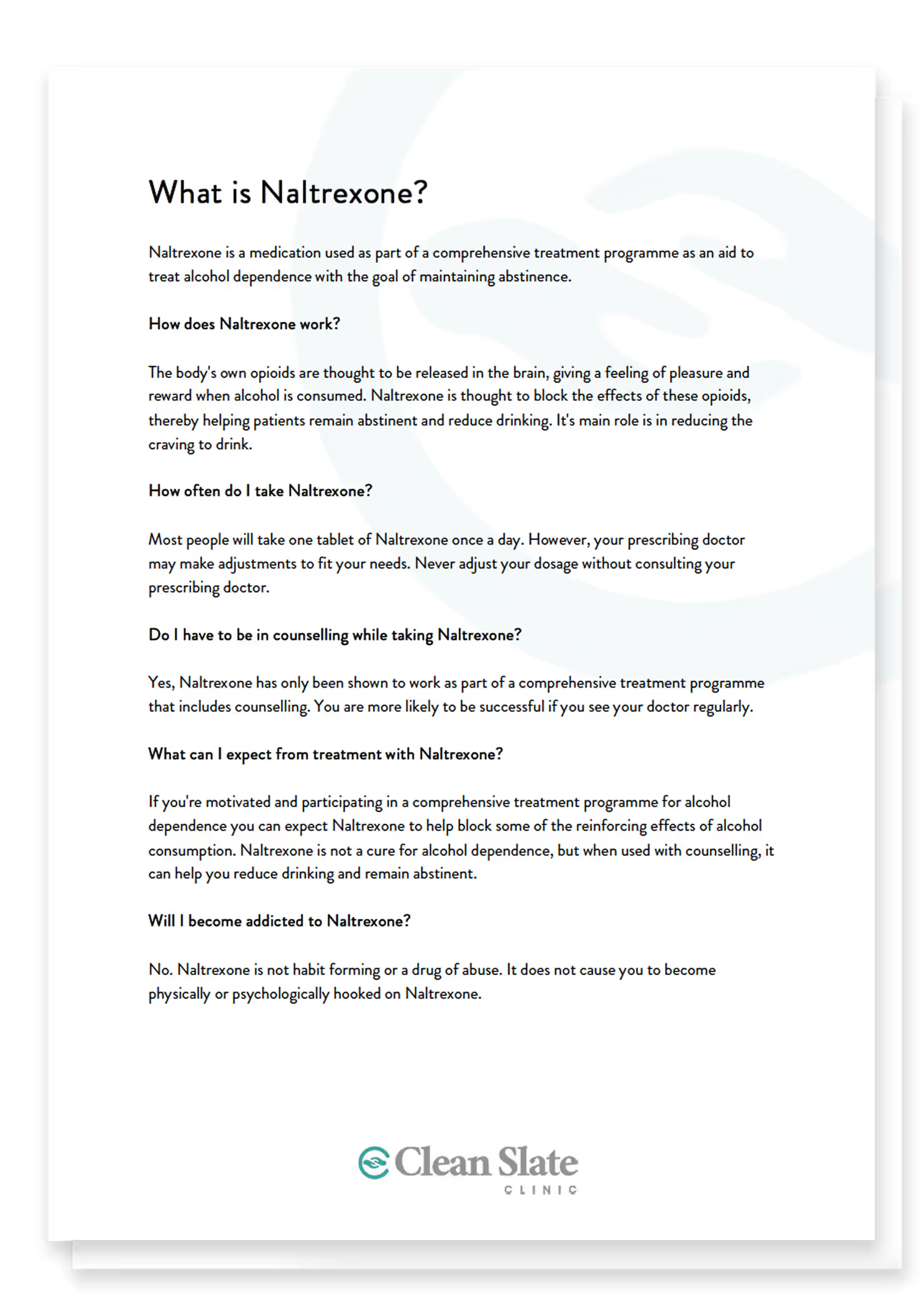
I've been prescribed Naltrexone - what is it?
Naltrexone is a medication used as part of a comprehensive treatment programme as an aid to treat alcohol dependence with the goal of maintaining abstinence.
Learn more about Naltrexone by downloading the document below.
The information has been prepared to answer some of the common questions you may have about Naltrexone. If you have a concern about any medicine you are taking, you should always consult your doctor or pharmacist.
Download the PDF:
Clean Slate Clinic - What is Naltrexone_.pdf
Download the Word doc:
Clean Slate Clinic - What is Naltrexone_.docx
Preview:
.svg)





Ready to get started?





Subscribe


.avif)